

Production plan for grinding barite powder
Published: March 15, 2025
Barite, or barium sulfate (BaSO₄), is one of the most strategically important non-metallic minerals in modern industry. Its unique properties—high specific gravity, chemical inertness, low abrasiveness, and excellent radiation shielding—make it indispensable in oil and gas drilling, paint and coatings, plastics, rubber, pharmaceuticals, and even medical imaging. However, transforming raw barite ore into a market-ready powder with consistent fineness, brightness, and purity is not simply a matter of buying a mill and turning it on. It requires a carefully engineered production plan that matches the right grinding equipment to the specific end-use application, controls operational costs, and ensures environmental compliance. This article outlines a professional production plan for grinding barite powder, drawing on the extensive experience and equipment portfolio of SBM Machinery, a global total solution provider for grinding systems with projects in over 180 countries. Whether you are processing barite for drilling-grade API specifications (typically 200–325 mesh) or for high-value paint and pharmaceutical fillers (325–2500 mesh), this guide will help you structure a reliable, efficient, and profitable production line.
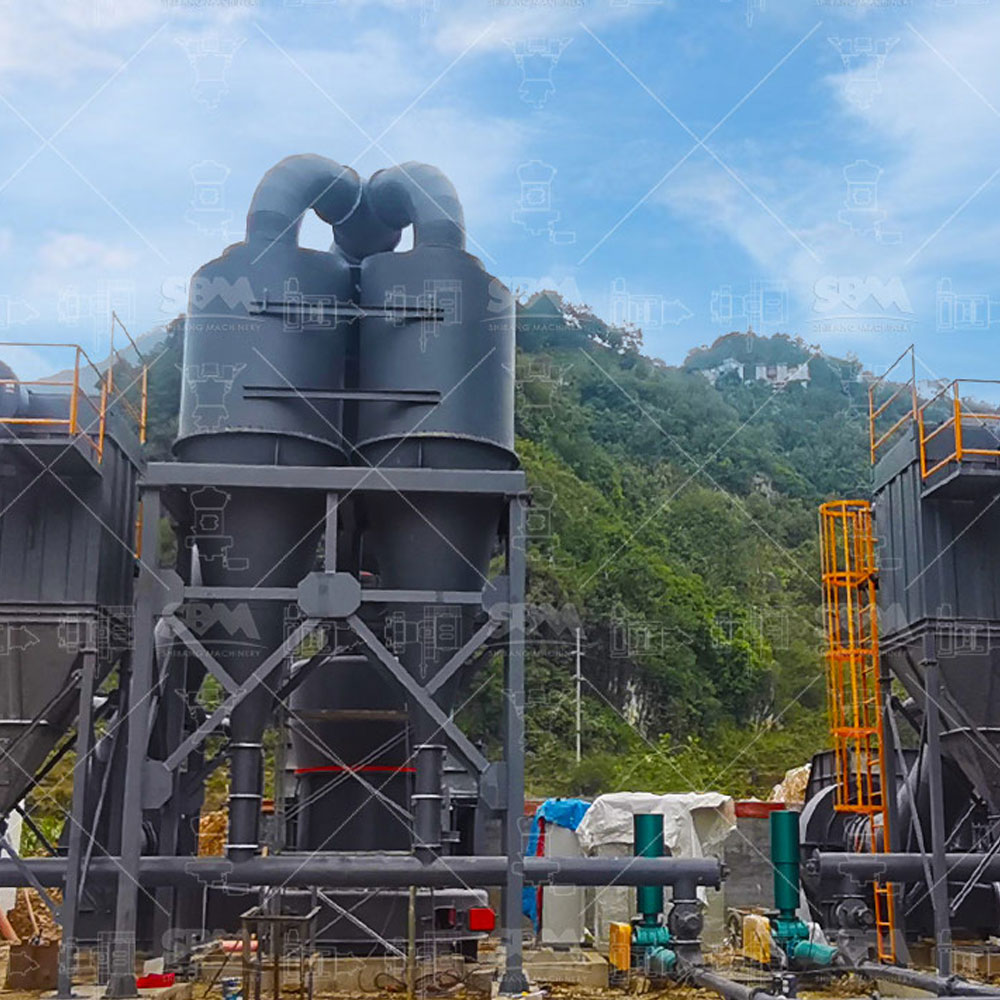
1. Understanding Barite and Its Grinding Requirements
Barite occurs naturally in sedimentary, hydrothermal, and residual deposits. Its Mohs hardness ranges from 3 to 3.5, and its specific gravity is unusually high at 4.2–4.6 g/cm³. These characteristics influence every stage of the production plan: crushing, grinding, classification, and collection. Unlike hard minerals such as quartz or feldspar, barite is relatively soft, but its high density means that feed rates, mill power, and classifier settings must be adjusted to avoid over-grinding and excessive wear. Moreover, barite often contains impurities such as iron oxide, clay, and silica, which must be removed or diluted during processing to meet end-user specifications. A successful production plan therefore begins with a detailed characterization of the raw ore: chemical composition, moisture content, work index, and initial particle size distribution. This data determines the choice of crushers, the grinding mill type, and the necessary auxiliary equipment such as dryers, magnetic separators, and coating systems.
2. Key Stages of a Barite Powder Production Plan
A complete barite grinding plant typically consists of five stages: raw material storage and crushing, drying (if necessary), grinding and classification, powder collection, and finished product storage and packaging. Each stage must be integrated with the others to ensure smooth material flow and consistent product quality.
Crushing: Run-of-mine barite is first reduced to a feed size suitable for the grinding mill, usually 0–50 mm for European Trapezium Mills and Vertical Roller Mills, or 0–20 mm for ultrafine mills. Jaw crushers or hammer crushers are commonly used, followed by screening to remove oversize material.
Drying: If the raw barite contains more than 1–2% moisture, a rotary dryer or the integrated drying function of a vertical roller mill may be required. Barite intended for paint or pharmaceutical applications often demands moisture below 0.5%, so drying is critical.
Grinding and Classification: This is the heart of the production plan. The choice of mill depends on the target fineness and capacity. For coarse to medium-fine barite powder (30–400 mesh), the MTW European Trapezium Mill or LM Vertical Roller Mill is ideal. For ultrafine barite powder (325–2500 mesh), the SCM Ultrafine Mill or LUM Ultrafine Vertical Mill is the preferred solution. Each mill incorporates an internal classifier or is paired with an external air classifier to control the top cut size.
Collection and Packaging: Cyclone collectors, pulse jet dust collectors, and bagging systems complete the line. Modern plants use PLC-based automatic control to monitor mill load, classifier speed, and air flow, ensuring stable operation with minimal labor.
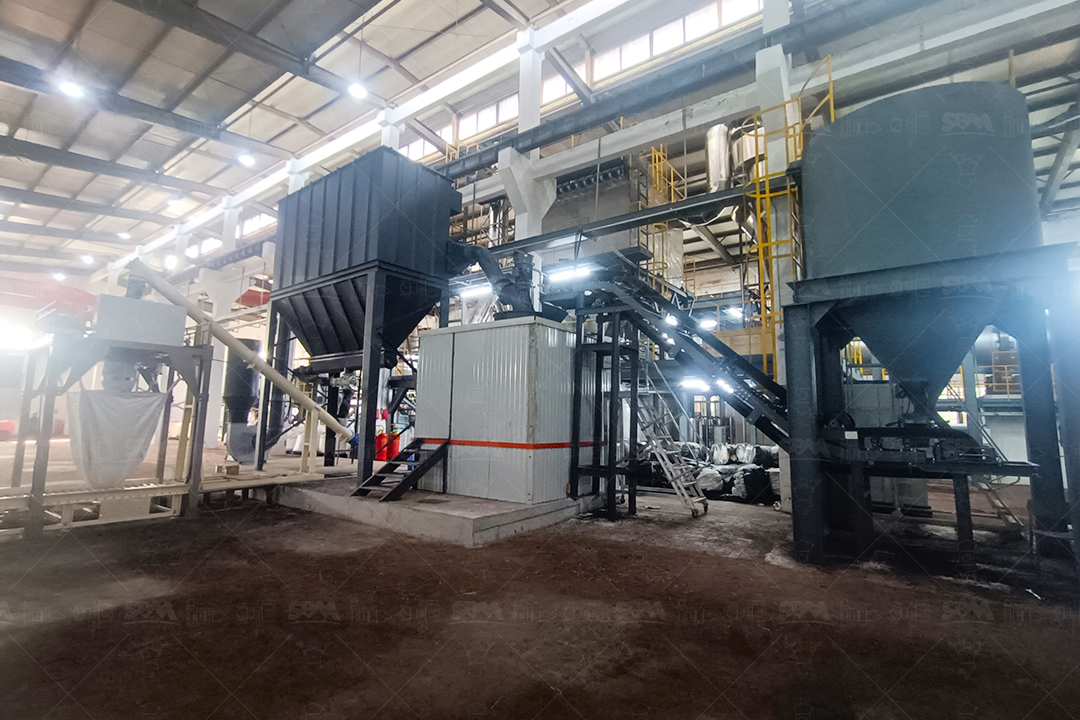
3. Selecting the Right Grinding Mill for Barite
Because barite is used in such diverse applications, no single mill can serve every production plan. The following sections describe the four main grinding solutions offered by SBM Machinery and how they apply to barite processing.
3.1 MTW European Trapezium Mill (MTW Raymond Mill)
The MTW Series European Trapezium Grinding Mill is a mature, proven solution for barite grinding in the 30–400 mesh range, with capacities from 3 to 40 tph. It is developed on the basis of long-term R&D, structural analysis of traditional mills, and feedback from more than 9,500 customers. For barite, the MTW mill offers several advantages. Its combined-type shovel blade reduces wear-part costs; only the blade needs replacement during maintenance. The curved shovel blades change the feeding angle and prolong the service life of the roller and ring. The arc air duct minimizes air energy loss, while the cone gear whole transmission achieves higher transmission efficiency and lower investment costs. The volute design improves wind-driven transport efficiency and reduces maintenance. For a drilling-grade barite production plan requiring 200–325 mesh, the MTW mill is often the most cost-effective choice.
3.2 LM Vertical Roller Mill
For larger-scale barite operations, the LM Vertical Roller Mill is a superior option. It integrates drying, pulverizing, and powder selection in one unit, with capacities from 3 to 400 tph and output sizes from 30 to 400 mesh. The LM mill features a small comprehensive investment footprint—about 50% of a ball-milling system—and can be arranged outdoors, significantly reducing civil construction costs. Operating costs are low because the grinding rollers do not contact the grinding plate directly; the roller and plate are made of high-quality materials, resulting in longer service life and less wear. Energy consumption is 30–40% lower than that of ball-milling systems. The automatic control system allows remote and local control switching, saving labor costs. The system is wholly sealed and operates under negative pressure, with dust emission meeting national standards. For a barite production plan targeting 200–400 mesh at high tonnage, the LM Vertical Roller Mill is an excellent primary choice.
3.3 SCM Ultrafine Mill
When the production plan calls for ultrafine barite powder—325 to 2500 mesh, with one-time fineness reaching D97 ≤ 5 μm—the SCM series ultrafine grinding mill is the answer. It was developed to meet increasingly stringent fineness requirements that general Raymond mills cannot satisfy. The SCM mill features high output and low energy consumption: capacity is more than twice that of jet mills, while energy consumption is 30% lower. Frequency-conversion control allows convenient adjustment, and the efficient vertical turbine powder classifier achieves accurate cutting size with no coarse powder spillover. The roller and ring are made of special materials for durability several times higher than standard parts. The grinding chamber has no bearing screw and works stably without vibration. For environmental protection, the efficient double powder collecting method—combining powder collectors and pulse dust collectors—achieves dust collection far higher than international standards. Optimized sound insulation and mufflers effectively prevent noise spread. This mill is ideal for barite used in paints, coatings, plastics, and pharmaceuticals.
3.4 LUM Ultrafine Vertical Mill
The LUM Ultrafine Vertical Mill is a new type of ultrafine grinding equipment that integrates powder grinding, separation, and transportation. It is designed for medium and high-end processing in industries such as plastic master batch, PVC, artificial stone, electric cable, and non-woven fabrics, and is mainly used for ultrafine grinding of calcite, marble, limestone, talc, dolomite, barite, kaolin, wollastonite, gypsum, feldspar, and pyrophyllite. With input sizes of 0–20 mm, output sizes of 325–4000 mesh, and capacities of 10–70 tph, the LUM mill offers high efficiency and high-quality finished products. The grinding curves of the roller shell and lining plate are uniquely designed based on ultrafine pulverization principles, making it easier to form a material bed, improving grinding efficiency, and increasing the proportion of finished products from the primary grinding. Advanced multi-rotor powder classifier technology allows customized fineness with no low-grade material. The PLC control system automatically manages grinding pressure, grinding disc rotating speed, and classifier speed. The pressure adjustment adopts PLC/DCS automatic control for accurate grinding pressure, high efficiency, and stable operation. Frequency-conversion speed regulation enables the mill to be used for different materials. The special structural design ensures small vibration and low noise; the whole equipment is well sealed and operates under negative pressure, preventing powder and dust from flowing out. For a barite production plan requiring 800–2500 mesh at medium to high capacity, the LUM mill is a strong candidate.
3.5 Ball Mill
Ball mills have been used in many industries for a long time, and the technology is quite mature. However, investors often express concerns that metal balls wear out easily and energy consumption is high. SBM has optimized the ball mill by improving the structure design and adopting new materials, which obviously reduces the cost of spare parts. Various types are available: dry ball mills are mainly for producing common powder, while wet ball mills are widely used in mineral dressing. For barite, ball mills can be used for coarse grinding or when a specific particle shape is required, but they are generally less energy-efficient than vertical roller mills for fine and ultrafine grinding. A production plan might include a ball mill as a secondary or tertiary grinder in a hybrid circuit, but for most barite applications, the MTW, LM, SCM, or LUM mills will deliver better overall economy.
4. Operational Considerations and Common Challenges
Even with the right equipment, a barite production plan faces several operational challenges. The most common include inconsistent feed moisture, abrasive impurities, classifier wear, and dust emission. High moisture can cause clogging in the mill and reduce capacity. Abrasive impurities such as silica accelerate wear on rollers and liners. Classifier wear leads to inconsistent product fineness. Dust emission not only violates environmental regulations but also wastes valuable product. To address these, the production plan should include pre-drying or integrated drying, wear-resistant materials for grinding parts, regular maintenance schedules, and efficient dust collection systems. SBM’s mills are designed with these challenges in mind: the LM mill’s sealed negative-pressure operation, the SCM mill’s pulse dust collectors, and the LUM mill’s PLC control system all contribute to reliable, clean, and efficient operation.
5. Automation and Quality Control
Modern barite grinding plants increasingly rely on automation to maintain product consistency and reduce labor costs. SBM’s mills can be equipped with expert automatic control systems that allow free switching between remote and local control. Key parameters such as grinding pressure, classifier speed, and air flow are monitored and adjusted in real time. Automatic feedback ensures fast and stable conversion of finished products. For quality control, the production plan should include regular sampling and particle size analysis using laser diffraction or sieve analysis. Brightness and chemical purity should also be tested, especially for paint and pharmaceutical grades. By integrating automation with rigorous quality control, a barite producer can achieve consistent output that meets API, ISO, or customer-specific specifications.
6. Environmental and Safety Compliance
Barite grinding generates dust, noise, and vibration. A responsible production plan must address these environmental factors. SBM’s grinding equipment is designed to operate stably with little vibration and low noise. The systems are wholly sealed and work under negative pressure, free of dust spillover. The efficient double powder collecting method of powder collectors and pulse dust collectors achieves dust collection far higher than international standards. Optimized sound insulation rooms and mufflers effectively prevent the spread of equipment noise. For safety, the production plan should include proper training for operators, lockout/tagout procedures for maintenance, and fire prevention measures for dry powder handling. Compliance with local environmental regulations is not optional; it is a prerequisite for long-term operation.
7. Conclusion
Grinding barite powder is a technically demanding but highly rewarding business. A well-designed production plan—one that carefully characterizes the raw material, selects the appropriate grinding mill, integrates drying and classification, automates control, and ensures environmental compliance—can deliver consistent, high-quality barite powder for the most demanding applications. SBM Machinery, with its comprehensive range of grinding equipment including the MTW European Trapezium Mill, LM Vertical Roller Mill, SCM Ultrafine Mill, LUM Ultrafine Vertical Mill, and optimized ball mills, has served clients in over 180 countries and regions. Its equipment is widely used in power generation, building materials, mining, metallurgy, chemicals, and non-metallic minerals, including large-scale barite powder processing. By leveraging this expertise and the technical advantages described in this article, you can build a production plan that is efficient, profitable, and sustainable.
Frequently Asked Questions (FAQ)
Q1: What is the most common fineness required for barite powder in oil and gas drilling, and which mill do you recommend?
For drilling-grade barite, API specifications typically require a minimum of 97% passing 200 mesh and a specific gravity of 4.2 or higher. The most common fineness is 200–325 mesh. For this application, the MTW European Trapezium Mill is often the best choice because it offers a good balance of capacity (3–40 tph), low wear-part costs, and reliable operation. If you need higher tonnage (up to 400 tph), the LM Vertical Roller Mill is more suitable due to its lower energy consumption and integrated drying.
Q2: My barite ore has high moisture content. Can your mills handle it without a separate dryer?
Yes and no. The LM Vertical Roller Mill and LUM Ultrafine Vertical Mill have integrated drying functions, meaning they can handle feed moisture up to a certain limit (typically 5–10% depending on the model) by using hot gas from a furnace or kiln. However, if the moisture is higher or if you are using an MTW or SCM mill, a separate rotary dryer is recommended before grinding. Excessive moisture can cause clogging, reduce capacity, and increase wear. A proper production plan will assess your ore’s moisture and specify the right drying solution.
Q3: What are the main wear parts in barite grinding, and how can I reduce replacement costs?
The main wear parts are the grinding rollers, grinding rings (or plates), and shovel blades. Barite is relatively soft (Mohs 3–3.5), but it can contain abrasive impurities like silica. To reduce wear costs, choose mills with wear-resistant materials. For example, the MTW mill’s combined-type shovel blade allows you to replace only the blade, not the entire assembly. The SCM mill’s roller and ring are made of special materials for durability several times higher than standard parts. The LM and LUM mills use high-quality materials for rollers and plates, and the roller does not contact the plate directly, reducing wear. Regular maintenance and proper feed size control also extend wear life.
Q4: Can your grinding mills produce barite powder finer than 2500 mesh?
The SCM Ultrafine Mill can achieve one-time fineness of D97 ≤ 5 μm (approximately 2500 mesh), and with repeated experiments, partial highest fineness can reach 2500 mesh. The LUM Ultrafine Vertical Mill can produce 325–4000 mesh powder, so it can go even finer than 2500 mesh if needed. However, for most barite applications—drilling, paints, plastics—fineness rarely exceeds 2000 mesh. Producing ultra-fine powder increases energy consumption and reduces capacity, so the production plan should match fineness to the actual market requirement.
Q5: I am concerned about dust and noise regulations. How does your equipment comply?
SBM grinding equipment is designed with environmental protection as a priority. The systems are wholly sealed and operate under negative pressure, so dust does not escape. The SCM mill uses efficient double powder collecting (powder collectors plus pulse dust collectors) to achieve dust collection far higher than international standards. The LM and LUM mills also feature sealed operation and pulse dust collectors. For noise, optimized sound insulation rooms and mufflers effectively prevent the spread of equipment noise. The mills operate stably with little vibration, so noise is fairly low. Our equipment meets national environmental protection requirements in most countries, but you should always verify local regulations and obtain necessary permits.


