

Basic application and advantages of raymond mill in calcium carbonate grinding
Published: August 14, 2025
Raymond mills, particularly the modern European trapezium mill design, have become the workhorse of the calcium carbonate grinding industry. They offer a compelling balance of fineness control, throughput, and cost efficiency that few other systems can match. In short, a Raymond mill grinds raw calcium carbonate—whether limestone, calcite, or marble—into fine powders typically ranging from 30 to 400 mesh, making it indispensable for producing heavy calcium carbonate (GCC) used in plastics, paints, paper, and construction materials. Its core advantages include a compact vertical structure, a integrated classifying system that delivers consistent particle size, low energy consumption per ton of product, and straightforward maintenance thanks to features like the combined-type shovel blade and cone gear transmission. For operations seeking a reliable, proven solution for medium-fine calcium carbonate powder, the Raymond mill remains a first-choice technology.
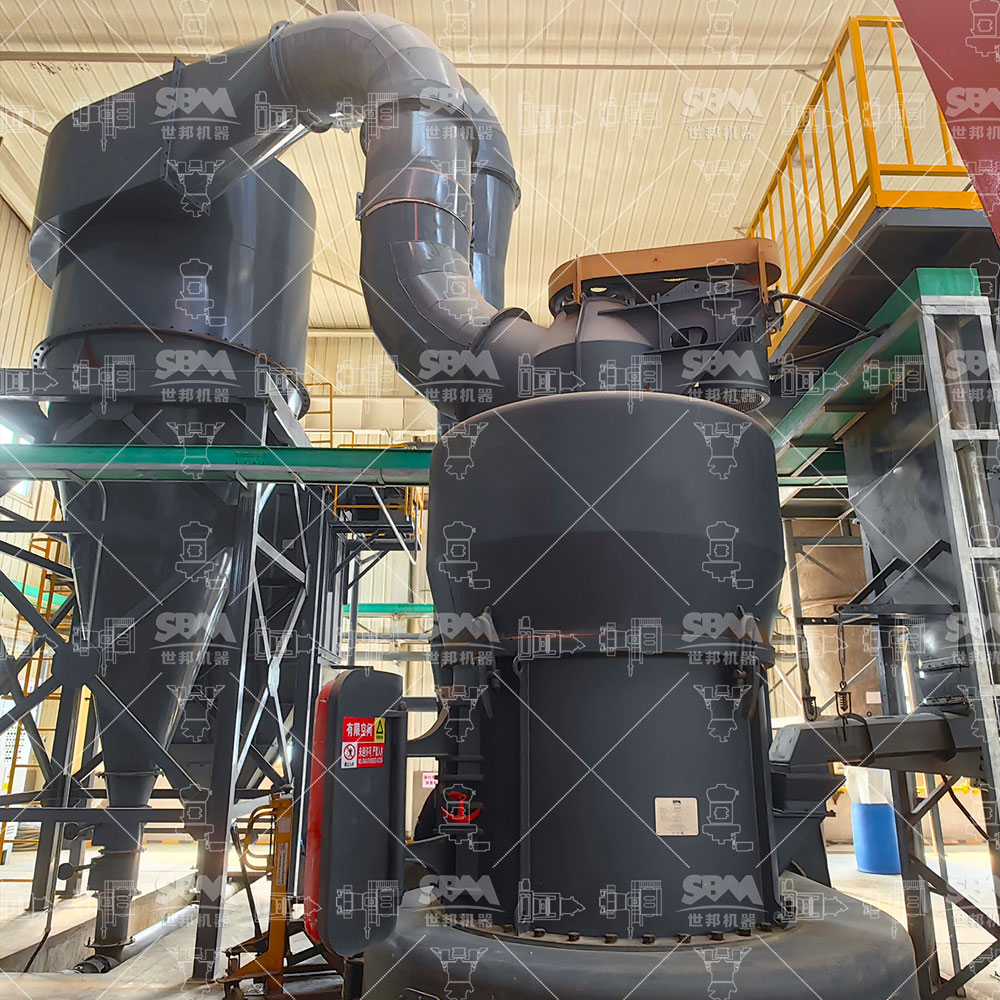
Why Calcium Carbonate Grinding Demands a Specialized Mill
Calcium carbonate is one of the most abundant minerals on earth, but its applications are highly sensitive to particle size distribution, shape, and purity. Ground calcium carbonate (GCC) must be produced with tight control over top cut and fines, because a paint formulator or PVC pipe manufacturer cannot tolerate coarse grit that causes surface defects or weak mechanical properties. Unlike soft minerals that can be processed in a hammer mill, calcium carbonate is moderately hard (Mohs 3–4) and abrasive. It also tends to generate dust, which creates environmental and health challenges. Therefore, the grinding equipment must deliver not only the right fineness but also stable operation, low wear part consumption, and dust containment. This is exactly where the Raymond mill—especially the evolved European trapezium version—has earned its reputation over decades of global service.
The Basic Application of Raymond Mills in Calcium Carbonate Processing
A Raymond mill is a pendulum-type ring-and-roller mill with an integrated air classifier. In a typical calcium carbonate grinding circuit, raw material (0–50 mm) is first crushed by a jaw crusher or hammer crusher to about 20–30 mm, then fed into the mill via an elevator and vibrating feeder. Inside the grinding chamber, a set of rollers suspended from a central shaft rotates against a stationary grinding ring. The material is scooped by a shovel blade and thrown between the roller and ring, where it is pulverized by a combination of pressure and attrition. An upward air stream from the blower lifts the fine powder into the classifier. Coarse particles fall back for further grinding, while finished powder (30–400 mesh) is carried to a cyclone collector and then a pulse dust collector. This continuous, closed-loop process is simple, reliable, and adaptable.
For calcium carbonate, the Raymond mill is used in several key applications:
- Heavy calcium carbonate (GCC) for plastics and rubber: Typically ground to 200–400 mesh, GCC acts as a functional filler that improves stiffness, impact resistance, and dimensional stability. Raymond mills produce the consistent, angular particles that bond well with polymer matrices.
- Paper and paperboard coating: Fine GCC (300–400 mesh) is used as a filler and coating pigment. The Raymond mill's air classifier ensures that no oversized particles scratch the paper surface.
- Paints and coatings: Ground calcium carbonate extends titanium dioxide and provides matting. Fineness control is critical to avoid settling and to maintain gloss uniformity.
- Construction and building materials: Coarser grades (30–100 mesh) are used in dry-mix mortars, sealants, and asphalt fillers. Here, Raymond mills offer high throughput at low cost per ton.
- Environmental desulfurization: Limestone powder (200–325 mesh) is injected into flue gas to neutralize sulfur dioxide. Raymond mills are widely deployed in power plants for this purpose.
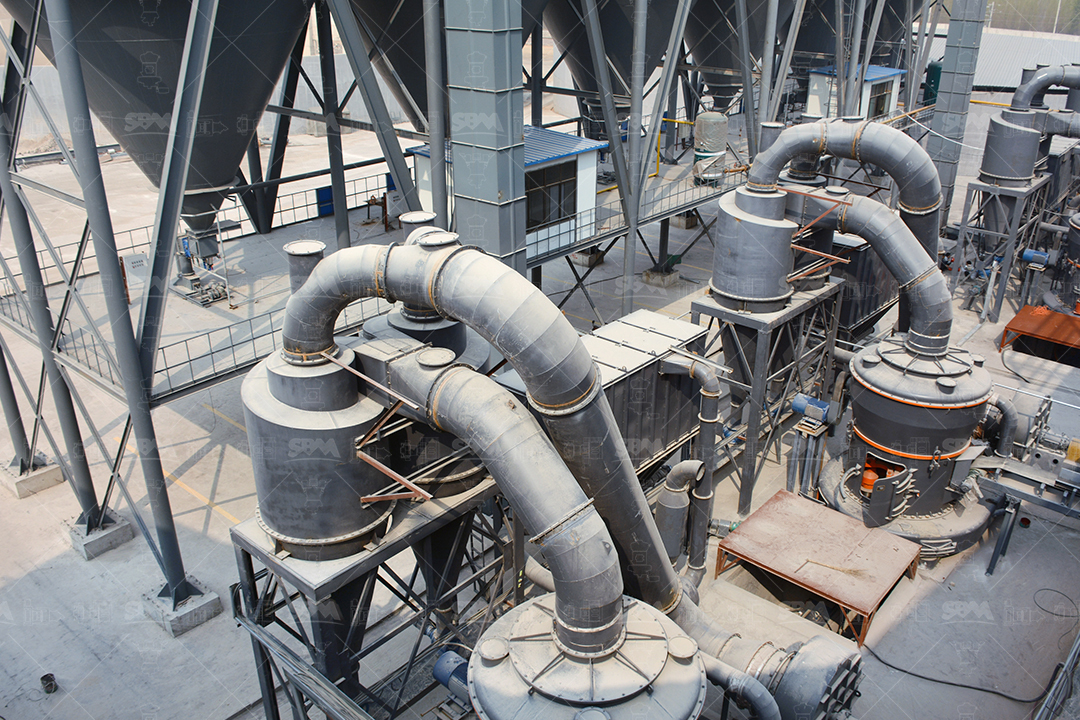
Technical Advantages of Modern Raymond Mills (European Trapezium Design)
The traditional Raymond mill has been refined into the MTW Series European Trapezium Mill, which incorporates several patented improvements specifically beneficial for calcium carbonate grinding. These advantages address the most common pain points: high wear costs, unstable fineness, dust leakage, and energy waste.
1. Unique Wear-Proof Shovel Blade Design
In calcium carbonate grinding, the shovel blade feeds material between the roller and ring. Conventional blades wear quickly, requiring frequent replacement and causing downtime. The MTW mill uses a combined-type shovel blade with a curved profile. Only the blade tip needs replacement during maintenance, not the entire assembly. The curved design also changes the feeding angle, which prolongs the service life of both the roller and the ring. For a calcium carbonate plant running 24/7, this translates directly to lower operating costs and higher availability.
2. Arc Air Duct Design
The air duct in a Raymond mill transports the ground powder to the classifier. Traditional straight ducts create turbulence and energy loss. The arc-shaped duct (circular duct) in modern mills reduces air resistance, ensuring efficient transport and preventing material buildup. A high-strength guard plate protects the duct's working face from abrasive calcium carbonate particles. This design maintains consistent airflow, which in turn stabilizes the fineness of the finished product.
3. Cone Gear Whole Transmission
Instead of a belt drive or open gear, the MTW mill uses a bevel gear integral transmission. This provides higher transmission efficiency, requires less maintenance, and saves space. For calcium carbonate producers, the benefit is lower power consumption per ton and a more compact footprint—important when retrofitting an existing plant.
4. Volute Design
The unobstructed wear-resistant volute improves the efficiency of the wind-driven transport inside the mill. It also reduces the cost of material maintenance because the volute can be lined with wear-resistant material and replaced easily. In practice, this means less frequent shutdowns for repairs and more consistent product quality.
Comparing Raymond Mills with Other Grinding Options for Calcium Carbonate
While vertical roller mills and ultrafine mills have their place, the Raymond mill occupies a sweet spot for medium-fine grinding (30–400 mesh) at capacities from 3 to 40 tph. Vertical roller mills (LM series) can achieve higher capacities (up to 400 tph) and are excellent for large-scale GCC production, but they require higher capital investment and more complex maintenance. Ultrafine mills (SCM or LUM series) can reach 2500 mesh, but they are overkill for standard GCC grades and consume more energy per ton at coarse fineness. The Raymond mill wins on simplicity, low capital cost, and ease of operation. For a calcium carbonate processor who needs 200 mesh powder at 10 tph, a Raymond mill is often the most economical choice.
Key Benefits That Solve Customer Pain Points
Customers in the calcium carbonate industry frequently struggle with several issues: inconsistent product fineness, high wear part costs, dust pollution, high energy bills, and complex maintenance. A well-designed Raymond mill addresses each of these:
- Inconsistent fineness: The integrated air classifier and arc duct provide stable, adjustable fineness (30–400 mesh). Frequency control can be added for finer tuning.
- High wear costs: The combined shovel blade, curved profile, and high-quality roller/ring materials extend replacement intervals. Only the blade tip needs changing, reducing spare parts inventory.
- Dust pollution: The whole system operates under negative pressure and is sealed. A pulse dust collector captures fine particles, meeting strict environmental standards. Noise is also reduced by optimized insulation.
- High energy consumption: The cone gear transmission and volute design reduce energy losses. Compared to ball mills, a Raymond mill can save 30–40% energy for the same fineness.
- Complex maintenance: The mill's structure allows easy access to the grinding chamber. The automatic control system (optional) enables remote monitoring and adjustment, saving labor.
With over 180 countries served and continuous refinement based on feedback from more than 9,500 customers, the modern Raymond mill is not just a legacy machine—it is a highly optimized tool for calcium carbonate grinding.
Frequently Asked Questions (FAQ)
1. What is the maximum capacity of a Raymond mill for calcium carbonate, and can it handle my required fineness?
Our MTW Series European Trapezium Mill can process 3 to 40 tons per hour, with output fineness adjustable from 30 to 400 mesh. For calcium carbonate, typical capacities are 5–25 tph for 200–325 mesh. If you need finer than 400 mesh (e.g., 800 or 1250 mesh), we recommend our ultrafine mills. The exact capacity depends on raw material hardness, moisture, and target fineness. We provide free testing with your material to confirm.
2. How often do I need to replace wear parts like rollers and rings when grinding calcium carbonate?
Wear life depends on the abrasiveness of your calcium carbonate and the fineness you produce. For typical limestone or calcite grinding to 200 mesh, the roller and ring can last 1,500–3,000 hours. The combined shovel blade can last even longer because only the tip is replaced. We use high-chromium alloy or ceramic materials for heavy-duty applications. Proper maintenance and avoiding metal contamination in the feed will maximize wear life.
3. Does a Raymond mill require a lot of civil work and auxiliary equipment?
No. The Raymond mill has a compact vertical design. It only needs a small foundation, and the main unit, blower, classifier, cyclone, and dust collector can be arranged in a compact layout. Compared to a ball mill system, the floor space is about 50% less. We can also provide a mobile or containerized solution for small-scale operations. The auxiliary equipment includes a jaw crusher, bucket elevator, vibrating feeder, and electric control panel—all supplied as a complete system.
4. How do you control dust and noise during calcium carbonate grinding?
The entire system operates under negative pressure, so dust cannot escape. A pulse-jet dust collector captures fine particles, and the emission concentration is below 20 mg/m³, meeting national and international standards. For noise, we use a sound-insulated room around the blower and a muffler on the air outlet. The mill itself operates with low vibration. In practice, the noise level at 1 meter from the mill is below 85 dB, which is safe for continuous operation.
5. Can I adjust the product fineness easily without stopping the mill?
Yes. The classifier speed can be adjusted via a frequency converter while the mill is running. This changes the cut point and thus the finished powder fineness. For automated plants, our PLC/DCS control system allows remote setpoint changes. You can switch from 200 mesh to 325 mesh in a few minutes without shutting down. This flexibility is essential when serving multiple customers with different specifications.


