

Carbon: industrial cornerstone and the refined transformation enabled by raymond mill
Published: February 18, 2026
Carbon is one of the most versatile and indispensable materials in modern industry. From power generation and cement production to chemical processing and new energy development, carbon-based materials such as coal, petroleum coke, and graphite underpin a vast array of industrial processes. However, raw carbon materials rarely meet the stringent requirements of downstream applications without undergoing precise size reduction and refinement. This is where advanced grinding technology, particularly the Raymond mill and its modern evolutions, plays a transformative role. Shanghai SBM Machinery Equipment Co., Ltd. (SBM Machinery), as a total solution provider for grinding equipment, has spent decades refining the art and science of carbon pulverization. With equipment deployed in over 180 countries and regions, SBM has become the preferred partner for industries seeking to unlock the full potential of carbon materials. This article explores how Raymond mills and related grinding systems enable the refined transformation of carbon, addressing common challenges and delivering measurable operational benefits.
Why Carbon Demands Specialized Grinding Solutions
Carbon materials present unique challenges. They vary widely in hardness, moisture content, abrasiveness, and combustibility. Coal, for instance, must be ground to a fine powder to maximize combustion efficiency in power plants, while petroleum coke requires precise particle size distribution for use in aluminum smelting and fuel applications. Graphite, used in batteries and lubricants, demands ultra-fine grinding without contaminating the final product.Traditional grinding equipment often struggles with these demands, leading to inconsistent output, high energy consumption, excessive wear, and environmental non-compliance. SBM Machinery recognized these pain points early and developed a range of mills specifically engineered to handle carbon-based materials with precision and reliability.
The Raymond Mill Legacy and Its Modern Evolution
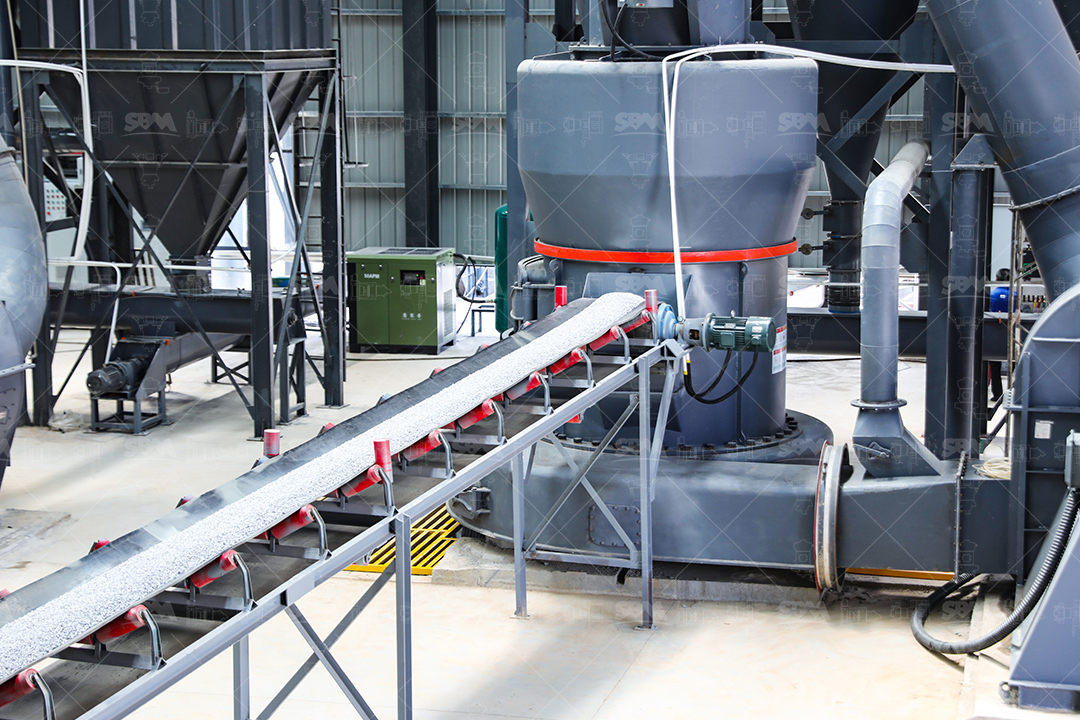
The Raymond mill has long been a cornerstone in industrial powder processing. Its original design offered a reliable method for grinding coal, limestone, and other materials to fine powders. However, as industrial requirements grew more demanding—higher fineness, greater capacity, lower energy consumption—traditional Raymond mills began to show limitations.
SBM's MTW Series European Trapezium Grinding Mill, also known as the MTW Raymond Mill, represents a significant leap forward. Developed over years of research and development, and incorporating feedback from more than 9,500 customers, this mill integrates international advanced technologies with proprietary innovations. Key features include a cone gear whole transmission system, an internal oil absorption lubrication system, and an arc air flue design. These enhancements collectively boost efficiency, reduce maintenance, and extend service life.
The MTW Raymond Mill accepts input sizes up to 50mm and delivers output fineness ranging from 30 to 400 mesh, with capacities from 3 to 40 tons per hour. Its unique wear-proof perching knife design uses combined-type shovel blades that reduce wearing part costs—only the blade needs replacement during maintenance. The curved shovel blades change the feeding angle, prolonging the service life of the roller and ring. This design directly addresses a common customer pain point: the high cost of frequent replacement of grinding components.
Another notable feature is the arc air duct design, which minimizes air energy loss and ensures efficient material transportation. The high-strength guard plate protects the working face of the air duct, further reducing maintenance needs. The cone gear whole transmission achieves higher transmission efficiency while saving space and lowering investment costs. The volute design improves wind-driven transmission efficiency and reduces material maintenance costs.
Vertical Roller Mills: A Leap in Carbon Grinding Efficiency
While the Raymond mill excels in fine grinding, the demand for higher capacity and lower energy consumption led to the development of the LM Vertical Roller Mill. This equipment addresses the technical issues of low output and high energy consumption prevalent in ordinary mills. It integrates drying, pulverizing, and powder selection into a single unit, making it ideal for cement, chemical, coal, and electric power industries.
The LM Vertical Roller Mill processes input sizes up to 50mm and delivers output fineness from 30 to 400 mesh, with capacities ranging from 3 to 400 tons per hour. Its small comprehensive investment is a major advantage: the equipment combines crushing, drying, grinding, powder separation, and transportation, featuring a simple system and compact layout. It occupies only about 50% of the floor space required by a ball-milling system and can be arranged outdoors, significantly reducing investment costs.
Operating costs are also markedly lower. The roller does not contact the grinding plate directly, and both are made of high-quality materials, resulting in longer service life and less wear. The grinding rollers directly grind materials on the grinding plate, achieving 30% to 40% lower energy consumption compared to ball-milling systems. This directly addresses the pain point of high energy costs that many carbon processing plants face.
The LM Vertical Roller Mill is equipped with an expert automatic control system that allows free switching between remote and local control, enabling easy operation and reducing labor costs. Environmentally, it operates stably with little vibration and low noise. The system is wholly sealed and works under negative pressure, preventing dust spillover and meeting national emission standards.
Ultrafine Grinding: Meeting the Demand for Finer Carbon Powders
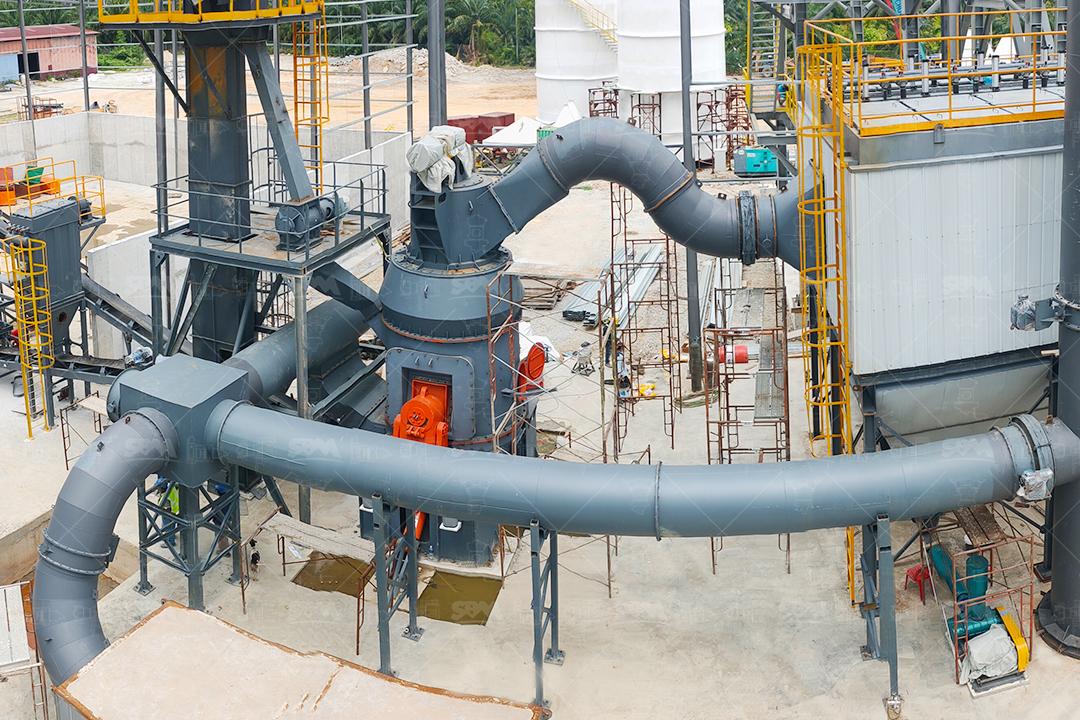
As industries advance, the demand for ultrafine carbon powders has surged. Applications such as lithium-ion battery anodes, conductive additives, and high-performance lubricants require powders with fineness levels that traditional Raymond mills cannot achieve. SBM's SCM Series Ultrafine Grinding Mill was developed to meet this need.
The SCM Ultrafine Mill adjusts powder fineness within a range from 325 to 2500 meshes, with a one-time finished product fineness of D97 ≤ 5μm. This has been verified by geoscientific research institutes and ranks among the highest in the industry. The mill accepts input sizes up to 20mm and delivers capacities from 0.5 to 25 tons per hour.
High output and low energy consumption are hallmarks of this mill. Its capacity is more than twice that of jet mills, while energy consumption is 30% lower. The automatic feedback system ensures fast and stable conversion of finished products, and intelligent control saves labor costs. The efficient vertical turbine powder classifier achieves high efficiency, accurate cutting size, and no spillover of coarse powder.
The heavy rotor design and tight test method ensure durability. The roller and ring are made of special materials, offering several times higher durability than standard components. The grinding chamber has no bearing screw, allowing stable operation free of vibration after balance treatment. Environmentally, the efficient double powder collecting method—combining powder collectors and pulse dust collectors—achieves excellent dust collection far exceeding international standards. Optimized sound insulation and mufflers effectively prevent noise spread.
LUM Ultrafine Vertical Mill: Precision and Intelligence for Carbon
For medium and high-end processing, the LUM Ultrafine Vertical Mill integrates powder grinding, separation, and transportation. Designed with years of experience and incorporating Taiwan's grinding roller technology and Germany's powder separating technology, it is ideal for ultrafine grinding of calcite, marble, limestone, talc, dolomite, barite, kaolin, wollastonite, gypsum, feldspar, and pyrophyllite. In carbon processing, it excels in producing high-quality graphite and carbon black powders.
The LUM mill accepts input sizes up to 20mm and delivers output fineness from 325 to 4000 mesh, with capacities from 10 to 70 tons per hour. Its high efficiency and high-quality finished products stem from uniquely designed grinding curves of the roller shell and lining plate, which make it easier to form a material bed, improving grinding efficiency and increasing the proportion of finished products from primary grinding.
Advanced separation technology and energy efficiency are achieved through the multi-rotor powder classifier principle, allowing customized finished product fineness with no low-grade material. The PLC control system manages major parameters like grinding pressure, rotating speed of the grinding disc, and classifier speed. The intelligentized control system uses PLC/DCS automatic control for pressure adjustment, ensuring accurate grinding pressure control, high efficiency, and stable operation. Remote control and simple operation are standard, and frequency-conversion speed regulation adapts the mill to various materials.
Environmentally, the LUM mill features special structural design and operating principles that ensure small vibration and low noise. The whole equipment is well sealed, and the system operates under negative pressure, preventing powder and dust from flowing out. It is environmentally friendly and meets national environmental protection requirements.
Ball Mills: Optimized for Carbon Grinding
Ball mills have long been used in carbon grinding, but traditional designs suffer from high wear and energy consumption. SBM has optimized its ball mill offerings by improving structure design and adopting new materials, significantly reducing spare parts costs. Various types are available: dry ball mills for producing common powder and wet ball mills widely used in mineral dressing. Input sizes up to 25mm are accepted, with output sizes from 0.2 to 0.074mm and capacities from 3 to 65 tons per hour.
For carbon processing, ball mills remain relevant for certain applications, particularly where large volumes of coarse to medium-fine powder are required. SBM's optimized designs ensure that even this traditional technology benefits from modern advancements in wear resistance and energy efficiency.
Addressing Customer Pain Points: The SBM Advantage
Customers in the carbon processing industry frequently face several pain points: high energy consumption, excessive wear of grinding components, inconsistent product fineness, environmental compliance issues, and high labor costs. SBM Machinery's range of grinding mills directly addresses these challenges.
Energy consumption is minimized through innovative designs like the LM Vertical Roller Mill, which uses 30-40% less energy than ball mills. Wear is reduced through specialized materials and designs such as the combined-type shovel blade in the MTW Raymond Mill and the heavy rotor design in the SCM Ultrafine Mill. Consistent fineness is ensured by advanced classifiers and automatic control systems, from the 30-400 mesh range of the MTW and LM mills to the ultra-fine 2500-4000 mesh capabilities of the SCM and LUM mills.
Environmental compliance is achieved through sealed systems, negative pressure operation, pulse dust collectors, and noise insulation. Labor costs are lowered by automatic control systems that enable remote operation and reduce the need for constant manual intervention.
Furthermore, SBM provides total solutions, from individual units to complete grinding systems, with expertise spanning the entire mineral processing workflow. This ensures that customers receive not just equipment but a partnership dedicated to optimizing their carbon processing operations.
Conclusion
Carbon remains an industrial cornerstone, and its refined transformation depends on advanced grinding technology. The evolution from traditional Raymond mills to modern European trapezium mills, vertical roller mills, ultrafine mills, and optimized ball mills has enabled industries to achieve higher efficiency, lower costs, and greater environmental compliance. SBM Machinery, with its comprehensive range of grinding equipment and global experience, stands ready to help carbon processors meet the challenges of today and tomorrow. By choosing the right mill for the right application, businesses can unlock the full value of carbon materials and drive innovation across industries.
Frequently Asked Questions (FAQ)
1. What is the maximum input size my carbon material can have for your grinding mills?
Our grinding mills accept various input sizes depending on the model. The MTW European Trapezium Mill and LM Vertical Roller Mill accept up to 50mm, the SCM Ultrafine Mill and LUM Ultrafine Vertical Mill accept up to 20mm, and the ball mill accepts up to 25mm. We recommend consulting with our engineers to match the mill to your specific material characteristics.
2. How do I prevent excessive wear on grinding components when processing abrasive carbon materials?
Excessive wear is a common concern with abrasive carbon materials. Our mills feature wear-resistant designs such as the combined-type shovel blade in the MTW mill, which allows only the blade to be replaced, and special materials for rollers and rings in the SCM and LUM mills. Additionally, proper maintenance and choosing the right mill for your material's abrasiveness can significantly extend component life.
3. Can your mills handle carbon materials with high moisture content?
Yes. The LM Vertical Roller Mill and LUM Ultrafine Vertical Mill integrate drying functions, making them suitable for materials with higher moisture content. For other mills, pre-drying may be required. Our team can advise on the best configuration for your specific moisture levels.
4. What about dust and noise pollution from carbon grinding operations?
Environmental compliance is a priority. Our mills are designed with sealed systems and negative pressure operation to prevent dust spillover. Pulse dust collectors and sound insulation are standard on many models, ensuring emissions and noise meet national standards. The LM and LUM mills are particularly noted for their low noise and dust-free operation.
5. Can I adjust the fineness of the final carbon powder easily?
Absolutely. Most of our mills offer adjustable fineness. The MTW and LM mills range from 30 to 400 mesh, the SCM mill from 325 to 2500 mesh, and the LUM mill from 325 to 4000 mesh. Many models feature frequency-conversion control or automatic classifiers, allowing precise and convenient adjustment to meet your specific product requirements.


