

Comparative analysis of raymond mill and other grinding equipment
Published: November 15, 2024
In the ever-evolving world of mineral processing and powder preparation, selecting the right grinding equipment is not merely a purchasing decision—it is a strategic investment that directly impacts operational efficiency, product quality, and long-term profitability. Among the myriad of options available, the Raymond mill has long been a cornerstone in industries ranging from building materials to chemical processing. However, as technology advances and market demands shift toward finer powders, higher capacities, and greater energy efficiency, a comprehensive comparison with other grinding solutions such as vertical roller mills, ultrafine mills, and ball mills becomes essential. This article provides a detailed comparative analysis based on extensive industry experience and advanced equipment design, exploring the unique strengths, technical advantages, and application scenarios of each mill type. By examining factors such as input and output specifications, energy consumption, maintenance requirements, and environmental impact, we aim to equip plant managers, engineers, and decision-makers with the insights needed to optimize their grinding circuits. Whether you are processing limestone for desulfurization, grinding petroleum coke, or producing ultrafine calcium carbonate, understanding the nuanced differences between these machines will ensure you choose the equipment that best aligns with your production goals and operational constraints.
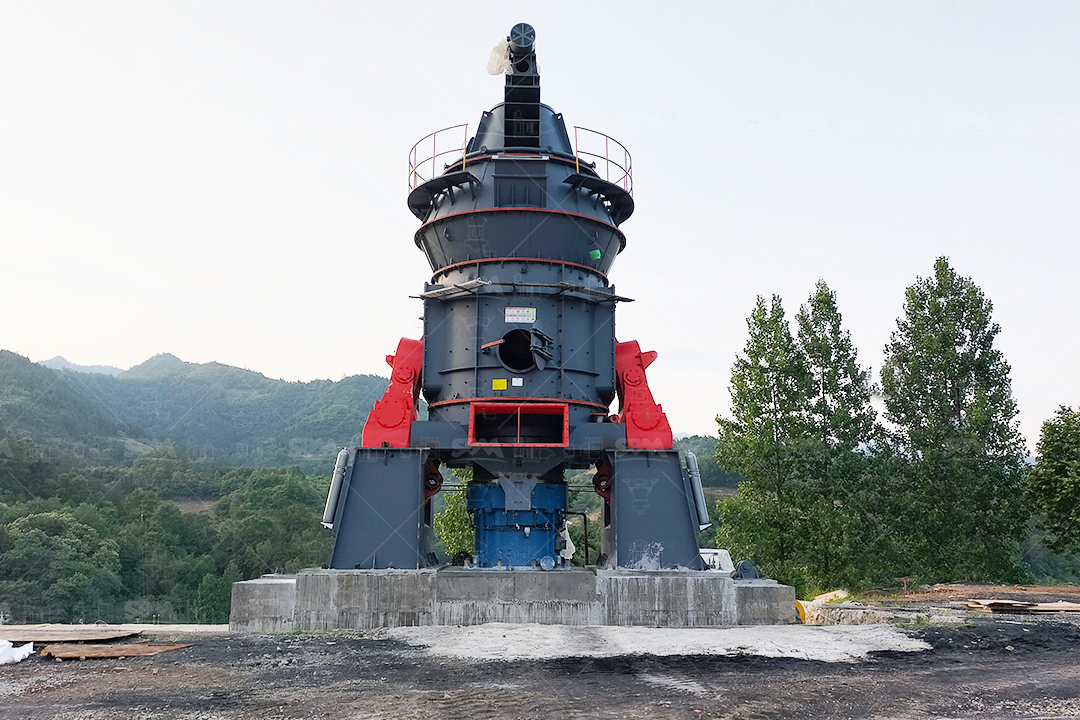
Raymond Mill: The Traditional Workhorse with Modern Upgrades
The Raymond mill, particularly the European Trapezium Mill (MTW Series), represents a significant evolution of the classic pendulum mill design. Developed through decades of R&D and feedback from over 9,500 customers, this mill integrates advanced features such as a cone gear whole transmission, an internal oil absorption lubrication system, and an arc air flue. These innovations address many of the drawbacks associated with older Raymond mills, including high maintenance costs and inefficient air flow. With an input size of 0-50mm and an output range of 30-400 mesh, the MTW Raymond mill offers a capacity of 3-40tph, making it suitable for medium-scale operations. Its unique wear-proof perching knife design reduces the frequency of spare part replacement, while the curved shovel blades optimize the feeding angle, extending the service life of the roller and ring. The arc air duct minimizes energy loss and ensures efficient material transport, and the volute design enhances wind-driven transmission efficiency. Despite these improvements, the Raymond mill still faces limitations in achieving ultrafine fineness (below 400 mesh) and in handling high-capacity requirements, where vertical mills often outperform it. For many traditional applications, however, it remains a reliable and cost-effective choice.
Vertical Roller Mill: The High-Capacity Alternative
When production demands scale up, the Vertical Roller Mill (LM series) emerges as a compelling alternative. Designed to overcome the low output and high energy consumption of conventional mills, this equipment integrates crushing, drying, grinding, powder separation, and transportation into a single compact system. Its input size is 0-50mm, with an output of 30-400 mesh and a remarkable capacity of 3-400tph—far exceeding that of Raymond mills. The LM vertical mill features a small comprehensive investment, occupying only about 50% of the floor space required by a ball mill system, and can be arranged outdoors to reduce infrastructure costs. Operating costs are significantly lower due to less wear: the grinding rollers do not directly contact the grinding plate, and both are made of high-quality materials, resulting in longer service life. Energy consumption is 30-40% lower than ball mill systems. An automatic control system enables remote and local control switching, saving labor costs, while the fully sealed negative-pressure operation ensures dust-free, environmentally friendly performance. However, the LM vertical mill is less suited for ultrafine grinding below 400 mesh, and its capital cost may be higher than a basic Raymond mill. It excels in cement, coal, and electric power industries where high throughput and drying capacity are essential.
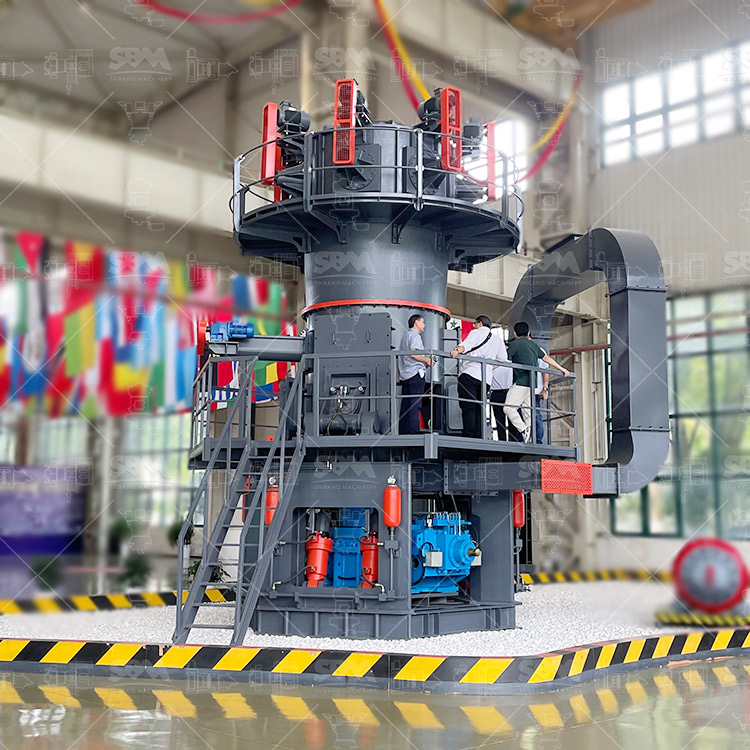
Ultrafine Mills: Pushing the Boundaries of Fineness
As markets demand finer powders for applications like advanced ceramics, pharmaceuticals, and high-performance fillers, general Raymond mills often fall short. The SCM series ultrafine grinding mill addresses this gap, offering adjustable fineness from 325 to 2500 mesh, with a disposable fineness reaching D97≤5μm. With an input size of 0-20mm and a capacity of 0.5-25tph, it is ideal for small-to-medium ultrafine production. Its technical advantages include high output and low energy consumption—capacity is more than twice that of jet mills while energy consumption is 30% lower. Frequency-conversion control allows convenient adjustment, and the efficient vertical turbine powder classifier ensures accurate cutting size with no coarse powder spillover. The heavy rotor design and special roller/ring materials provide durability several times higher than standard mills. Environmental protection is achieved through efficient double powder collecting methods (pulse dust collectors) and sound insulation. For even higher capacities in ultrafine range, the LUM ultrafine vertical mill integrates Taiwan grinding roller technology and Germany powder separating technology, achieving 325-4000 mesh with a capacity of 10-70tph. It is particularly suited for calcite, marble, limestone, talc, and other non-metallic minerals. Both ultrafine mills outperform Raymond mills in fineness and energy efficiency for fine products, but they require higher initial investment and more sophisticated maintenance.
Ball Mill: The Mature Veteran with Persistent Challenges
Ball mills have been a staple in mineral processing for decades, known for their robust construction and ability to grind a wide range of materials. With an input size of 0-25mm and an output of 0.2-0.074mm (approximately 200-400 mesh), they offer capacities from 3-65tph. However, traditional ball mills suffer from high wear rates on metal balls and high energy consumption. Recent optimizations, such as improved structure design and new materials, have reduced spare part costs, and various types (dry and wet) are available for different requirements. Dry ball mills are used for common powder production, while wet ball mills are widely used in mineral dressing. Compared to Raymond and vertical mills, ball mills are less efficient in terms of energy per ton of product and have a larger footprint. They also produce a broader particle size distribution, which may require additional classification. Nevertheless, for abrasive materials or where contamination must be minimized, ball mills remain a viable option. Their simple operation and low maintenance (in terms of mechanical complexity) are advantages, but the ongoing costs of grinding media and power can be prohibitive.
Key Comparative Factors: Energy, Maintenance, and Product Quality
When comparing these grinding technologies, several critical factors emerge. Energy efficiency: Vertical roller mills and ultrafine mills are significantly more efficient than Raymond and ball mills for fine grinding. The LM vertical mill consumes 30-40% less energy than ball mills, while the SCM ultrafine mill consumes 30% less than jet mills. Raymond mills, despite improvements, still have higher energy consumption per ton for fine products. Maintenance: Raymond mills require regular replacement of shovel blades, rollers, and rings, but the combined-type shovel blade reduces costs. Vertical mills have fewer wear parts due to non-contact grinding, and ultrafine mills use special materials for extended life. Ball mills have high wear on grinding media, leading to frequent replacements. Product fineness: Raymond mills typically produce 30-400 mesh; vertical mills also 30-400 mesh; ultrafine mills reach 325-2500 mesh or even 4000 mesh. Ball mills produce 0.2-0.074mm, which is coarser. Environmental impact: Vertical and ultrafine mills operate under negative pressure with efficient dust collection, meeting stringent standards. Raymond mills can also be sealed but may require additional dust control. Ball mills generate significant noise and dust. Footprint: Vertical mills are compact (50% of ball mill system), while ball mills require large foundations. Capital cost: Raymond mills are generally lower in initial cost, followed by ball mills, then vertical and ultrafine mills. However, total cost of ownership over time favors vertical and ultrafine mills due to lower energy and maintenance.
Application-Specific Selection Guidelines
Choosing the right mill depends on the specific application. For environmental desulfurization limestone powder preparation, where 200-325 mesh is common, the MTW Raymond mill or LM vertical mill are both suitable; the vertical mill offers higher capacity and lower operating costs for large power plants. For heavy calcium carbonate (GCC) processing, ultrafine mills like SCM or LUM are preferred for fine grades (1250 mesh or finer), while Raymond mills can handle coarser grades. Coal powder preparation for boilers often uses vertical mills due to their drying capacity and high throughput. Petroleum coke grinding, which is abrasive, benefits from vertical mills with wear-resistant liners. Slag micro-powder production requires high capacity and drying; vertical roller mills are the industry standard. New energy materials, such as battery precursors, demand ultrafine and precise particle size distribution, making SCM or LUM mills ideal. Ball mills are still used in mineral dressing for wet grinding and in laboratories, but for large-scale dry grinding, they are increasingly replaced by vertical and ultrafine mills. In summary, for coarse to medium grinding (30-400 mesh) with moderate capacity, Raymond mills are cost-effective. For high capacity and energy efficiency, vertical mills win. For ultrafine grinding (<400 mesh), ultrafine mills are essential. Ball mills are niche for wet or abrasive applications.
Frequently Asked Questions (FAQ)
1. What is the main difference between a Raymond mill and a vertical roller mill in terms of operating cost?
Vertical roller mills generally have lower operating costs due to 30-40% lower energy consumption and less wear on grinding parts, as the rollers do not directly contact the grinding plate. Raymond mills have higher wear on rollers and rings, although the combined-type shovel blade reduces some costs. However, Raymond mills have a lower initial investment.
2. Can a Raymond mill produce powders finer than 400 mesh?
Standard Raymond mills typically produce 30-400 mesh. For finer products (up to 2500 mesh), you need an ultrafine mill such as the SCM series or LUM vertical mill, which are specifically designed for ultrafine grinding with higher classification efficiency.
3. My material has high moisture content. Which mill is best?
Vertical roller mills and ultrafine vertical mills are ideal for materials with high moisture because they integrate drying functions using hot gas. Raymond mills can also handle some moisture but may require additional drying equipment. Ball mills are less suitable for high moisture as they can clog.
4. What are the maintenance requirements for a vertical roller mill compared to a ball mill?
Vertical roller mills have fewer wear parts and longer maintenance intervals because the grinding elements are made of high-quality materials and operate without direct metal-to-metal contact. Ball mills require frequent replacement of grinding media (balls) and liners, leading to higher maintenance costs and downtime.
5. Which mill is most environmentally friendly?
Ultrafine vertical mills and vertical roller mills operate under negative pressure with efficient dust collection systems, meeting stringent environmental standards. They also have lower noise levels due to reduced vibration. Raymond mills can be sealed but may need additional dust filters. Ball mills are the noisiest and dustiest, requiring extensive containment.


