

Technical application and trends of raymond mill in feldspar powder processing
Published: April 8, 2025
In the evolving landscape of non-metallic mineral processing, feldspar stands out as a critical raw material for ceramics, glass, and fillers. The Raymond mill, especially modern iterations like the European Trapezium Mill, has become a cornerstone technology for feldspar powder production. This article explores the technical applications, recent trends, and practical solutions that address common pain points in feldspar grinding. Drawing on over three decades of expertise and field data from more than 9,500 customers worldwide, we examine how advanced Raymond mill designs deliver higher efficiency, lower operating costs, and superior product quality. From input sizes of 0–50 mm to output fineness of 30–400 mesh, and capacities ranging from 3 to 40 tph, the modern Raymond mill is not just a traditional workhorse—it is a precision-engineered system ready for the demands of today’s feldspar industry.
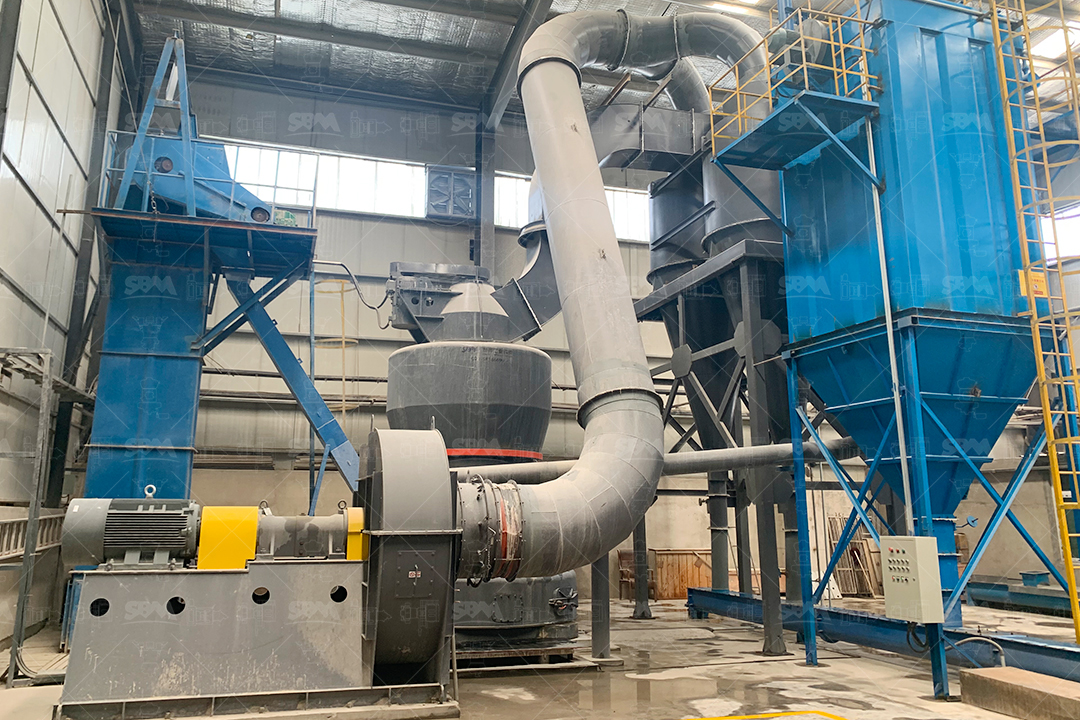
Feldspar processing presents unique challenges: abrasive materials, varying moisture content, and the need for consistent particle size distribution. Traditional Raymond mills often struggled with high wear rates, energy inefficiency, and frequent maintenance downtime. However, the latest generation of European Trapezium Mills—often referred to as MTW Raymond Mills—has been specifically engineered to overcome these issues. Based on extensive R&D and feedback from thousands of customers, these mills integrate several patented technologies that directly benefit feldspar processors.
One of the most notable advancements is the unique wear-proof perching knife design. In feldspar grinding, the shovel blade is a critical wear part. The combined-type shovel blade allows operators to replace only the blade rather than the entire assembly, significantly reducing maintenance costs. Moreover, the curved shovel blades change the feeding angle, which prolongs the service life of the roller and ring. For feldspar, which is moderately hard (Mohs 6–6.5), this design translates to longer campaigns between rebuilds and more consistent throughput.
Another key feature is the arc air duct design. Traditional straight ducts cause air energy loss and turbulence. The circular duct in modern Raymond mills ensures smoother airflow, higher transportation efficiency, and reduced energy consumption. A high-strength guard plate protects the working face of the air duct, extending its lifespan even when handling abrasive feldspar particles. This might seem like a small detail, but in continuous feldspar powder production, even a 5% improvement in airflow efficiency can lead to noticeable energy savings over a year.
The cone gear whole transmission is a game-changer for reliability. Unlike traditional belt-driven systems, the bevel gear integral transmission achieves higher transmission efficiency, requires less space, and lowers investment costs. For feldspar processors who often operate in remote locations, fewer mechanical components mean less downtime and simpler maintenance. The inner oil absorption lubrication system further ensures that the gear and bearings run cool and clean, even in dusty environments.
The volute design—an unobstructed, wear-resistant volute—effectively improves the efficiency of wind-driven transmission while reducing material maintenance costs. In practice, this means that the mill can maintain high grinding pressure and consistent fineness without frequent cleaning or part replacement. For feldspar powder destined for ceramic glazes or glass batches, consistent fineness is non-negotiable. The volute design helps achieve that consistency shift after shift.
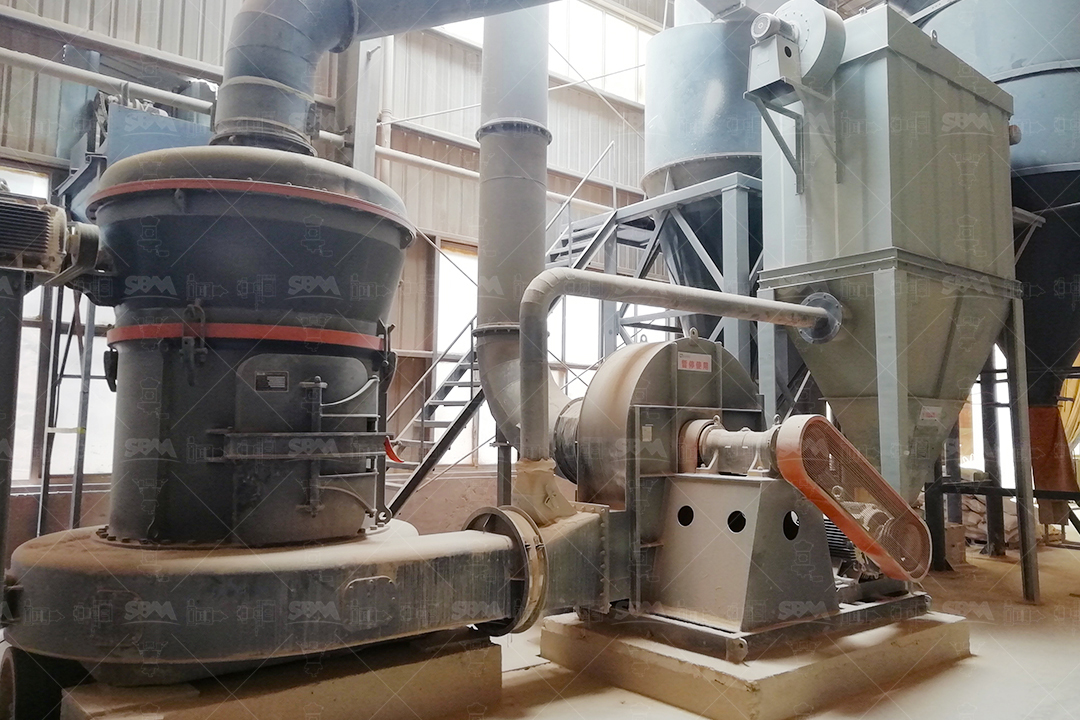
When we look at technical trends, the integration of drying, grinding, and classification into a single system is becoming standard. The LM Vertical Roller Mill, for instance, is a newly launched product that addresses low output and high energy consumption in ordinary industries. While originally popular in cement and coal, its application in feldspar processing is growing. With input sizes up to 50 mm, output fineness of 30–400 mesh, and capacities from 3 to 400 tph, the vertical roller mill offers a compelling alternative for large-scale feldspar operations. Its small comprehensive investment—about 50% of the floor space of a ball-milling system—and ability to be arranged outdoors significantly reduce capital expenditure. Operating costs are lower too: the roller does not contact the grinding plate directly, and both are made of high-quality materials. Energy consumption is 30–40% lower than ball-milling systems. For feldspar processors looking to expand capacity without proportionally increasing energy bills, this is a major trend.
Another trend is the rise of ultrafine grinding. As industries demand finer feldspar powders—especially for high-end ceramics, paints, and plastics—general Raymond mills are no longer sufficient. The SCM series ultrafine grinding mill adjusts fineness from 325 to 2500 mesh, with one-time fineness reaching D97≤5μm. This is achieved through frequency-conversion control and an efficient vertical turbine powder classifier. For feldspar, ultrafine grinding opens new markets in functional fillers and specialty coatings. The heavy rotor design and special materials for roller and ring mean durability is several times higher than standard mills. The grinding chamber has no bearing screw, so it runs stably without vibration. Environmentally, the efficient double powder collecting method—combining powder collectors and pulse dust collectors—far exceeds international standards. Noise is controlled by an optimized sound insulation room and muffler, making it suitable for urban or semi-urban locations.
For even more demanding applications, the LUM ultrafine vertical mill integrates Taiwan’s grinding roller technology and Germany’s powder separating technology. It is designed for medium and high-end processing in plastic master batch, PVC, artificial stone, electric cable, and non-woven fabrics. For feldspar, this mill can produce powders from 325 to 4000 mesh with capacities of 10–70 tph. The grinding curves of the roller shell and lining plate are uniquely designed based on ultrafine pulverization principles, making it easier to form a material bed, improving grinding efficiency, and increasing the proportion of finished products from the primary grinding. The multi-rotor powder classifier allows customized fineness with no low-grade material. A PLC/DCS automatic control system ensures precise grinding pressure, stable operation, and remote control. Environmentally, the whole system is well sealed and operates under negative pressure, preventing dust spillover.
Of course, ball mills still have a place in feldspar processing, especially for coarse grinding or when a very high purity is not required. However, modern ball mills have also been optimized. The traditional problems—metal balls wearing out quickly and high energy consumption—have been addressed through improved structure design and new materials. Dry ball mills are mainly for producing common powder, while wet ball mills are widely used in mineral dressing. For feldspar, a ball mill might be used as a first-stage grinder before a Raymond mill, but for many new projects, a single vertical roller mill or ultrafine mill can replace the entire circuit.
What does this mean for feldspar processors? First, the trend is toward systems that are more compact, more automated, and more environmentally friendly. Second, energy efficiency is no longer a luxury but a necessity, as energy costs continue to rise. Third, product consistency and fineness control are becoming competitive differentiators. The modern Raymond mill, especially the European Trapezium design, addresses all three. It is not just a mill; it is a complete grinding solution that can be integrated with drying, classification, and dust collection.
From a technical application standpoint, feldspar processors should consider the following: input size must be matched to the mill’s capability (0–50 mm for MTW and LM, 0–20 mm for SCM and LUM). Output fineness requirements dictate the choice—30–400 mesh for MTW and LM, 325–4000 mesh for SCM and LUM. Capacity requirements range from 3 tph for small MTW units to 400 tph for large LM units. The MTW European Trapezium Mill is ideal for small to medium operations that need a reliable, low-maintenance Raymond-style mill. The LM Vertical Roller Mill is better for large-scale operations where drying and grinding are combined. The SCM and LUM ultrafine mills are for high-value, fine powder markets.
Over the years, SBM grinding equipment has served over 180 countries and regions, making it the preferred choice for customers in the global powder processing industry. This global experience has been distilled into every new mill design, ensuring that the challenges faced by feldspar processors—abrasion, energy, dust, and consistency—are met with practical, field-proven solutions.
Looking ahead, the trends are clear: digitalization (PLC/DCS control), hybridization (combining grinding with drying and classification), and sustainability (low noise, low dust, low energy). Feldspar processors who adopt these technologies will not only reduce their operating costs but also improve product quality and meet increasingly strict environmental regulations. The Raymond mill, in its modern forms, remains a central piece of this evolution.
Frequently Asked Questions
1. What is the maximum input size for a Raymond mill when processing feldspar?
For modern European Trapezium Mills (MTW), the maximum input size is 0–50 mm. For ultrafine mills like SCM and LUM, the input size is typically 0–20 mm. It is important to pre-crush feldspar to the recommended size to avoid excessive wear and vibration.
2. How do I control the fineness of feldspar powder?
Fineness is controlled by the classifier speed and airflow. In MTW mills, you can adjust the analyzer blade speed to achieve 30–400 mesh. For ultrafine requirements (325–2500 mesh), the SCM or LUM series with frequency-conversion control and multi-rotor classifiers allows precise adjustment. Regular sampling and sieving are recommended to maintain consistency.
3. What are the common wear parts in feldspar grinding, and how can I reduce costs?
The most common wear parts are the shovel blade, roller, and ring. The combined-type shovel blade in MTW mills allows replacing only the blade, reducing costs. Curved blades also prolong roller and ring life. Using high-quality materials and maintaining proper grinding pressure will further extend service intervals.
4. Can a Raymond mill handle feldspar with high moisture content?
Traditional Raymond mills are not ideal for high moisture. However, the LM Vertical Roller Mill integrates drying, grinding, and classification, and can handle moisture up to 15% depending on the material. For MTW mills, pre-drying may be necessary if moisture exceeds 6–8%. The LUM ultrafine mill also has limited drying capability, so external dryers may be required for wet feldspar.
5. How do I choose between a Raymond mill, vertical roller mill, and ultrafine mill for feldspar?
It depends on your target fineness, capacity, and budget. For 30–400 mesh and small to medium capacity (3–40 tph), the MTW Raymond mill is cost-effective and easy to maintain. For large capacity (up to 400 tph) and combined drying, the LM vertical roller mill is better. For ultrafine powder (325–2500 mesh) for high-end applications, the SCM or LUM ultrafine mills are the right choice. Always consult with a supplier who can test your specific feldspar sample.


