

Principle and structure analysis of raymond mill
Published: November 15, 2024
Raymond mill, also known as pendulum mill or Raymond roller mill, remains one of the most widely adopted grinding solutions in mineral processing, building materials, chemicals, and metallurgy. Understanding its working principle and structural composition is essential for selecting the right equipment, optimizing production efficiency, and reducing long-term operational costs. As a total solution provider for grinding equipment, SBM Machinery has served over 180 countries and regions, offering everything from individual units to complete grinding systems. This article provides a professional analysis of Raymond mill's principle and structure, drawing on decades of engineering experience and insights from thousands of customer applications. Whether you are processing limestone for desulfurization, grinding heavy calcium carbonate, or preparing coal powder, a clear grasp of the mill's internal mechanics will help you achieve better fineness, higher capacity, and more stable operation.
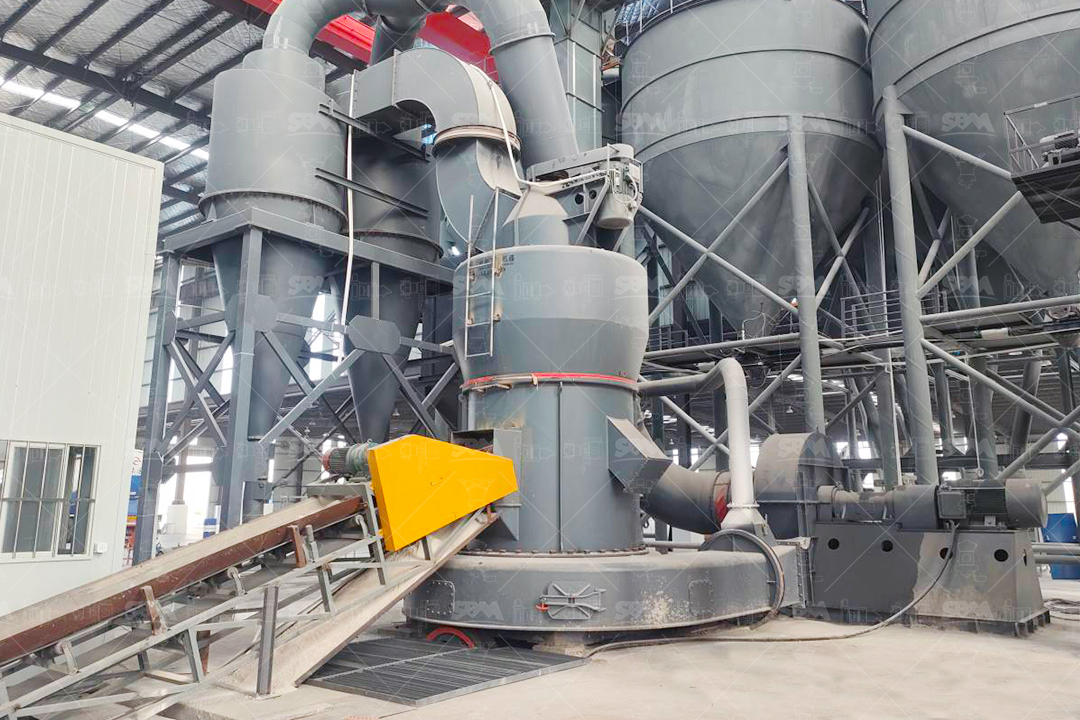
Working Principle of Raymond Mill
The Raymond mill operates on the principle of centrifugal grinding combined with air classification. Material enters the grinding chamber through the feeder and falls onto the grinding ring. The central shaft rotates, driving the star rack and the grinding rollers to revolve around the vertical axis. Under the action of centrifugal force, the rollers press outward against the grinding ring. The shovel blades, positioned below the rollers, scoop the material into the space between the roller and the ring, where it is crushed and ground by the combined forces of pressure and friction.
Simultaneously, the fan creates an upward air stream that carries the ground powder from the grinding chamber to the classifier. The classifier, typically a blade-type or turbine-type separator, controls the fineness of the final product. Coarse particles are rejected and fall back into the grinding chamber for further reduction, while fine powder passes through the classifier and is collected by the cyclone collector or dust collector. This closed-loop system ensures continuous operation and consistent product quality.
The efficiency of the Raymond mill depends on several factors, including the hardness and moisture content of the feed material, the rotational speed of the central shaft, the clearance between the roller and ring, and the adjustment of the classifier. Proper control of these parameters allows operators to achieve output sizes ranging from 30 to 400 mesh, with capacities from 3 to 40 tons per hour in standard configurations.
Key Structural Components
A typical Raymond mill consists of several critical components that work in harmony to deliver reliable performance. The main structure includes the base, the central shaft, the star rack, the grinding rollers, the grinding ring, the shovel blades, the classifier, the air duct, and the transmission system.
1. Base and Central Shaft
The base provides the foundation for the entire machine and houses the transmission mechanism. The central shaft is mounted vertically on the base and rotates at a controlled speed. It transmits torque from the motor to the star rack. The shaft is supported by heavy-duty bearings that must be properly lubricated to ensure smooth rotation and long service life.
2. Star Rack and Grinding Rollers
The star rack is mounted on the upper end of the central shaft and holds the grinding rollers. Typically, three to five rollers are arranged symmetrically around the central axis. Each roller is suspended on a horizontal shaft and can swing outward under centrifugal force. The rollers are made of high-quality alloy steel or wear-resistant materials to withstand the abrasive nature of mineral grinding.
3. Grinding Ring
The grinding ring is a stationary circular component mounted on the inner wall of the grinding chamber. It provides the surface against which the rollers press and grind the material. The ring is usually made of high-chromium cast iron or other wear-resistant alloys. Its profile may be flat, curved, or trapezoidal, depending on the mill design and the intended application.
4. Shovel Blades
Shovel blades are positioned at the bottom of the star rack, just above the grinding ring. Their function is to scoop the material from the bottom of the chamber and feed it into the grinding zone between the roller and the ring. The shape and angle of the shovel blades significantly affect the feeding efficiency and the overall grinding performance. In modern designs, combined-type or curved shovel blades are used to reduce wear and improve material lifting.
5. Classifier
The classifier is located at the top of the grinding chamber and separates fine powder from coarse particles. It consists of a rotating disc with adjustable blades or a turbine rotor. By changing the rotational speed or the blade angle, the operator can control the cut size and thus the fineness of the final product. A well-designed classifier ensures sharp separation, high efficiency, and minimal oversize material in the finished powder.
6. Air Duct and Fan
The air duct connects the grinding chamber to the classifier and the dust collection system. It guides the air stream that carries the ground material upward. The fan, usually a centrifugal type, generates the necessary airflow and pressure to transport the powder through the system. The design of the air duct, including its shape and internal surface, affects energy consumption and wear rates. Modern mills often feature arc-shaped or volute air ducts to reduce turbulence and energy loss.
7. Transmission System
The transmission system transfers power from the motor to the central shaft. Traditional mills use belt drives or open gear systems, while advanced models employ cone gear whole transmission or bevel gear integral transmission. These modern designs offer higher transmission efficiency, quieter operation, and reduced maintenance requirements. The transmission system may also include an internal oil absorption lubrication system to ensure reliable performance under heavy loads.
Technical Advantages of Modern Raymond Mills
Over the years, Raymond mill technology has evolved significantly. Traditional designs suffered from issues such as low output, high energy consumption, excessive wear, and dust leakage. Modern Raymond mills, such as the MTW Series European Trapezium Grinding Mill, incorporate a range of innovative features to address these challenges.
One notable advancement is the unique wear-proof perching knife design. The combined-type shovel blade reduces the cost of wearing parts, as only the blade needs to be replaced during maintenance. The curved shovel blades change the feeding angle and prolong the service life of the roller and ring, thereby reducing operating costs.
Another improvement is the arc air duct design. The circular duct avoids air energy loss and ensures transportation efficiency. A high-strength guard plate protects the working face of the air duct, extending its service life. The cone gear whole transmission achieves higher transmission efficiency, saves space, and lowers investment costs. The volute design, with its unobstructed wear-resistant structure, effectively improves the efficiency of wind-driven transmission while reducing material maintenance costs.
These technical advantages collectively result in higher grinding efficiency, lower power consumption, reduced maintenance downtime, and better environmental performance. For customers processing non-metallic minerals, coal powder, petroleum coke, slag, or new energy materials, modern Raymond mills offer a reliable and cost-effective solution.
Common Challenges and Solutions
Despite their robustness, Raymond mills can face operational challenges that affect productivity and product quality. One common issue is insufficient fineness. This may result from worn classifier blades, improper classifier speed, or excessive feed rate. Adjusting the classifier and reducing the feed rate can restore the desired fineness. Another issue is low output, which may be caused by worn rollers and rings, inadequate air volume, or excessive moisture in the feed material. Regular inspection and replacement of wear parts, checking the fan and air duct for blockages, and pre-drying the material can help maintain capacity.
Vibration is another frequent complaint. It can stem from unbalanced rollers, loose foundation bolts, or foreign objects in the grinding chamber. Proper balancing, tightening, and cleaning can resolve this problem. Dust leakage, on the other hand, often indicates worn seals or a damaged dust collector. Upgrading to a pulse dust collector and replacing seals can improve environmental performance and comply with emission standards.
Energy consumption is a persistent concern in grinding operations. Modern Raymond mills with optimized transmission, efficient classifiers, and low-resistance air ducts can reduce power consumption by 30% to 40% compared to traditional ball mills. Additionally, automated control systems allow operators to fine-tune parameters in real time, avoiding unnecessary energy waste.
Applications and Selection Considerations
Raymond mills are versatile and can handle a wide range of materials, including limestone, calcite, marble, talc, dolomite, barite, kaolin, wollastonite, gypsum, feldspar, and pyrophyllite. They are widely used in environmental desulfurization limestone powder preparation, large-scale non-metallic mineral powder processing, heavy calcium carbonate production, coal powder preparation, petroleum coke grinding, slag micro-powder production, and new energy materials.
When selecting a Raymond mill, consider the following factors: feed size, desired output size, required capacity, material hardness and moisture content, and available space. For ultrafine applications, a Raymond mill may not be sufficient, and an ultrafine mill or vertical roller mill may be more appropriate. SBM offers a range of grinding equipment, including the MTW European Trapezium Mill, LM Vertical Roller Mill, SCM Ultrafine Mill, LUM Ultrafine Vertical Mill, and Ball Mill, to meet diverse processing needs.
It is also important to evaluate the total cost of ownership, including initial investment, energy consumption, wear part replacement, and maintenance labor. A well-designed mill with high-quality wear parts and automated controls may have a higher upfront cost but can deliver significant savings over its service life.
Maintenance Best Practices
To maximize the service life and performance of a Raymond mill, follow a structured maintenance program. Regularly inspect the grinding rollers and ring for wear and replace them when the wear exceeds the recommended limit. Check the shovel blades for deformation or excessive wear and replace them as needed. Lubricate the central shaft bearings and transmission gears according to the manufacturer's schedule. Clean the classifier and air duct to prevent material buildup and ensure proper airflow. Monitor the fan and dust collector for signs of wear or blockage. Train operators to recognize abnormal sounds, vibration, or temperature rises and to respond promptly.
Implementing a preventive maintenance plan can reduce unplanned downtime, extend equipment life, and maintain consistent product quality. Keeping a spare parts inventory for critical components such as rollers, rings, shovel blades, and classifier blades can further minimize production interruptions.
Frequently Asked Questions
1. What is the maximum feed size for a Raymond mill?
Most Raymond mills accept feed sizes up to 30-50 mm, depending on the model and material hardness. Feeding larger material can cause vibration, reduced capacity, and accelerated wear. It is recommended to crush the material to the specified feed size before grinding.
2. How can I adjust the fineness of the finished powder?
Fineness is primarily controlled by the classifier. Increasing the classifier speed or adjusting the blade angle produces finer powder, while reducing speed or angle yields coarser powder. The air volume and feed rate also influence fineness, so these parameters should be adjusted together.
3. Why is my Raymond mill producing less output than expected?
Low output can result from worn rollers and rings, insufficient air volume, excessive feed moisture, or a clogged air duct. Inspect and replace wear parts, check the fan and duct for blockages, and ensure the feed material is dry. Adjusting the classifier to a coarser setting can also increase capacity.
4. What causes vibration in a Raymond mill?
Vibration may be caused by unbalanced rollers, loose foundation bolts, foreign objects in the grinding chamber, or improper feed size. Check and balance the rollers, tighten all bolts, remove foreign objects, and ensure the feed size is within the recommended range.
5. How often should I replace the grinding rollers and ring?
The replacement interval depends on the abrasiveness of the material and the operating conditions. Typically, rollers and rings last several months to over a year. Inspect them regularly for wear and replace them when the wear profile affects product fineness or capacity.


