

Key role of vertical roller mill technology in improving fly ash quality: enhancing concrete performance
Published on: May 22, 2025
In modern construction and infrastructure development, the quality of concrete is paramount, and fly ash—a byproduct of coal combustion in power plants—has emerged as a critical supplementary cementitious material. The key to unlocking its full potential lies in advanced grinding technology. Vertical roller mill (VRM) technology has revolutionized fly ash processing by delivering superior fineness, consistent particle size distribution, and enhanced reactivity. This not only improves concrete strength, durability, and workability but also reduces cement consumption and environmental impact. As a total solution provider for grinding equipment, SBM Machinery has been at the forefront, with its LM vertical roller mill and LUM ultrafine vertical mill specifically engineered to meet the demanding requirements of fly ash processing across the globe. This article explores how vertical roller mill technology enhances fly ash quality, the resulting benefits for concrete performance, and why SBM’s solutions are trusted in over 180 countries.
Understanding Fly Ash and Its Role in Concrete
Fly ash is a fine, powdery residue generated from the combustion of pulverized coal in thermal power plants. When used as a partial replacement for Portland cement in concrete, it offers numerous advantages: improved workability, reduced heat of hydration, enhanced long-term strength, and increased resistance to chemical attack. However, the performance of fly ash in concrete heavily depends on its physical and chemical characteristics—particularly its fineness, particle shape, and glassy phase content. Raw fly ash often contains coarse particles and unburned carbon, which can compromise concrete quality. Therefore, efficient grinding and classification are essential to upgrade fly ash to a high-performance pozzolan.
Challenges in Fly Ash Processing
Traditional grinding methods, such as ball mills, have been used for decades but come with inherent limitations. They are energy-intensive, suffer from high wear rates, and often produce a wide particle size distribution with excessive coarse fractions. This leads to lower reactivity and higher water demand in concrete mixes. Moreover, the noise and dust associated with ball mills pose environmental and health concerns. As regulations tighten and the demand for high-quality fly ash grows, the industry needs a more efficient, reliable, and sustainable grinding solution. This is where vertical roller mill technology steps in.
How Vertical Roller Mill Technology Elevates Fly Ash Quality
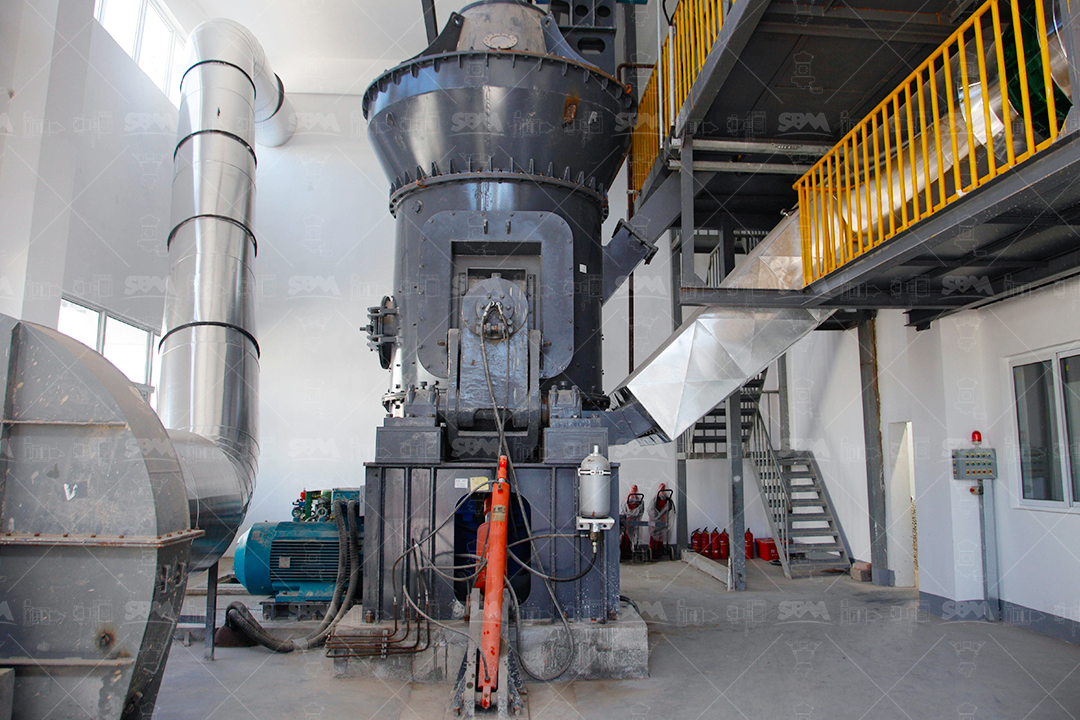
Vertical roller mills operate on a fundamentally different principle than ball mills. Material is ground between a rotating grinding table and stationary rollers, with hot gas passing through the mill to dry and transport the material. This integrated approach—combining grinding, drying, and classification—yields several key benefits for fly ash processing:
1. Superior Fineness and Particle Size Distribution
One of the most significant advantages of VRM technology is its ability to achieve high fineness with a narrow particle size distribution. The LM vertical roller mill, for instance, can produce fly ash with fineness ranging from 30 to 400 mesh (or even finer with the LUM ultrafine vertical mill, up to 4000 mesh). The efficient vertical turbine classifier ensures precise cut points, eliminating coarse particles that would otherwise reduce reactivity. This results in a fly ash product with a higher proportion of spherical glassy particles, which act as excellent lubricants in concrete, improving workability and reducing water demand.
2. Enhanced Reactivity and Pozzolanic Activity
Finer fly ash particles have a greater surface area, accelerating the pozzolanic reaction with calcium hydroxide to form additional calcium silicate hydrate (C-S-H) gel. This translates to higher early-age and long-term strength in concrete. VRM-ground fly ash typically exhibits a higher strength activity index compared to ball-mill-ground ash, allowing for greater cement replacement without compromising performance. This not only reduces material costs but also lowers the carbon footprint of concrete production.
3. Reduced Unburned Carbon Content
Unburned carbon in fly ash can adsorb air-entraining agents, leading to inadequate air entrainment and poor freeze-thaw durability in concrete. VRM technology, with its efficient classification and gentle grinding action, helps minimize the loss on ignition (LOI) by rejecting coarse carbon particles. The result is a cleaner, more consistent fly ash that performs reliably in concrete mixes.
4. Energy Efficiency and Low Operating Costs
Compared to ball mills, vertical roller mills consume 30% to 40% less energy per ton of product. The grinding rollers do not contact the grinding table directly, reducing wear and extending service life. The LM vertical roller mill features an integrated system that combines crushing, drying, grinding, powder separation, and transportation, resulting in a compact layout that occupies about 50% of the floor space of a ball-milling system. This can be arranged outdoors, significantly reducing investment costs. Additionally, the automatic control system enables remote and local control, optimizing grinding pressure and mill speed for stable operation and lower labor costs.
5. Environmental Compliance and Dust Control
VRMs operate under negative pressure with a fully sealed system, preventing dust spillover and meeting stringent environmental standards. The low vibration and noise levels further contribute to a safer, cleaner workplace. For power plants and fly ash processing facilities, this is a crucial factor in complying with local regulations and achieving sustainability goals.
SBM Machinery: A Trusted Partner in Fly Ash Grinding
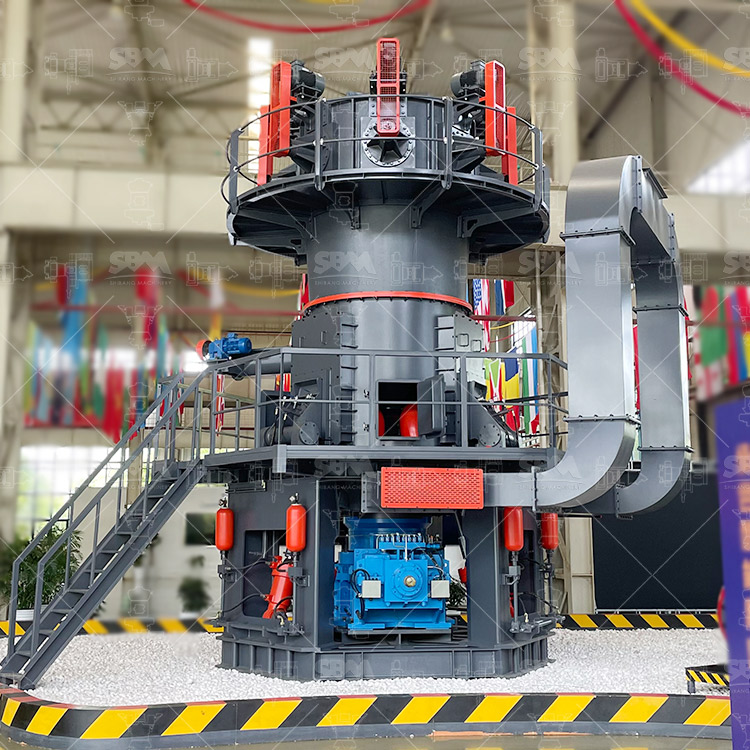
Shanghai SBM Machinery Equipment Co., Ltd. (SBM Machinery) is a total solution provider for grinding equipment, offering clients everything from individual units to complete grinding systems. With expertise spanning the entire mineral processing workflow, SBM has served over 180 countries and regions, making it the preferred choice for customers in the global powder processing industry. Our equipment is widely used in power generation, building materials, mining, metallurgy, chemicals, and non-metallic minerals, including environmental desulfurization limestone powder preparation, large-scale non-metallic mineral powder processing, heavy calcium carbonate (GCC) processing, coal powder preparation, petroleum coke grinding, slag micro-powder production, and new energy materials.
For fly ash processing, SBM offers two flagship vertical roller mills:
LM Vertical Roller Mill
The LM Vertical Roller Mill is our newly-launched product designed to address the technical issues of low output and high energy consumption in ordinary grinding mills. It is developed based on years of production and development experience, analyzing the strengths and weaknesses of both foreign and domestic products. Its performance has entered the leading level among international products of its kind. The LM mill features:
- Small Comprehensive Investment: Integrated functions of crushing, drying, grinding, powder separating, and transportation with a simple system and compact layout, occupying about 50% of the floor space of a ball-milling system. It can be arranged outdoors, greatly reducing investment costs.
- Low Operating Costs: Less wear because the roller does not contact the grinding plate directly, and both are made of high-quality materials. High efficiency with lower energy consumption (30%–40% lower than ball-milling systems).
- Automatic Control System: Expert automatic control system with free switching between remote and local control for easy operation and labor cost savings.
- High Environmental Protection Standard: Stable operation with little vibration, low noise, fully sealed system under negative pressure, free of dust spillover, and environmentally friendly with emissions meeting national standards.
With input size of 0–50mm, output size of 30–400 mesh, and capacity of 3–400 tph, the LM mill is ideal for large-scale fly ash grinding.
LUM Ultrafine Vertical Mill
For applications requiring ultrafine fly ash, the LUM Ultrafine Vertical Mill integrates powder grinding, separation, and transportation. It is designed with Taiwan’s grinding roller technology and Germany’s powder separating technology, making it a professional medium and high-end processing equipment. The LUM mill is mainly used for ultrafine grinding of calcite, marble, limestone, talc, dolomite, barite, kaolin, wollastonite, gypsum, feldspar, pyrophyllite, and other non-metallic mineral ores. Key features include:
- High Efficiency & High Quality of Finished Products: Unique grinding curves of the roller shell and lining plate based on ultrafine pulverization principles, making it easier to form a material bed, improving grinding efficiency, and increasing the proportion of finished products from primary grinding.
- Advanced Separation Technology & Energy Efficiency: Multi-rotor powder classifiers allow customized finished product fineness with no low-grade material. PLC control system manages grinding pressure, rotating speed of grinding disc, and classifier speed.
- Intelligentized Control System & Stable Operation: PLC/DCS automatic control for pressure adjustment ensures accurate control of grinding pressure, high efficiency, and stable operation. Remote control and frequency-conversion speed regulation enable flexible use.
- Environmentally-friendly: Special structural design and operating principle ensure small vibration and low noise. Fully sealed system under negative pressure prevents powder and dust outflow, meeting national environmental protection requirements.
With input size of 0–20mm, output size of 325–4000 mesh, and capacity of 10–70 tph, the LUM mill is perfect for producing high-performance ultrafine fly ash.
Real-World Impact: Enhancing Concrete Performance
When fly ash is processed with SBM’s vertical roller mills, the benefits for concrete are tangible. Concrete producers report improved workability, reduced water demand, higher compressive strengths, and better durability. For example, a power plant in Southeast Asia replaced its ball mill with an LM vertical roller mill and achieved a 35% reduction in energy consumption while improving fly ash fineness from 300 m²/kg to 500 m²/kg. The resulting fly ash was used in a major infrastructure project, where concrete with 30% fly ash replacement showed a 28-day strength increase of 15% compared to the previous mix. In another case, a concrete manufacturer in Europe used LUM ultrafine mill to produce fly ash with D97 ≤ 5 μm, enabling 50% cement replacement without compromising early strength.
These improvements stem from the fundamental advantages of VRM technology: precise particle size control, minimal contamination, and consistent product quality. By investing in advanced grinding equipment, concrete producers can reduce costs, enhance performance, and contribute to sustainable construction practices.
Choosing the Right Vertical Roller Mill for Fly Ash
Selecting the appropriate vertical roller mill depends on several factors, including desired fineness, throughput, available space, and budget. The LM vertical roller mill is suitable for medium to large-scale operations requiring 30–400 mesh fly ash with capacities up to 400 tph. It excels in drying high-moisture fly ash and can handle varying feed sizes. The LUM ultrafine vertical mill is ideal for producing ultrafine fly ash (325–4000 mesh) with strict quality requirements, especially for high-performance concrete and specialty applications. Both mills feature SBM’s commitment to reliability, energy efficiency, and environmental protection.
In addition to vertical roller mills, SBM offers a range of other grinding equipment, including the MTW European Trapezium Mill, SCM Ultrafine Mill, and Ball Mill, to meet diverse processing needs. However, for fly ash upgrading, vertical roller mills represent the state-of-the-art solution.
Frequently Asked Questions (FAQ)
1. What fineness can I achieve with SBM’s vertical roller mills for fly ash, and how does it affect concrete strength?
SBM’s LM vertical roller mill can produce fly ash from 30 to 400 mesh, while the LUM ultrafine vertical mill can achieve 325 to 4000 mesh (D97 ≤ 5 μm). Finer fly ash significantly increases pozzolanic reactivity, leading to higher early and long-term concrete strengths. For optimal performance, we recommend a fineness of at least 400 m²/kg (approximately 325 mesh) for general concrete, and finer for high-performance applications.
2. How does your vertical roller mill handle high-moisture fly ash?
Both the LM and LUM mills are designed with integrated drying functions. Hot gas is introduced into the mill, and the material is dried while being ground. The LM mill can handle fly ash with moisture content up to 15% (depending on the heat source), eliminating the need for separate drying equipment. This reduces capital costs and simplifies the process flow.
3. What are the maintenance requirements and wear part lifespan?
SBM’s vertical roller mills are engineered for low maintenance. The grinding rollers and table are made of high-quality wear-resistant materials, and the rollers do not contact the table directly, minimizing wear. The unique wear-proof perching knife design (in MTW mill) and combined-type shovel blade further reduce operating costs. Typically, roller and table liners last 8,000–12,000 hours, depending on feed abrasiveness. The automatic lubrication system ensures smooth operation and extends bearing life.
4. Can I use your vertical roller mill to grind other materials besides fly ash?
Absolutely. SBM’s LM and LUM vertical roller mills are versatile and can process a wide range of materials, including limestone, calcite, marble, barite, kaolin, gypsum, slag, petroleum coke, and coal. The LM mill is widely used in cement, chemical, coal, and electric power industries, while the LUM mill excels in non-metallic mineral ultrafine grinding. This flexibility allows you to diversify your product line and maximize return on investment.
5. What support does SBM provide for installation and after-sales service?
SBM Machinery offers comprehensive support, including customized process design, equipment manufacturing, installation supervision, commissioning, and operator training. With a global service network covering over 180 countries, we provide timely spare parts supply and technical assistance. Our expert team can also conduct on-site audits and optimization to ensure your grinding system operates at peak efficiency. We are committed to being your long-term partner in powder processing.
By choosing SBM’s vertical roller mill technology, you are not just investing in equipment—you are investing in superior fly ash quality, enhanced concrete performance, and a sustainable future. Contact us today to learn how we can tailor a solution for your specific needs.


