

Deep processing flow of spodumene with grinding mill
Published: 2025-03-17
Spodumene, a lithium aluminum inosilicate mineral, has become one of the most strategically important industrial minerals in the global transition toward clean energy. As the primary hard-rock source of lithium, spodumene must undergo a carefully controlled comminution and concentration sequence before it can be converted into battery-grade lithium carbonate or lithium hydroxide. The deep processing flow of spodumene with a grinding mill typically begins with crushing and screening, followed by grinding to liberate lithium-bearing minerals from gangue, then gravity or flotation separation, and finally dewatering and drying. Each stage places distinct demands on particle size distribution, energy efficiency, and equipment wear resistance. Because spodumene is relatively hard and often associated with quartz, feldspar, and mica, the grinding circuit is frequently the bottleneck that determines overall recovery and operating cost. This article outlines the complete deep processing flow, explains how different grinding mill technologies fit different stages, and addresses the practical pain points that plant managers and project investors encounter when designing or optimizing a spodumene concentrator. It also provides guidance on equipment selection, process control, and maintenance strategies that support stable, high-yield production over the long term.
Understanding the Mineralogy and Processing Objectives
Spodumene occurs in pegmatite deposits, usually alongside quartz, albite, muscovite, and accessory minerals such as tantalite and beryl. The lithium content in raw ore is generally low, often between 0.8% and 2.0% Li2O, which means that a large volume of material must be processed to produce a marketable concentrate. The objective of deep processing is to liberate spodumene crystals from the surrounding gangue and then upgrade the Li2O grade to a level suitable for chemical conversion, typically above 5.5% Li2O for concentrate destined for the lithium carbonate route. Liberation is achieved primarily through size reduction. However, excessive grinding creates fines that are difficult to recover by gravity or flotation and can also lead to slime coatings that interfere with surface chemistry. Therefore, the grinding stage must achieve an optimal liberation size rather than simply reducing the material as fine as possible. Depending on the deposit, the target grind size for spodumene beneficiation is often in the range of 0.5 mm to 0.075 mm, with the exact cut point determined by liberation analysis and downstream separation performance. This is why the choice of grinding equipment, circuit configuration, and classification efficiency directly affects the economic viability of the entire project.
Stage One: Crushing and Pre-Concentration
The deep processing flow begins with run-of-mine ore delivery to the crushing circuit. Because spodumene pegmatite can be highly abrasive and may contain large lumps, primary crushing is usually performed by a jaw crusher or gyratory crusher, followed by secondary and tertiary crushing using cone crushers or impact crushers. The goal is to reduce the ore to a size suitable for the grinding mill feed, commonly below 10 to 15 mm. In some modern plants, dense medium separation or sensor-based ore sorting is applied before grinding to reject coarse gangue and upgrade the feed grade. This pre-concentration step reduces the tonnage entering the grinding circuit and therefore lowers energy consumption and wear costs. When ore sorting is not feasible, the crushing circuit still plays a critical role in preparing a consistent feed size, because variations in feed size can cause unstable operation in the grinding mill and reduce the efficiency of classification. Screen selection and closed-circuit crushing are therefore important to ensure that the grinding mill receives a well-graded, controlled feed.
Stage Two: Grinding and Liberation
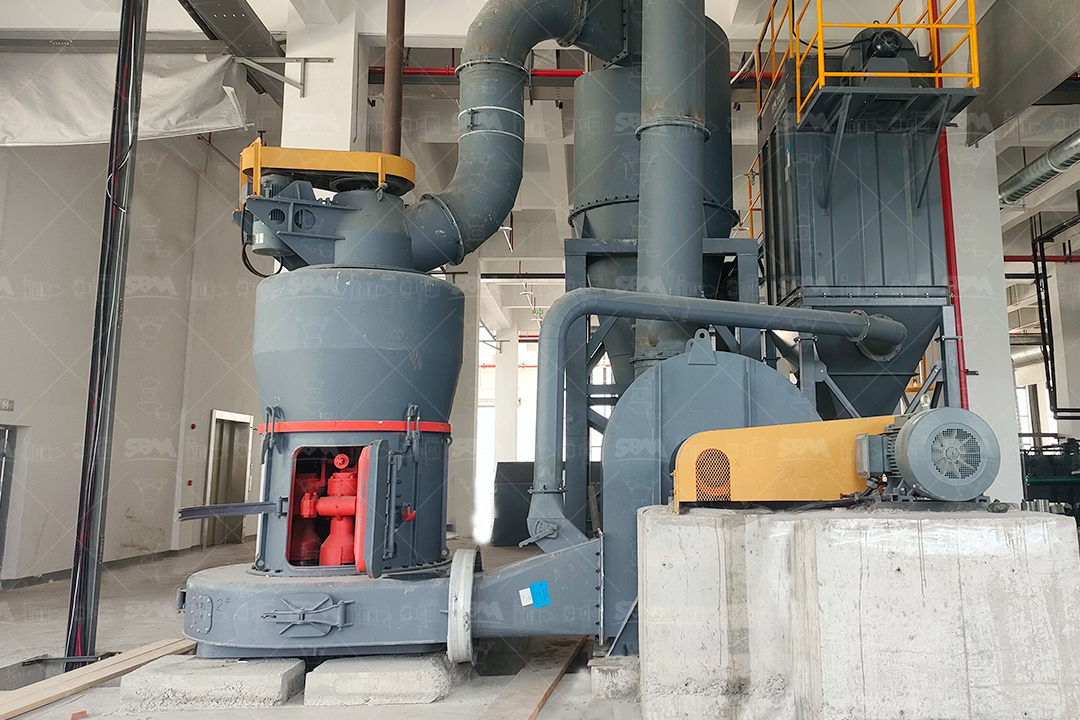
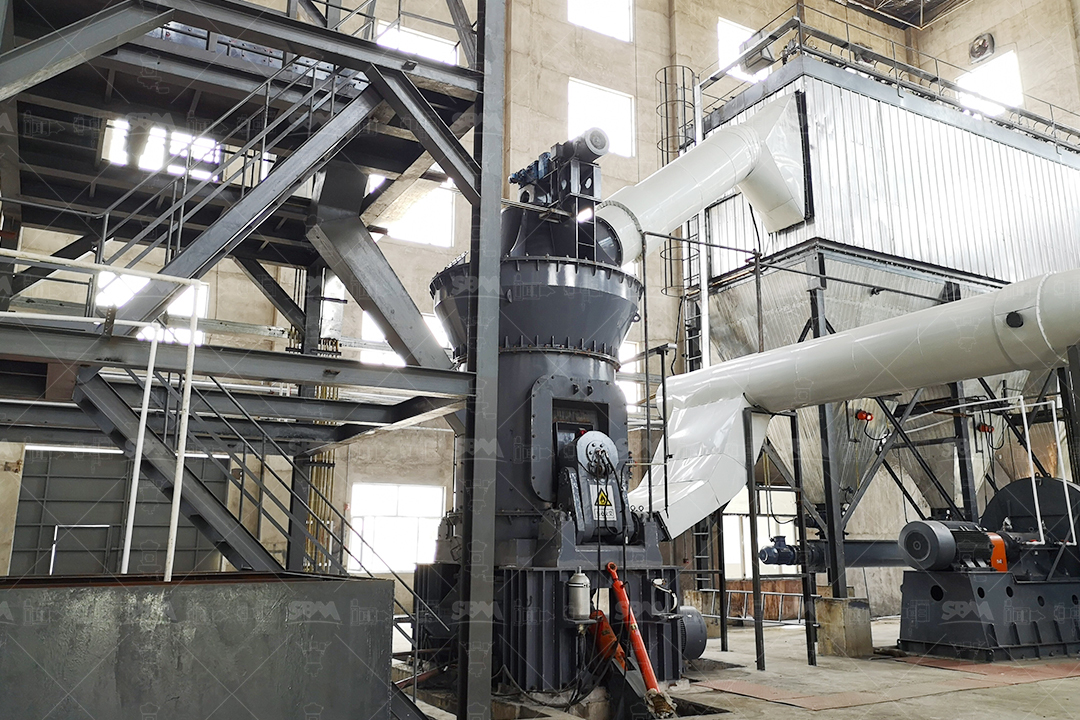
Grinding is the heart of the spodumene deep processing flow. It is where the ore is reduced to the target liberation size and where the majority of the plant's energy is consumed. The most common equipment choices for spodumene grinding include ball mills, rod mills, vertical roller mills, and ultrafine mills, depending on the required product fineness and throughput. For coarse liberation, a rod mill or autogenous mill may be used to avoid over-grinding. For finer liberation, a ball mill in closed circuit with a hydrocyclone or spiral classifier is widely applied. In recent years, vertical roller mills and European trapezium mills have gained attention for their ability to combine grinding, drying, and classification in a single compact unit. These mills can process feed sizes up to 50 mm and produce products in the range of 30 to 400 mesh, with capacities from a few tonnes per hour up to several hundred tonnes per hour. For ultrafine liberation, especially when the ore is finely disseminated, ultrafine mills and ultrafine vertical mills can reach product fineness of 325 to 4000 mesh, with one-pass fineness as fine as D97 less than 5 microns. The choice depends on the liberation curve of the specific ore body, the downstream separation method, and the required concentrate grade.
In practice, many spodumene concentrators use a two-stage grinding circuit. The first stage is a coarse grind to liberate the majority of spodumene from the coarse gangue, followed by gravity separation or flotation to remove a portion of the waste. The second stage is a finer grind of the rougher concentrate or middlings to further liberate locked particles. This staged approach reduces over-grinding of already liberated material and improves overall recovery. Classification equipment must be matched to the mill discharge to ensure that only fully liberated particles report to the overflow and that coarse particles are returned to the mill for further grinding. High-efficiency classifiers, such as the vertical turbine classifier used in ultrafine mills, can provide accurate cut sizes and reduce the circulation load, which in turn lowers energy consumption per tonne of product.
Stage Three: Separation and Concentration
After grinding, the liberated spodumene particles are separated from gangue minerals. The two most common methods are gravity separation and froth flotation. Gravity separation, using spirals, shaking tables, or dense medium cyclones, is effective for coarse spodumene because of its relatively high specific gravity compared with quartz and feldspar. It is often used as a pre-concentration step before flotation. Flotation is the dominant method for fine spodumene recovery. Because spodumene has a similar surface chemistry to some silicate gangue minerals, selective collectors and depressants are required to achieve a high-grade concentrate. The flotation circuit typically includes roughing, cleaning, and scavenging stages, with regrinding of middlings when necessary. The performance of flotation is strongly influenced by the particle size distribution produced by the grinding mill. If the grind is too coarse, valuable minerals remain locked in composite particles and report to tailings. If the grind is too fine, slimes are generated that consume reagents and reduce flotation selectivity. Therefore, the grinding and classification circuit must be operated within a narrow window to provide the optimal feed for flotation.
Magnetic separation may also be applied to remove iron-bearing minerals such as mica and tourmaline, which can lower the concentrate grade and affect downstream chemical processing. In some flowsheets, gravity concentration is used to produce a coarse concentrate, while flotation recovers the finer fraction. The combination of gravity and flotation often improves overall lithium recovery and reduces reagent consumption. The key is to design the separation circuit around the liberation characteristics of the ore and the particle size distribution delivered by the grinding mill.
Stage Four: Dewatering, Drying, and Product Handling
The final stage of the deep processing flow involves dewatering and drying the concentrate. Thickeners and filters are used to remove water from the flotation concentrate, and rotary dryers or fluidized bed dryers are used to reduce the moisture content to a level suitable for transport and chemical conversion. In some plants, the concentrate is also subjected to calcination at high temperature to convert alpha-spodumene to beta-spodumene, a phase change that makes the lithium more amenable to acid roasting or alkaline leaching. Calcination is typically carried out in a rotary kiln or a fluidized bed reactor, and the product is then cooled and milled again to the final specification. The entire deep processing flow is therefore not a single grinding step but a sequence of integrated unit operations, each of which must be optimized to achieve the target recovery and grade.
Key Pain Points in Spodumene Grinding and How to Address Them
One of the most common pain points reported by spodumene processors is high wear rate of grinding media and liners. Spodumene ore is hard and abrasive, and the presence of quartz and feldspar accelerates wear. This leads to frequent replacement of wear parts, increased maintenance downtime, and higher operating costs. To address this, mills such as the European trapezium mill use a combined-type shovel blade design that allows only the blade to be replaced during maintenance, reducing the cost of wearing parts. The curved shovel blades also change the feeding angle and prolong the service life of the roller and ring. Vertical roller mills, on the other hand, use a grinding principle in which the roller does not contact the grinding plate directly, and both are made of high-quality materials, resulting in longer service life and less wear. Ultrafine mills with heavy rotor design and special roller and ring materials can achieve durability several times higher than conventional mills.
Another frequent pain point is high energy consumption. Grinding is inherently energy-intensive, and spodumene plants often face rising electricity costs. Vertical roller mills can reduce energy consumption by 30% to 40% compared with traditional ball milling systems because the grinding rollers directly grind material on the grinding plate and the system integrates crushing, drying, grinding, powder separation, and transportation. Ultrafine mills also offer high output and low energy consumption, with capacity more than twice that of jet mills while using 30% less energy. For plants that need to grind to very fine sizes, the energy savings can be substantial.
A third pain point is inconsistent product fineness and poor classification efficiency. If the classifier is not well matched to the mill, coarse particles may report to the overflow, or fine particles may be returned to the mill and over-ground. This leads to unstable flotation performance and lower recovery. Modern mills are equipped with advanced classification systems. For example, the ultrafine mill uses a high-efficiency vertical turbine powder classifier that achieves accurate cut size and prevents coarse powder from spilling into the fine product. The ultrafine vertical mill adopts a multi-rotor classifier principle, allowing the finished product fineness to be customized within a selected range with no low-grade material in existence. Frequency-conversion control allows convenient adjustment of product fineness, and automatic feedback ensures fast and stable conversion of finished products.
A fourth pain point is dust emission and environmental compliance. Spodumene processing generates fine dust that can be harmful to workers and the environment. Regulatory requirements are becoming stricter, and plants that fail to control dust may face fines or shutdowns. Modern grinding mills are designed with sealed systems and negative pressure operation. For example, the ultrafine mill uses an efficient double powder collecting method with powder collectors and pulse dust collectors, achieving dust collection far higher than international standards. The optimized sound insulation room and muffler effectively prevent the spread of equipment noise. Vertical roller mills operate stably with little vibration and low noise, and the whole system is sealed and works under negative pressure, free of dust spillover, with emissions meeting national standards.
A fifth pain point is labor and operational complexity. Many spodumene projects are located in remote areas where skilled labor is scarce. Manual control of grinding circuits can lead to inconsistent operation and costly mistakes. Modern mills are equipped with automatic control systems that enable remote and local control. The vertical roller mill is provided with an expert automatic control system that realizes free switching between remote and local control, achieving easy operation and saving labor costs. The ultrafine vertical mill uses a PLC/DCS automatic control system for pressure adjustment of the grinding roller, ensuring accurate control of grinding pressure, high efficiency, and stable operation. Frequency-conversion speed regulation enables the mill to be used for different materials and product specifications. These automation features reduce the burden on operators and help maintain stable production.
Selecting the Right Grinding Mill for Spodumene Deep Processing
Selecting the right grinding mill requires a careful evaluation of ore characteristics, target product size, throughput, and downstream process requirements. For coarse liberation and high capacity, a vertical roller mill or a European trapezium mill may be the best choice. The European trapezium mill is suitable for feed sizes up to 50 mm and can produce products from 30 to 400 mesh with capacities from 3 to 40 tonnes per hour. It features a cone gear whole transmission, inner oil absorption lubrication system, and arc air flue, which together provide high transmission efficiency and low maintenance costs. The volute design improves wind-driven transmission efficiency and reduces material maintenance costs. For medium to large capacity plants, the vertical roller mill offers capacities from 3 to 400 tonnes per hour, with product fineness from 30 to 400 mesh. It integrates crushing, drying, grinding, powder separation, and transportation, and its floor space is about 50% of that of a ball milling system, allowing outdoor arrangement and reduced investment costs.
For ultrafine grinding, the ultrafine mill and ultrafine vertical mill are appropriate. The ultrafine mill can adjust product fineness from 325 to 2500 mesh, with one-pass fineness reaching D97 less than 5 microns. It features high output, low energy consumption, intelligent control, and environmental protection. The ultrafine vertical mill is designed for medium and high-end processing and can produce products from 325 to 4000 mesh with capacities from 10 to 70 tonnes per hour. It is suitable for non-metallic mineral ores such as calcite, marble, limestone, talc, dolomite, barite, kaolin, wollastonite, gypsum, feldspar, and pyrophyllite, and can also be applied to spodumene when fine liberation is required. Its grinding curves for the roller shell and lining plate are uniquely designed based on ultrafine pulverization principles, making it easier to form a material bed, improving grinding efficiency, and increasing the proportion of finished products from the primary grinding.
Ball mills remain a mature and reliable option for many spodumene plants, especially where the ore is relatively coarse or where the plant has existing ball mill infrastructure. However, conventional ball mills suffer from high wear of metal balls and high energy consumption. Optimized ball mills use improved structure design and new materials to reduce spare parts costs, and various types are available for different requirements, such as dry ball mills for common powder and wet ball mills for mineral dressing. When considering a new project or an expansion, it is advisable to compare the total cost of ownership, including energy, wear parts, maintenance, and product quality, rather than focusing only on capital cost.
Process Control and Optimization
Once the grinding mill is installed, process control is essential to maintain stable operation and consistent product quality. Key variables include feed rate, feed size distribution, grinding pressure, classifier speed, and circulating load. In a vertical roller mill, the grinding pressure and the rotating speed of the grinding disc and classifier can be adjusted to optimize fineness and throughput. The automatic control system can maintain these parameters within set points, reducing variability. In a ball mill circuit, the feed rate, water addition, and classifier overflow density are critical. Online particle size analyzers can provide real-time feedback, allowing operators to adjust the mill feed and classifier speed to keep the product size within specification. Regular sampling and laboratory analysis are also important to verify that the liberation size is being achieved and that the downstream separation circuit is performing as expected.
Preventive maintenance is another key factor in long-term success. Wear parts should be inspected on a scheduled basis, and replacement should be planned to avoid unplanned downtime. Lubrication systems must be checked regularly, especially in mills with inner oil absorption lubrication. The grinding chamber should be inspected for buildup or damage, and the classifier should be cleaned to maintain accurate cut size. Training operators on the specific equipment and process is also important, because even the most advanced mill can underperform if it is not operated correctly. By combining proper equipment selection, automatic control, and disciplined maintenance, spodumene processors can achieve high recovery, low operating cost, and consistent product quality.
Conclusion
The deep processing flow of spodumene with a grinding mill is a complex, multi-stage operation that requires careful integration of crushing, grinding, classification, separation, and dewatering. The grinding stage is particularly critical because it determines liberation, energy consumption, and the quality of the feed to downstream separation. By selecting the appropriate mill technology, such as a European trapezium mill, vertical roller mill, ultrafine mill, ultrafine vertical mill, or optimized ball mill, and by implementing automatic control and preventive maintenance, processors can overcome common pain points such as high wear, high energy consumption, inconsistent fineness, dust emission, and labor complexity. As the demand for lithium continues to grow, efficient and reliable spodumene processing will remain a key factor in meeting global battery material supply needs.
Frequently Asked Questions
1. What is the ideal product size for spodumene grinding before flotation?
The ideal product size depends on the liberation characteristics of the specific ore. In many spodumene deposits, the target grind size for flotation is between 0.5 mm and 0.075 mm. The exact cut point should be determined by liberation analysis and flotation test work. Grinding finer than necessary can create slimes that reduce flotation selectivity and increase reagent consumption, while grinding too coarse can leave valuable minerals locked in composite particles and lower recovery. A staged grinding approach with intermediate separation is often used to balance liberation and over-grinding.
2. How can I reduce wear costs in spodumene grinding?
Wear costs can be reduced by selecting mills with wear-resistant designs and materials. For example, the European trapezium mill uses a combined-type shovel blade that allows only the blade to be replaced during maintenance, and its curved shovel blades change the feeding angle to prolong the service life of the roller and ring. Vertical roller mills use high-quality materials for the roller and grinding plate, and the roller does not contact the grinding plate directly, resulting in less wear. Ultrafine mills with heavy rotor design and special roller and ring materials can achieve durability several times higher than conventional mills. Regular inspection and planned replacement also help avoid excessive wear and unplanned downtime.
3. What causes inconsistent product fineness in spodumene grinding, and how can it be fixed?
Inconsistent product fineness is often caused by poor classification efficiency, variable feed size, or unstable mill operation. If the classifier is not well matched to the mill, coarse particles may report to the overflow, or fine particles may be returned to the mill and over-ground. Modern mills with advanced classifiers, such as the high-efficiency vertical turbine classifier in the ultrafine mill or the multi-rotor classifier in the ultrafine vertical mill, can provide accurate cut size and stable product fineness. Automatic control systems that adjust grinding pressure and classifier speed in real time also help maintain consistency. Regular sampling and laboratory analysis are recommended to verify product size and adjust operating parameters.
4. How can spodumene plants control dust and noise to meet environmental regulations?
Dust and noise control can be achieved by selecting mills designed with sealed systems and negative pressure operation. For example, the ultrafine mill uses an efficient double powder collecting method with powder collectors and pulse dust collectors, achieving dust collection far higher than international standards. The optimized sound insulation room and muffler effectively prevent the spread of equipment noise. Vertical roller mills operate stably with little vibration and low noise, and the whole system is sealed and works under negative pressure, free of dust spillover, with emissions meeting national standards. Proper maintenance of seals, filters, and dust collectors is also important to ensure ongoing compliance.
5. What automation features are available for spodumene grinding mills?
Modern grinding mills offer various automation features to improve operation and reduce labor costs. The vertical roller mill is equipped with an expert automatic control system that enables free switching between remote and local control, achieving easy operation and saving labor costs. The ultrafine vertical mill uses a PLC/DCS automatic control system for pressure adjustment of the grinding roller, ensuring accurate control of grinding pressure, high efficiency, and stable operation. Frequency-conversion speed regulation allows the mill to be used for different materials and product specifications. Automatic feedback systems ensure fast and stable conversion of finished products. These features help maintain consistent product quality and reduce the need for manual intervention.


