

Applications and environmental value of vertical mill in power industry
Published: March 15, 2025
As the global power industry accelerates its transition toward cleaner, more efficient energy production, the role of advanced grinding equipment has become increasingly critical. Vertical mills, particularly those engineered for pulverizing and processing applications, have emerged as indispensable assets in modern power plants. Among the various types available, vertical roller mills (VRMs) and ultrafine vertical mills stand out for their ability to integrate grinding, drying, powder separation, and transportation into a single, compact system. For power generation facilities relying on coal, limestone, or other raw materials, these mills deliver substantial improvements in operational efficiency while significantly reducing environmental footprint. Shanghai SBM Machinery Equipment Co., Ltd., a total solution provider for grinding equipment with a global presence spanning over 180 countries and regions, has developed a range of vertical mills that directly address the power industry's dual demands: high-capacity output and stringent environmental compliance. This article explores the key applications of vertical mills in the power sector, their environmental advantages, and the technical features that make them the preferred choice for modern power plants. It also addresses common customer concerns through a series of frequently asked questions.
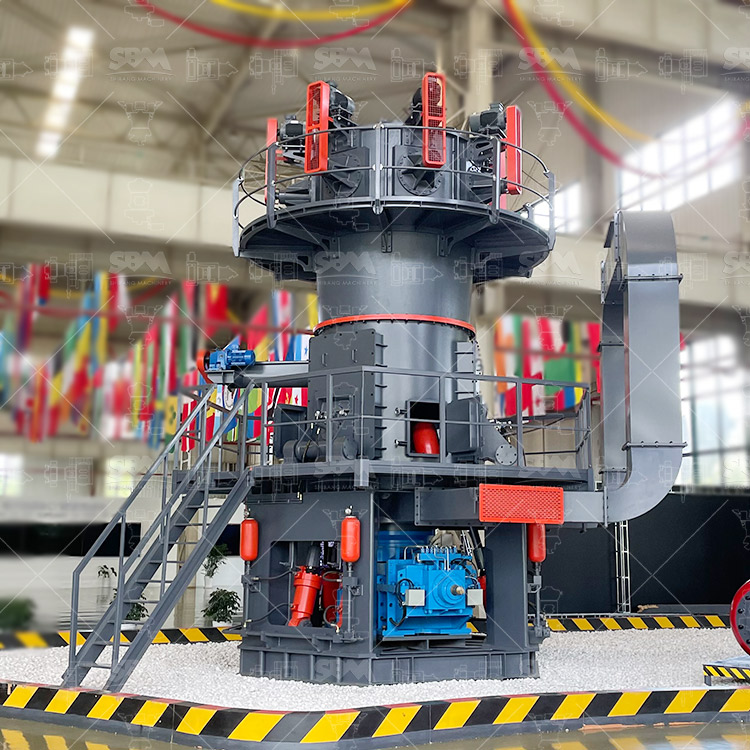
Core Applications of Vertical Mills in Power Generation
In the power industry, vertical mills are primarily deployed in three major areas: coal powder preparation, limestone powder preparation for flue gas desulfurization (FGD), and the processing of industrial by-products such as slag and petroleum coke. Each application places distinct demands on the grinding system, and vertical mills have proven uniquely capable of meeting them.
1. Coal Powder Preparation
Coal remains a dominant fuel source for power generation in many regions, and the efficiency of coal combustion depends heavily on the fineness and consistency of the pulverized coal. Vertical roller mills are widely used to grind coal to the required fineness (typically 30–400 mesh) with capacities ranging from 3 to 400 tph, depending on the model. SBM's LM Vertical Roller Mill, for instance, is specifically designed to handle the technical challenges of low output and high energy consumption that plague traditional mills. Its integrated drying function allows it to process coal with varying moisture content, eliminating the need for separate drying equipment. The mill's cone gear whole transmission and arc air duct design ensure stable operation and efficient material transport, even under the demanding, continuous operating conditions typical of power plants.
Moreover, the automatic control system featured in SBM's vertical mills enables remote and local control switching, which is essential for maintaining consistent coal fineness while adapting to load fluctuations in the boiler. This level of automation reduces labor costs and minimizes the risk of human error, a critical factor in large-scale power generation.
2. Limestone Powder Preparation for Flue Gas Desulfurization
Environmental regulations worldwide have made flue gas desulfurization a mandatory component of coal-fired power plants. Limestone powder is the most common reagent used in wet FGD systems, and its reactivity depends on particle size distribution and purity. Vertical mills are ideal for preparing limestone powder with the required fineness (typically 250–325 mesh or finer) at high throughput rates. SBM's MTW Series European Trapezium Mill, while not a vertical mill in the strictest sense, shares many design philosophies with VRMs and is often used in desulfurization limestone powder preparation. However, for larger capacities and higher efficiency, the LM Vertical Roller Mill is the preferred solution. Its ability to dry, grind, and classify limestone in a single unit reduces system complexity and footprint, which is particularly valuable in space-constrained power plant environments.
The environmental value here is twofold: the mill itself operates under negative pressure with a fully sealed system, preventing dust spillover and meeting national emission standards, while the resulting limestone powder enables effective SO₂ removal, reducing acid rain precursors and improving local air quality.
3. Slag and Petroleum Coke Grinding
As power plants increasingly co-process industrial by-products or switch to alternative fuels, the ability to grind materials such as blast furnace slag, steel slag, and petroleum coke becomes important. These materials are often abrasive and difficult to grind, leading to high wear rates in conventional mills. SBM's LM Vertical Roller Mill addresses this with a unique wear-proof perching knife design and combined-type shovel blades that can be replaced individually, reducing maintenance costs and downtime. The roller and grinding plate do not contact directly, and both are made of high-quality materials, resulting in longer service life and less wear. For slag micro-powder production—used as a supplementary cementitious material—the LM mill's high efficiency and drying capability ensure consistent product quality.
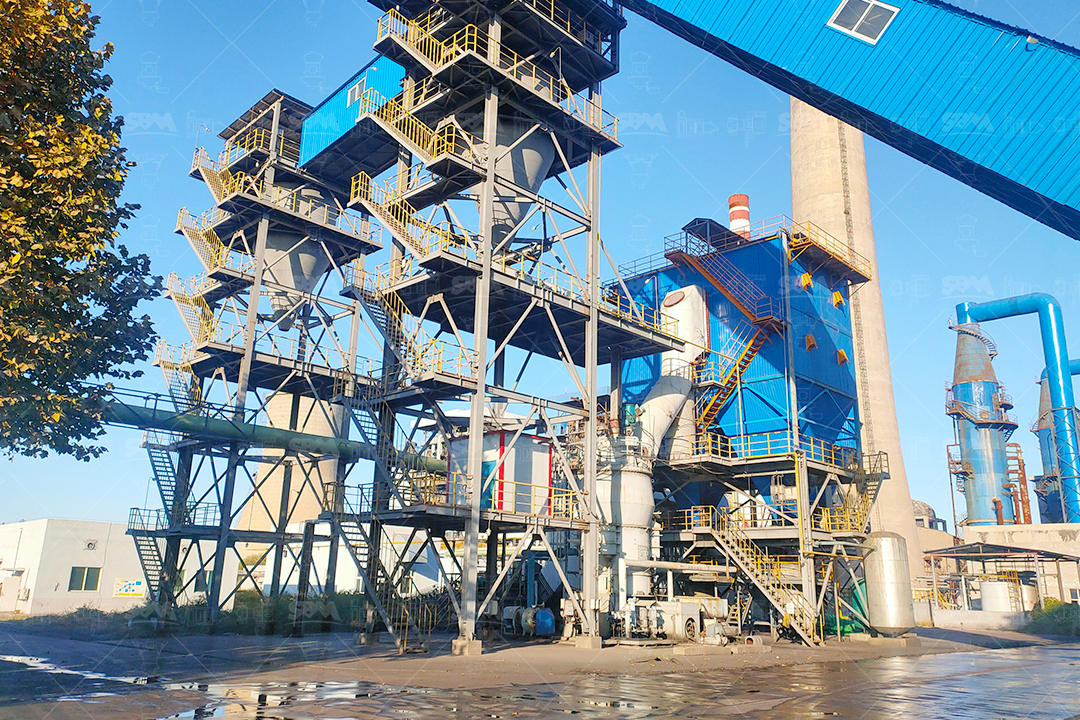
Environmental Value: Beyond Dust Control
The environmental benefits of vertical mills in the power industry extend far beyond simple dust collection. They encompass energy efficiency, reduced noise pollution, lower water consumption, and the ability to facilitate the circular economy through by-product utilization.
Energy Efficiency and Reduced Carbon Footprint
One of the most compelling environmental advantages of vertical mills is their significantly lower energy consumption compared to traditional ball mills. SBM's LM Vertical Roller Mill consumes 30% to 40% less energy than ball-milling systems of comparable capacity. This reduction directly translates into lower CO₂ emissions per ton of material processed. For a typical coal-fired power plant grinding hundreds of thousands of tons of coal or limestone annually, the energy savings can be substantial, contributing to both environmental targets and operational cost reductions.
The high grinding efficiency is achieved through the direct grinding of materials on the grinding plate by the rollers, combined with an efficient vertical turbine powder classifier that ensures accurate cutting size and no spillover of coarse powder. The frequency-conversion control allows convenient adjustment of fineness, optimizing the grinding process for specific materials and reducing wasted energy from over-grinding.
Noise and Vibration Reduction
Power plants are often located near residential areas, making noise pollution a sensitive issue. Vertical mills operate with little vibration and low noise, thanks to their stable structural design and balanced rotating components. SBM's ultrafine vertical mill, for example, features a heavy rotor design and tight test method, with the grinding chamber free of bearing screws, ensuring stable operation free of vibration after balance treatment. The optimized sound insulation room and muffler further prevent the spread of equipment noise. This makes vertical mills a neighbor-friendly choice for urban power plants.
Water Conservation and Closed-Loop Operation
Unlike wet grinding systems that require significant water input and generate slurry that must be dewatered, vertical mills operate dry. This eliminates water consumption for grinding and avoids the risk of water pollution from slurry runoff. The closed-loop operation, where the system works under negative pressure and all powder is collected by efficient powder collectors and pulse dust collectors, ensures that no dust escapes into the atmosphere. The double powder collecting method achieves dust collection efficiency far higher than international standards, making vertical mills an environmentally responsible choice even in regions with strict air quality regulations.
Facilitating Circular Economy
By enabling the efficient grinding of industrial by-products such as slag, fly ash, and petroleum coke, vertical mills help power plants and related industries divert waste from landfills and reduce the demand for virgin raw materials. Slag micro-powder produced by vertical mills can replace a portion of cement clinker in concrete, reducing the carbon intensity of construction materials. This aligns with the broader goals of the circular economy and sustainable development.
Technical Features That Drive Performance and Environmental Compliance
SBM's vertical mills incorporate a range of technical innovations that enhance both productivity and environmental performance. The cone gear whole transmission achieves higher transmission efficiency, saves space, and lowers investment costs. The arc air duct design minimizes air energy loss and ensures transportation efficiency, while the high-strength guard plate protects the working face of the air duct. The volute design improves wind-driven transmission efficiency and reduces maintenance costs. The automatic control system, including PLC/DCS for pressure adjustment of the grinding roller, ensures accurate control of grinding pressure, high efficiency, and stable operation. Remote control capability saves labor costs and allows for integration into plant-wide distributed control systems.
For ultrafine grinding needs, SBM's LUM Ultrafine Vertical Mill integrates Taiwan's grinding roller technology and Germany's powder separating technology. It is designed for medium and high-end processing of non-metallic minerals such as calcite, marble, limestone, talc, dolomite, barite, kaolin, wollastonite, gypsum, feldspar, and pyrophyllite. With output sizes ranging from 325 to 4000 mesh and capacities from 10 to 70 tph, it is suitable for power plants that require ultrafine limestone powder for advanced desulfurization or for processing additives.
Frequently Asked Questions
Q1: Our power plant needs to grind coal with high moisture content. Can a vertical mill handle this without separate drying equipment?
Yes. SBM's LM Vertical Roller Mill is designed with an integrated drying function. Hot air can be introduced into the mill to evaporate moisture while grinding. The system can handle coal with varying moisture levels, eliminating the need for a separate dryer and reducing capital and operating costs. The drying, grinding, and powder separation processes occur simultaneously, ensuring consistent product quality.
Q2: We are concerned about dust emissions. How does the vertical mill prevent dust from escaping?
The entire system operates under negative pressure and is fully sealed. Dust is collected by efficient powder collectors and pulse dust collectors using a double powder collecting method. This achieves dust collection efficiency far higher than international standards. The mill operates with little vibration, and the optimized sound insulation room and muffler further prevent noise and dust spread. Emission meets national standards, making it suitable for even the strictest environmental regulations.
Q3: What about wear parts? Our current mill requires frequent replacement of grinding elements, which drives up maintenance costs.
SBM's vertical mills feature a unique wear-proof perching knife design with combined-type shovel blades. Only the blade needs to be replaced during maintenance, not the entire shovel. The curved shovel blades change the feeding angle, prolonging the service life of the roller and ring. The roller and grinding plate are made of high-quality materials and do not contact directly, resulting in longer service life and less wear. For ultrafine mills, the roller and ring are made of special material, so durability is several times higher.
Q4: Can the vertical mill be controlled remotely and integrated into our plant's DCS?
Yes. SBM's vertical mills are equipped with an expert automatic control system that allows free switching between remote and local control. The pressure adjustment of the grinding roller uses a PLC/DCS automatic control system, ensuring accurate control of grinding pressure. Major parameters like grinding pressure, rotating speed of the grinding disc, and speed of the classifier can be monitored and adjusted. This enables easy integration into plant-wide distributed control systems, saving labor costs and improving operational stability.
Q5: We need to process limestone for desulfurization, but our space is limited. Is the vertical mill compact enough?
Absolutely. The LM Vertical Roller Mill integrates crushing, drying, grinding, powder separating, and transportation functions into a single unit with a simple system and compact layout. Its floor space is about 50% of that of a ball-milling system of comparable capacity. It can be arranged outdoors, greatly reducing investment costs. The compact design makes it ideal for power plants with limited available space, whether for new installations or retrofits.
In conclusion, vertical mills have become a cornerstone technology for the power industry's transition to cleaner, more efficient operations. Their ability to handle diverse materials—from coal to limestone to slag—while minimizing energy consumption, dust emissions, and noise makes them an environmentally sound and economically viable choice. With SBM Machinery's extensive experience and global service network, power plants can leverage these advanced mills to meet both production targets and environmental goals.


