

How does the fineness of calcium carbonate powder affect applications? full disclosure of raymond mill adjustment techniques
Published: March 18, 2025
Calcium carbonate powder fineness is not a cosmetic specification—it is a functional parameter that determines whether the material performs as a filler, a functional additive, or a processing aid in paints, plastics, paper, sealants, pharmaceuticals, and construction systems. In practice, the same limestone source can become a low-value extender or a high-performance ingredient depending on its particle size distribution, top cut, and the grinding system's ability to hold that specification consistently. This article explains how fineness changes application behavior, then discloses the Raymond mill adjustment techniques that actually move the needle on fineness control: classifier speed, air volume and damper position, feed rate and feed size, roller-to-ring clearance and grinding pressure, blade configuration, and system temperature and circulating load. It also clarifies where Raymond mills fit and where they do not—so you can avoid the common mistake of forcing a 400-mesh machine to compete with an ultrafine mill. The goal is practical: help you choose the right fineness target, adjust the mill with confidence, and keep product quality stable across shifts and feed variations.
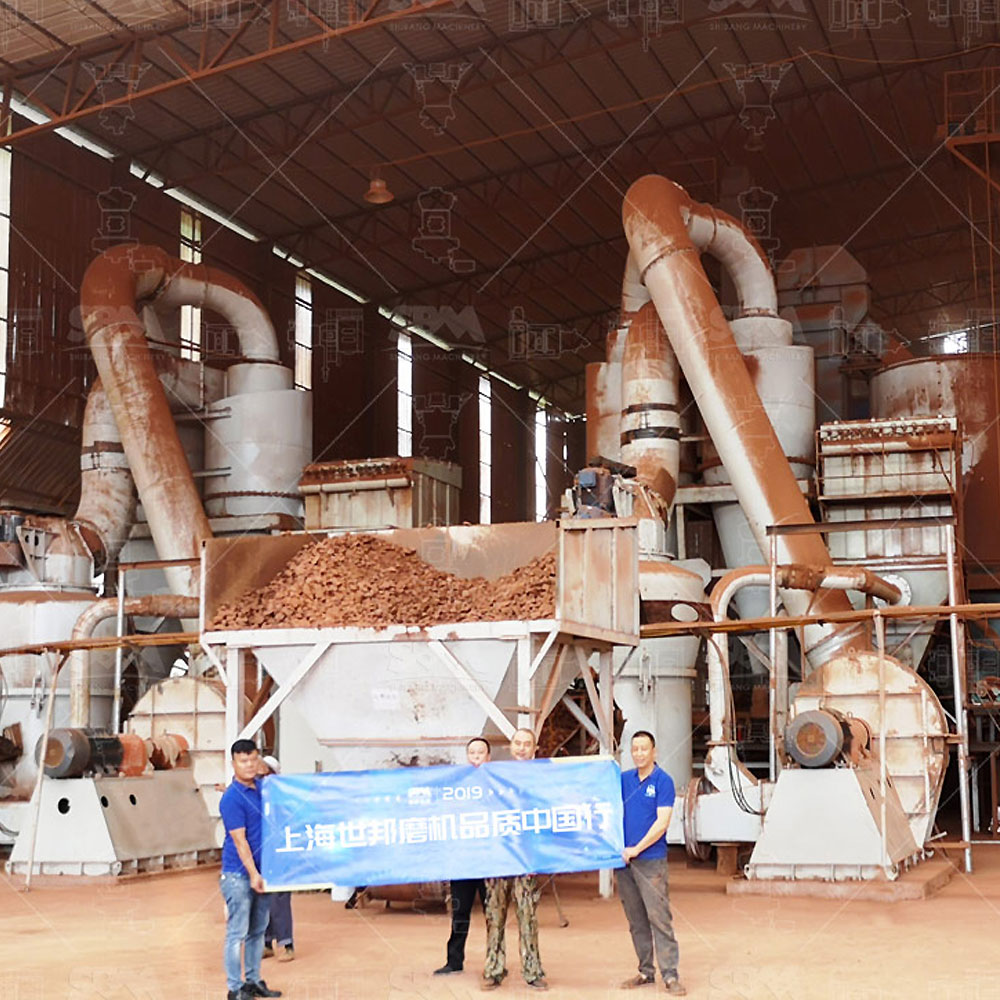
Why Fineness Is a Performance Parameter, Not Just a Number
In calcium carbonate processing, fineness is usually expressed as mesh (or the corresponding micron size) and is often paired with a top-cut specification such as D97. Two powders can share the same median particle size (D50) yet behave completely differently in a formulation if one has a coarse tail and the other is narrowly distributed. That is why experienced buyers ask for particle size distribution (PSD), not only “mesh.”
Fineness influences four application-critical behaviors:
- Surface area and reactivity: Finer particles expose more surface, which can improve dispersion, bonding, and chemical interaction in sealants and coatings.
- Packing and rheology: In plastics and PVC, PSD affects melt viscosity, impact strength, and surface finish. A well-graded filler can increase loading and reduce resin demand.
- Optical properties: In paints and paper coatings, finer and more uniform particles improve opacity, gloss, and brightness—up to a point. Over-grinding can increase oil absorption and hurt gloss.
- Mechanical performance: In rubber and adhesives, fine particles can reinforce, but excessive fines may raise viscosity and reduce flexibility.
The practical takeaway: define fineness by application, then choose equipment and adjustment strategy that can hold that fineness with minimal variability.
Application-by-Application: How Fineness Changes Performance
Paints, Coatings, and Inks
In architectural and industrial coatings, calcium carbonate acts as an extender and matting agent. Coarse grades (approximately 200–400 mesh) are used in textured and high-build coatings where surface profile is desired. Medium grades (400–800 mesh) are common in interior emulsions for opacity and cost balance. Fine grades (800–1250 mesh) improve gloss control and suspension. Ultrafine grades (1250–2500 mesh) are used in high-end coatings and inks where smoothness and dispersion are critical.
Pain points: coarse tails cause sanding defects and settling; over-fine powders increase oil absorption and reduce gloss. The solution is not simply “finer,” but tighter PSD and stable classifier control.
Plastics, PVC, and Masterbatch
In PVC pipes, profiles, and cable compounds, calcium carbonate improves stiffness and reduces cost. Fine grades (800–1500 mesh) are preferred for thin-wall and high-gloss surfaces. In masterbatch, ultrafine grades (1500–2500 mesh) help dispersion and color development. However, very fine powders can cause dusting, feeding problems, and higher torque.
Pain points: inconsistent fineness leads to surface defects, weld-line weakness, and variable impact strength. Adjusting the mill to deliver a stable D97 is more valuable than chasing a single mesh number.
Paper and Board
In paper coating, fine calcium carbonate (typically 800–2000 mesh) improves smoothness, printability, and brightness. In filler applications, medium grades are common. The key requirement is narrow PSD and low coarse content to avoid scratches and coating streaks.
Sealants, Adhesives, and Construction
In sealants, calcium carbonate provides thixotropy and reinforcement. Fine grades (600–1500 mesh) improve extrusion smoothness and sag resistance. In dry-mix mortars, coarser grades (200–400 mesh) are often used for body and workability. Over-fine powders can increase water demand and shrinkage.
Pharmaceuticals, Food, and Cosmetics
These applications demand ultra-fine, high-purity calcium carbonate with strict PSD control. Typically, ultrafine mills are required (325–2500 mesh and beyond), and Raymond mills are usually not the final-stage equipment unless the specification is within their capability.
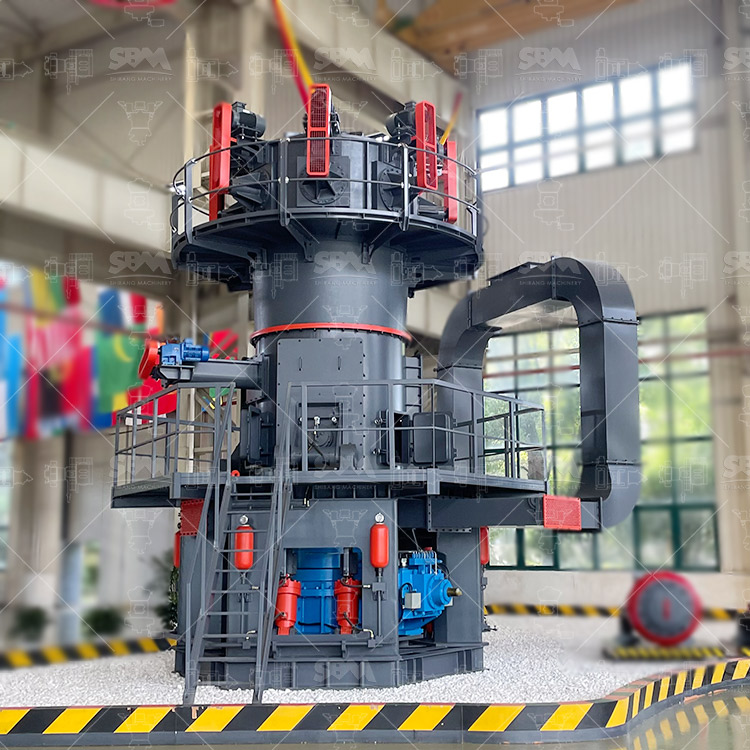
Raymond Mill Capability Envelope: What It Can and Cannot Do
The MTW Series European Trapezium Grinding Mill (often referred to as MTW Raymond Mill) is designed for 0–50 mm feed and can produce 30–400 mesh powder at 3–40 tph. It is a workhorse for limestone, calcite, dolomite, barite, and similar non-metallic minerals. Its strengths include robust construction, efficient classification, and relatively low operating cost.
However, if your target is 800 mesh or finer—especially with a tight top cut—a Raymond mill may struggle to meet capacity and PSD requirements. In those cases, an ultrafine mill (SCM series) or an ultrafine vertical mill (LUM series) is the appropriate choice. The SCM series can reach 325–2500 mesh with D97 ≤ 5 μm, while the LUM series covers 325–4000 mesh at 10–70 tph for calcite, marble, limestone, talc, and more.
The disclosure here is simple: do not expect a Raymond mill to behave like an ultrafine mill. Instead, optimize the Raymond mill for the fineness range it was built for, and use the right machine for finer targets.
Raymond Mill Adjustment Techniques: A Practical Guide
The following adjustments are the ones that most directly affect fineness and PSD in a Raymond mill. Treat them as a system—changing one without considering the others often leads to instability.
1) Classifier Speed
The classifier is the primary fineness control. Increasing classifier speed generally produces finer product because coarser particles are rejected and returned for regrinding. Decreasing speed allows coarser particles to exit, increasing output but reducing fineness.
Practical technique: Make small, incremental changes (e.g., 5–10% speed change) and wait for the system to stabilize before sampling. Sudden changes can cause circulating load swings and temporary out-of-spec product.
2) Air Volume and Damper Position
Air volume affects both transport and classification. Higher air volume can carry coarser particles out of the mill, reducing fineness. Lower air volume tends to produce finer product but may reduce capacity and cause material build-up.
Practical technique: Adjust the main fan damper in coordination with classifier speed. If you increase classifier speed, you may need to slightly increase air volume to maintain transport and avoid over-grinding. Monitor mill differential pressure and outlet temperature.
3) Feed Rate and Feed Size
Higher feed rate increases the load in the grinding chamber, which can lead to coarser product if the classifier cannot keep up. Smaller feed size improves grinding efficiency and helps achieve finer product with lower energy.
Practical technique: Keep feed size within the mill’s recommended range (0–50 mm for MTW, but finer feed is better for fine product). Use a variable frequency drive (VFD) on the feeder to maintain a stable ampere draw on the main motor. A stable feed rate is the foundation of stable fineness.
4) Roller-to-Ring Clearance and Grinding Pressure
In Raymond mills, grinding pressure is generated by springs or hydraulic systems (depending on design). Increased pressure can improve grinding and produce finer product, but excessive pressure increases wear and vibration.
Practical technique: Check roller-to-ring clearance according to the manufacturer’s specification. Too much clearance reduces grinding efficiency; too little causes metal-to-metal contact. Adjust pressure in small steps and monitor motor current, vibration, and product fineness.
5) Blade (Shovel) Configuration
The blade feeds material into the grinding zone. Worn or incorrectly angled blades reduce grinding efficiency and can cause coarser product. The MTW mill features a combined-type shovel blade design that reduces wear part costs and allows blade replacement without replacing the entire assembly.
Practical technique: Inspect blades regularly. Replace worn blades promptly. Ensure the blade angle is set to optimize material lifting and distribution.
6) System Temperature and Circulating Load
Temperature affects material behavior and classifier efficiency. High temperature can cause material to become sticky or agglomerate, leading to coarser product and blockages. Circulating load (the amount of material returned to the mill) is a key stability indicator.
Practical technique: Maintain adequate ventilation and avoid overloading. If circulating load is too high, reduce feed rate or increase air volume slightly. If it is too low, increase feed rate carefully.
7) Maintenance and Wear Parts
Wear on rollers, rings, and classifier blades directly affects fineness. Worn parts produce coarser product and higher energy consumption.
Practical technique: Establish a wear-part inspection schedule. Keep records of product fineness versus wear-part condition to predict replacement intervals.
From Adjustment to Application: Matching Fineness to End Use
Once you can control fineness, the next step is to match it to the application. A simple framework:
- 200–400 mesh: Construction, mortars, some plastics, low-end fillers.
- 400–800 mesh: Paints, coatings, paper filler, PVC profiles.
- 800–1250 mesh: High-quality coatings, sealants, rubber, masterbatch.
- 1250–2500 mesh: Premium coatings, inks, pharmaceuticals, food, cosmetics (often requires ultrafine mills).
If your target is at the finer end, consider the SCM series ultrafine mill or LUM series ultrafine vertical mill. These machines are designed for 325–2500 mesh and 325–4000 mesh respectively, with advanced classification and intelligent control.
Common Pain Points and How to Solve Them
Pain point 1: Fineness drifts during the shift. Cause: feed variation, wear, or temperature changes. Solution: stabilize feed, monitor classifier speed, and check wear parts.
Pain point 2: Coarse tail causes defects. Cause: classifier inefficiency or air volume too high. Solution: increase classifier speed, reduce air volume slightly, and inspect classifier blades.
Pain point 3: Capacity drops when chasing finer product. Cause: inherent trade-off. Solution: optimize feed size, reduce moisture, and consider a finer grinding system if the target is beyond the mill’s range.
Pain point 4: High energy consumption. Cause: over-grinding or worn parts. Solution: optimize classifier and air settings, replace wear parts, and avoid unnecessary over-fineness.
Pain point 5: Dust and environmental compliance. Cause: system leaks or inadequate dust collection. Solution: maintain negative pressure, check seals, and use efficient pulse dust collectors. The MTW mill’s sealed system and the LUM mill’s environmentally friendly design help meet national standards.
FAQ
1. Can a Raymond mill produce 800 mesh calcium carbonate?
It can, but capacity and PSD control may be limited. For consistent 800 mesh and finer, an ultrafine mill is usually more reliable.
2. What is the most effective adjustment to make product finer?
Increasing classifier speed is the most direct. Pair it with air volume and feed rate adjustments to maintain stability.
3. Why does my product get coarser even when I increase classifier speed?
Check for worn classifier blades, excessive air volume, or feed overload. Also verify that the classifier is actually responding to the control input.
4. How do I reduce dust when grinding fine calcium carbonate?
Ensure the system operates under negative pressure, maintain seals, and use efficient dust collection. The LUM series is designed with sealed operation and low noise.
5. When should I switch from a Raymond mill to an ultrafine mill?
If your target is consistently above 600–800 mesh with tight D97, or if you need 1250–2500 mesh, an ultrafine mill such as the SCM or LUM series is the better choice.
Choosing the right fineness and the right mill is a balance of application requirements, equipment capability, and operating discipline. With the adjustment techniques above, you can improve fineness stability, reduce waste, and get more value from every ton of calcium carbonate.


