

Key technical analysis for improving grinding efficiency of vertical roller mill
Published: March 2025
Improving the grinding efficiency of a vertical roller mill is not a matter of a single adjustment; it is the result of a carefully balanced system where grinding pressure, material bed stability, classifier performance, air flow, and wear-part design all interact. In practice, the most effective technical path combines optimized roller and liner geometry, intelligent hydraulic and process control, high-efficiency dynamic classification, and a tightly sealed negative-pressure circuit that minimizes energy loss and dust emissions. For operators processing materials from limestone and slag to calcite, barite, and petroleum coke, the goal is consistent: achieve the target fineness at the highest possible throughput per kilowatt-hour while keeping maintenance predictable. The following analysis breaks down the key technical levers, explains why they matter, and shows how modern vertical roller mill design addresses the common pain points that limit real-world grinding efficiency.
Understanding Where Grinding Efficiency Is Lost
Before discussing solutions, it is useful to identify where energy and capacity are typically lost in a vertical roller mill circuit. Most inefficiency falls into five categories: unstable material bed formation, excessive internal circulation of already-fine material, air-flow losses in the ducting and nozzle ring, inefficient classification that returns finished powder back to the grinding table, and uncontrolled vibration that forces operators to reduce feed rate or grinding pressure. Each of these problems has a technical remedy, and each interacts with the others. For example, increasing grinding pressure can improve bed compaction, but if the material layer is too thin, it causes vibration and accelerated wear rather than higher output. This is why a systems approach is essential.
Grinding Pressure, Material Bed, and Roller-Liner Geometry
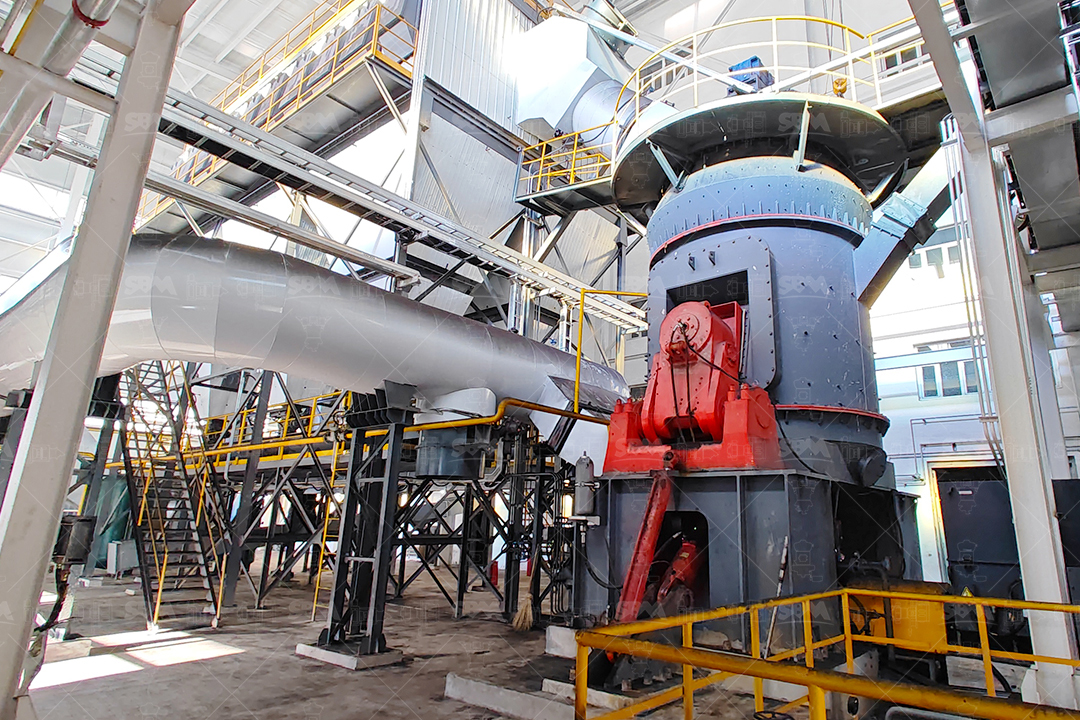
The foundation of efficient grinding in a vertical roller mill is the formation of a stable, uniformly distributed material bed between the grinding rollers and the grinding table. When the bed is stable, grinding forces are transferred efficiently through the material, and the size reduction process relies primarily on inter-particle compression rather than metal-to-metal contact. This reduces both specific energy consumption and wear.
Modern vertical roller mills address bed stability through several design features. The grinding curves of the roller shell and the lining plate can be uniquely designed according to the ultrafine pulverization principle, which makes it easier to form a proper material bed, improves grinding efficiency, and increases the proportion of finished product produced from the primary grinding pass. In practical terms, this means less material is recirculated and more of the energy input is converted into useful size reduction.
Grinding pressure must be matched to the material's grindability, moisture content, and target fineness. The control mode for pressure adjustment of the grinding roller can adopt a PLC or DCS automatic control system, ensuring accurate control of grinding pressure, high efficiency, and stable operation. Automatic control also enables remote operation and simple adjustment, which is particularly valuable when feed conditions vary throughout a shift.
Classification: The Hidden Driver of Efficiency
Even a perfectly ground material bed is not useful if the classifier cannot separate fine product from coarse particles efficiently. Inefficient classification causes two simultaneous losses: finished powder is returned to the grinding table and reground, wasting energy, and coarse particles may report to the finished product, forcing the operator to increase grinding pressure or reduce feed rate to meet quality specifications.
High-efficiency dynamic classifiers address this problem directly. The efficient vertical turbine powder classifier can achieve high classification efficiency, accurate cutting size, and no spillover of coarse powder. For ultrafine applications, the principle of multi-rotor powder classifiers is adopted, so the finished product fineness can be customized to the selected range with no low-grade material in existence. Frequency-conversion control makes the adjustment convenient, allowing one-time finished products with D97 ≤ 5 μm in suitable configurations.
The practical result is a tighter particle size distribution, fewer fines returned to the mill, and a lower circulating load. This directly improves the mill's effective capacity for a given power draw—an outcome that matters greatly in high-volume applications such as cement raw meal, slag, and coal powder preparation.
Air Flow, Duct Design, and Energy Loss Reduction
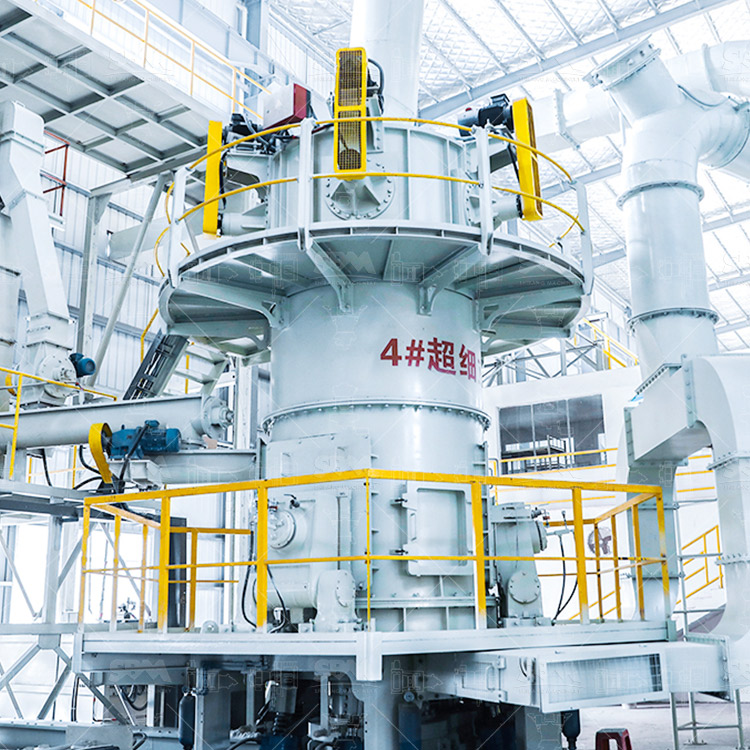
Vertical roller mills rely on air flow to transport ground material from the grinding zone to the classifier and then to the dust collection system. Every unnecessary pressure drop in this circuit represents wasted fan energy. This is why duct geometry and internal wear protection deserve close attention.
A circular or arc-shaped air duct can avoid air energy loss and ensure transportation efficiency, while a high-strength guard plate protects the working face of the duct from abrasive wear. In addition, an unobstructed wear-resistant volute design can effectively improve the efficiency of the wind-driven transmission inside the mill while simultaneously reducing the cost of material maintenance. Together, these features help maintain stable air flow over long operating periods, even when processing abrasive materials such as slag, petroleum coke, or heavy calcium carbonate.
The sealing condition of the system is equally important. A mill that operates under negative pressure with a fully sealed circuit prevents dust spillover and avoids the energy penalty associated with air leakage. When air in-leakage is minimized, the fan operates closer to its design point, and the overall specific energy consumption of the grinding system improves.
Transmission and Drive Efficiency
The drive system is often overlooked in efficiency discussions, but it accounts for a measurable share of total power consumption. Traditional mill designs may use multiple transmission components that introduce friction and alignment losses. A cone gear whole transmission, such as a bevel gear integral transmission, can achieve higher transmission efficiency, save space, and lower investment costs.
For larger mills, the trend is toward compact, integrated drive arrangements that reduce the number of moving parts and simplify maintenance. Higher transmission efficiency translates directly into more grinding power available at the table for the same electrical input, which is a straightforward gain in overall grinding efficiency.
Wear Protection and Maintenance Economics
Wear is not only a maintenance cost issue; it is also an efficiency issue. As rollers and liners wear, the grinding profile changes, the material bed becomes less stable, and the mill must be operated at reduced capacity or with increased pressure to maintain output. This increases specific energy consumption over time.
Several design strategies help slow this decline. The combined-type shovel blade design can reduce the cost of wearing parts, with only the blade needing replacement during maintenance; the curved shovel blades can change the feeding angle and prolong the service life of the roller and ring. Rollers and grinding plates made of high-quality materials enjoy longer service life and less wear, and in some designs the roller does not contact the grinding plate directly, further reducing metal-to-metal wear.
For ultrafine grinding, heavy rotor design and tight test methods are used, with the roller and ring made of special materials so that durability can be several times higher. The grinding chamber may be designed without bearing screws, allowing stable, vibration-free operation after balance treatment. These measures reduce unplanned downtime and help maintain consistent efficiency between maintenance intervals.
Automation, Instrumentation, and Process Stability
Stable operation is efficient operation. A vertical roller mill that experiences frequent vibration events, feed fluctuations, or classifier upsets will never achieve its best specific energy consumption. This is where modern automation plays a decisive role.
An expert automatic control system can realize free switching between remote and local control, achieving easy operation and reduced labor costs. Major parameters such as grinding pressure, rotating speed of the grinding disc, and speed of the classifier can be controlled through a PLC or DCS system. Automatic feedback with fast and stable conversion of finished products supports intelligent control and saves labor costs directly.
Instrumentation should include reliable measurement of mill differential pressure, vibration, bearing temperature, feed rate, and product fineness where online analysis is available. When these signals are integrated into the control strategy, the mill can respond to changes in feed grindability or moisture without operator intervention, keeping efficiency close to the optimum point.
System Integration: Drying, Grinding, and Transport in One Unit
Vertical roller mills are often chosen not only for their grinding efficiency but also for their ability to integrate multiple process steps. Equipment that integrates crushing, drying, grinding, powder separation, and transportation features a simple system and compact layout, with floor space of about 50% of that of a ball-milling system. It can be arranged outdoors, which greatly reduces investment costs.
For materials with moderate moisture, the drying function can be performed inside the mill using hot gas from a heat source, eliminating the need for a separate dryer. This reduces thermal energy losses and simplifies the flowsheet. In coal powder preparation, petroleum coke grinding, and slag micro-powder production, this integration is a major contributor to overall plant efficiency.
Environmental Performance as an Efficiency Metric
Environmental compliance and grinding efficiency are more closely linked than they may appear. A system that leaks dust or operates with excessive vibration is usually also a system that is losing energy. The equipment can operate stably with little vibration, so noise is fairly low. A wholly sealed system working under negative pressure is free of dust spillover and environmentally friendly, with emissions meeting national standards. The efficient double powder collecting method of powder collectors and pulse dust collectors can achieve good dust collection effects, far higher than international standards, while optimized sound insulation and mufflers effectively prevent the spread of equipment noise.
When a mill runs cleanly and smoothly, operators can push it closer to its design capacity without risking compliance issues. That is a real, measurable efficiency gain.
Matching Mill Type to Application
Different grinding tasks call for different mill configurations. For general mineral powder processing in the 30–400 mesh range, a European trapezium mill or a vertical roller mill with appropriate capacity may be the best fit. For ultrafine products in the 325–2500 mesh range, an ultrafine mill with high-efficiency classification is typically required, and for large-scale ultrafine production, an ultrafine vertical mill integrating grinding, separation, and transportation can deliver both high output and high quality.
In all cases, the same technical principles apply: stabilize the material bed, optimize grinding pressure, classify precisely, minimize air-flow losses, control wear, and automate the process. Companies that follow these principles consistently achieve lower specific energy consumption, higher availability, and more predictable product quality.
Frequently Asked Questions
1. Why does my vertical roller mill vibrate even when the feed rate seems normal?
Vibration usually indicates an unstable material bed rather than a feed rate problem. Common causes include inconsistent feed size, uneven distribution of material on the grinding table, excessive moisture causing the bed to slip, or grinding pressure that is too high for the current bed thickness. Check the feed particle size distribution, the condition of the feeding chute, and the hydraulic pressure settings. If the roller and liner profiles are worn, the bed geometry changes and vibration can appear even under previously stable conditions. A properly designed roller-liner curve and an automatic pressure control system help restore stability.
2. My specific energy consumption keeps rising over time. What should I check first?
Rising specific energy consumption is often a wear-related symptom. Inspect the grinding rollers, table liners, and classifier blades for wear. As these components wear, the grinding profile changes, classification efficiency drops, and more finished material is returned to the table for regrinding. Also check for air leakage in the system, since in-leakage forces the fan to work harder. Finally, review the classifier speed and grinding pressure settings; if they were adjusted to compensate for wear, they may now be outside the optimal range for the current configuration.
3. Can I improve fineness without reducing throughput?
Yes, but it requires improving classification rather than simply increasing grinding pressure. A high-efficiency dynamic classifier with frequency-conversion control can achieve a sharper cut size and reduce the amount of fine material recirculating to the grinding table. This allows the mill to maintain throughput while producing a finer product. In ultrafine applications, multi-rotor classifier principles can provide a customizable fineness range with no low-grade material in the finished product. The key is to optimize the entire grinding-classification circuit, not just the grinding zone.
4. How does material moisture affect grinding efficiency in a vertical roller mill?
Moisture affects both the material bed and the air-flow circuit. If the material is too wet, the bed can become unstable, rollers may slip, and the risk of vibration increases. Moisture also raises the dew point of the exhaust gas, which can cause condensation and dust build-up in the bag filter or ducting. Vertical roller mills with integrated drying capability can handle moderate moisture by using hot gas to dry the material as it is ground. However, if moisture is consistently high, the heat input and air flow must be balanced carefully to avoid compromising both grinding stability and product quality.
5. What maintenance practices have the biggest impact on long-term grinding efficiency?
The most impactful practices are those that maintain the geometry and balance of the grinding circuit. This includes regular inspection and timely replacement of roller shells and table liners, checking the classifier for wear and balance, verifying hydraulic pressure calibration, and inspecting the air duct and volute for abrasive wear or obstructions. Keeping the system sealed and free of air leakage preserves fan efficiency. Finally, maintaining the automatic control system and its sensors ensures that the mill continues to operate at its optimal pressure, speed, and feed rate rather than drifting into inefficient operating points.


