

What is fluorgypsum? green treatment with gui mine raymond mill
Published: 2025-01-15
Summary: Fluorgypsum, a calcium sulfate byproduct from hydrofluoric acid and phosphate fertilizer production, poses significant environmental challenges due to its fluoride content and accumulation. Green treatment technologies focus on converting this industrial waste into usable resources, and advanced grinding equipment plays a crucial role in this process. The GUI Mine Raymond Mill, particularly the MTW European Trapezium Mill from SBM Machinery, offers an efficient, environmentally friendly solution for fluorgypsum processing, enabling its utilization in building materials, cement retarders, and soil amendments while minimizing environmental impact. This article explores fluorgypsum characteristics, green treatment methods, and how specialized grinding technology contributes to sustainable resource recovery.
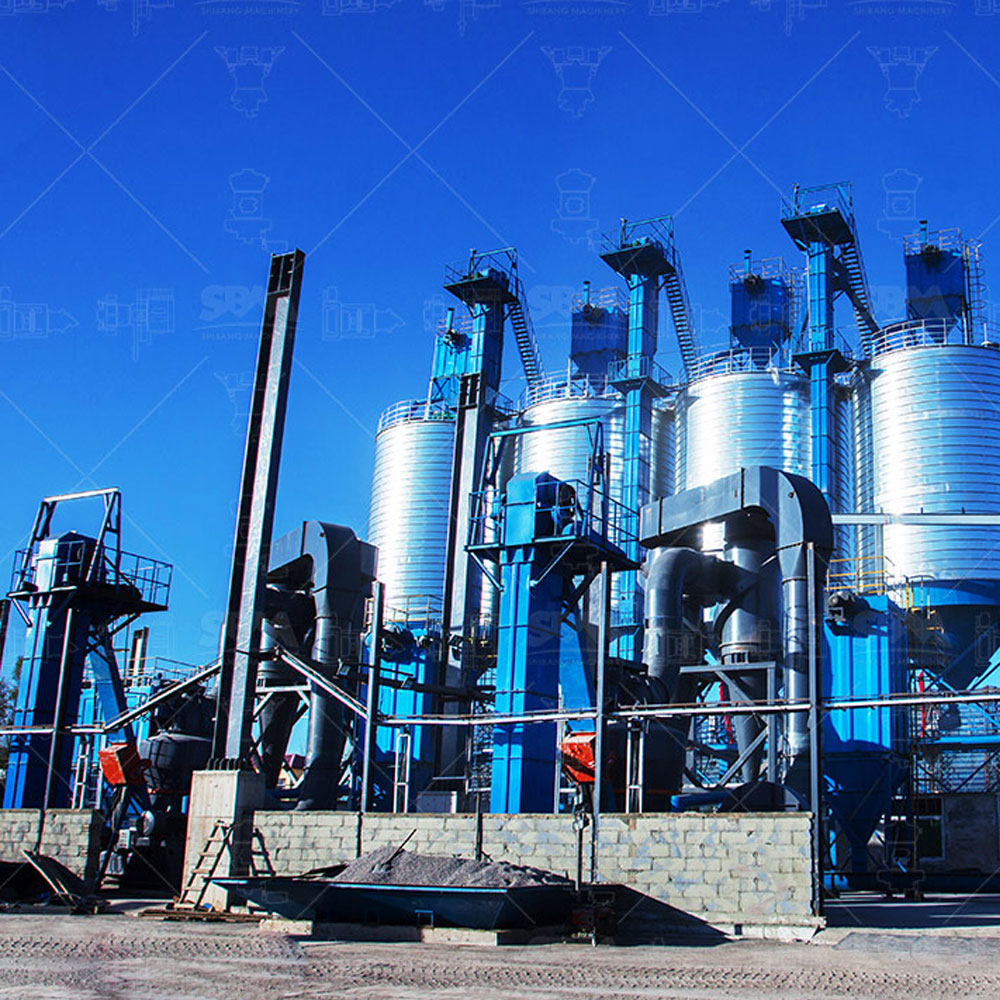
Understanding Fluorgypsum: Composition and Challenges
Fluorgypsum, also known as fluorogypsum or hydrofluoric acid gypsum, is an industrial byproduct generated during the production of hydrofluoric acid (HF) and, in some cases, phosphate fertilizers. When fluorspar (calcium fluoride, CaF2) reacts with sulfuric acid to produce hydrofluoric acid, calcium sulfate (CaSO4) is formed as a solid residue. This residue typically contains residual fluoride compounds, making its management a complex environmental issue.The global production of hydrofluoric acid generates millions of tons of fluorgypsum annually. In China alone, the accumulated stockpile of fluorgypsum has reached hundreds of millions of tons, occupying valuable land and posing potential risks of fluoride leaching into soil and groundwater. Unlike natural gypsum or flue gas desulfurization (FGD) gypsum, fluorgypsum often contains higher levels of impurities, including unreacted fluorspar, residual sulfuric acid, and soluble fluoride ions. These impurities not only limit its direct application but also necessitate careful treatment before any reuse.
The physical properties of fluorgypsum also present handling challenges. It typically exhibits fine particle size, high moisture content, and a tendency to agglomerate. When dried, it can become dusty, creating air quality concerns. Its pH can vary depending on the production process, often ranging from acidic to neutral. The presence of fluoride, even at low concentrations, raises environmental and health concerns if not properly stabilized.
The Environmental Imperative for Green Treatment
The traditional approach to managing fluorgypsum has been landfilling or long-term stockpiling. However, this method is increasingly unsustainable due to land scarcity, stringent environmental regulations, and the potential for long-term liability. Green treatment of fluorgypsum aims to convert this waste into valuable resources, thereby closing the loop in industrial ecology. This aligns with the principles of the circular economy and sustainable development goals.Green treatment encompasses several strategies. One primary approach is purification to remove fluoride and other impurities, rendering the gypsum suitable for construction applications. Another avenue is thermal treatment, such as calcination, to produce hemihydrate gypsum or anhydrite for use in cement and plaster products. More innovative methods involve chemical stabilization, where additives bind fluoride ions into insoluble compounds, preventing leaching. Regardless of the specific pathway, a common prerequisite is particle size reduction and homogenization—processes that require efficient and reliable grinding equipment.
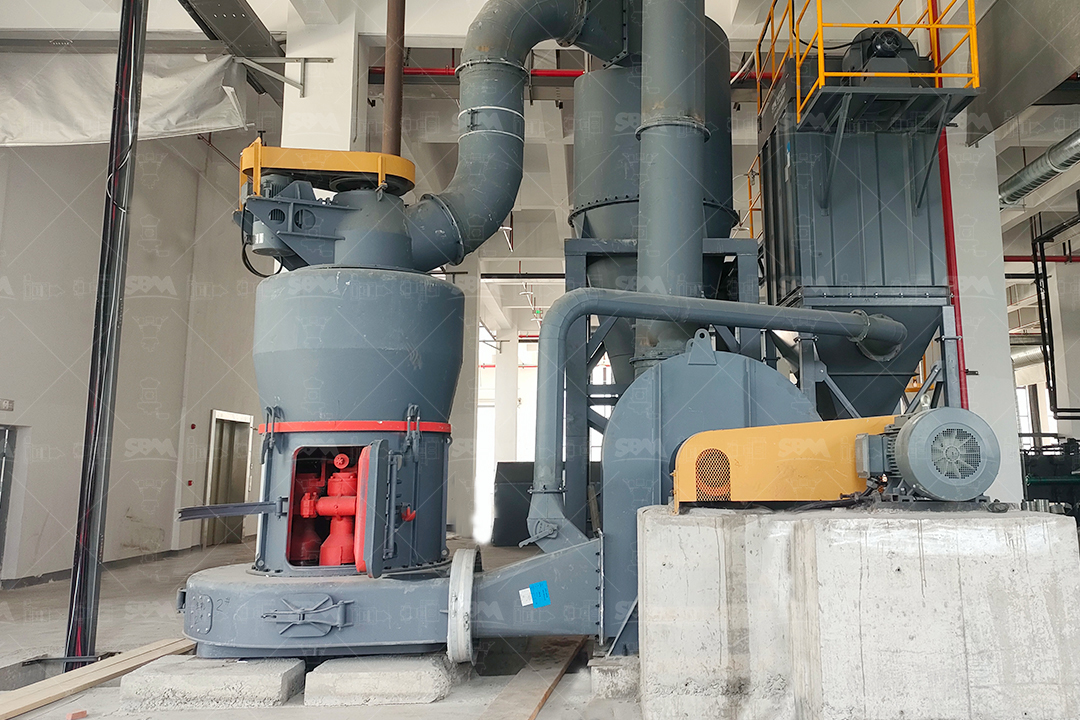
The Role of Grinding in Fluorgypsum Processing
Grinding is a critical unit operation in the green treatment of fluorgypsum. It serves multiple purposes: reducing particle size to increase surface area for chemical reactions or thermal decomposition, homogenizing the material to ensure consistent quality, and facilitating the removal of impurities through subsequent separation steps. For example, in the production of calcined gypsum from fluorgypsum, fine grinding ensures uniform heat transfer and complete dehydration. In cement applications, where fluorgypsum can act as a set retarder, the material must be ground to a specific fineness to match the performance of natural gypsum.Moreover, grinding can be combined with drying, especially when the fluorgypsum has high moisture content. The mechanical action and hot gas flow in modern mills can simultaneously reduce particle size and moisture, saving energy and simplifying the process flowsheet. This integrated approach is central to the design of advanced grinding mills like the MTW European Trapezium Mill.
Introducing the GUI Mine Raymond Mill: Technology for Green Treatment
The GUI Mine Raymond Mill, also known as the MTW Series European Trapezium Grinding Mill, represents a generation of grinding equipment designed to meet the demanding requirements of modern mineral processing and waste recycling. Developed by SBM Machinery based on years of research and feedback from over 9,500 customers, this mill incorporates international advanced technologies and multiple patented innovations. It is particularly well-suited for processing industrial byproducts like fluorgypsum, where reliability, environmental performance, and product quality are paramount.At its core, the GUI Mine Raymond Mill features a unique wear-proof combined-type shovel blade design. This design reduces the cost of wearing parts, as only the blade needs replacement during maintenance. The curved shovel blades change the feeding angle and prolong the service life of the roller and ring, thereby reducing operating costs—a critical consideration for continuous waste processing operations.The mill's arc air duct design is another key feature. The circular duct minimizes air energy loss and ensures efficient transportation of the ground material. A high-strength guard plate protects the working face of the air duct, enhancing durability. This aerodynamic design contributes to the mill's energy efficiency, which is essential for sustainable processing.
Furthermore, the cone gear whole transmission system achieves higher transmission efficiency, saves space, and lowers investment costs. The volute design—an unobstructed, wear-resistant casing—effectively improves the efficiency of the wind-driven transmission within the mill while simultaneously reducing maintenance costs. These technical advantages translate into a milling system that operates smoothly, consumes less power, and requires less downtime.
For fluorgypsum processing specifically, the GUI Mine Raymond Mill offers input sizes up to 50 mm and output fineness adjustable from 30 to 400 mesh, with capacities ranging from 3 to 40 tons per hour. This flexibility allows operators to tailor the grinding circuit to the specific requirements of their green treatment process, whether they are producing a fine powder for chemical stabilization or a coarser product for cement blending.
Integrating the GUI Mine Raymond Mill into a Green Treatment Flowsheet
A typical green treatment flowsheet for fluorgypsum might include the following stages: reception and storage, drying (if necessary), grinding, calcination (for gypsum products), and packaging or further processing. The GUI Mine Raymond Mill can be positioned after the drying stage or can perform simultaneous drying and grinding if hot gases are introduced into the mill. This integration simplifies the flowsheet and reduces capital and operating costs.In the grinding stage, the mill's efficient classification system ensures that the product meets the desired fineness specification. The arc air duct and volute design contribute to a stable airflow, which is crucial for consistent product quality. The mill's low noise and dust containment features, including a sealed system operating under negative pressure, align with the environmental objectives of green treatment facilities. Dust emissions are controlled to meet national standards, and the working environment is improved for operators.When fluorgypsum is ground for use as a cement retarder, the fineness must be controlled to optimize its performance. The GUI Mine Raymond Mill allows precise adjustment of the classifier, enabling the production of a product with a Blaine fineness suitable for cement applications. Similarly, for agricultural or soil amendment uses, a coarser grind may be sufficient, and the mill can be easily adjusted to meet that specification.
Environmental and Economic Benefits
The adoption of green treatment for fluorgypsum, facilitated by efficient grinding technology like the GUI Mine Raymond Mill, yields substantial environmental and economic benefits. Environmentally, it reduces the volume of waste sent to landfills, conserves natural gypsum resources, and mitigates the risk of fluoride contamination. Economically, it transforms a disposal cost into a revenue stream or a cost-saving input for other industries. For example, cement plants can substitute natural gypsum with processed fluorgypsum, lowering raw material costs. The construction industry can utilize purified fluorgypsum in drywall, plaster, and self-leveling compounds.The energy efficiency of the GUI Mine Raymond Mill also contributes to a lower carbon footprint for the treatment process. Compared to traditional ball mills, the MTW mill can reduce energy consumption by 30-40% for comparable fineness, according to SBM's operational data. This energy saving directly reduces greenhouse gas emissions and operational expenses.
Case Considerations and Best Practices
When implementing a fluorgypsum green treatment project, several factors should be considered. First, the characteristics of the fluorgypsum can vary significantly depending on the source; a thorough material analysis is essential to design the appropriate treatment process. Second, the presence of fluoride requires careful handling to prevent worker exposure and environmental release. Proper ventilation, dust collection, and personal protective equipment are necessary. Third, the market for the final products—whether gypsum powder, cement retarder, or soil amendment—should be evaluated to ensure economic viability.
Partnering with an experienced equipment supplier like SBM Machinery can help navigate these considerations. SBM offers not only the GUI Mine Raymond Mill but also a range of other grinding mills, such as vertical roller mills and ultrafine mills, to suit different capacity and fineness requirements. Their expertise in mineral processing and environmental applications can guide project development from feasibility studies to commissioning.
Frequently Asked Questions (FAQ)
1. What are the main impurities in fluorgypsum that affect its reuse?
Fluorgypsum typically contains residual fluoride compounds, unreacted fluorspar, sulfuric acid, and sometimes heavy metals. These impurities can leach into the environment and affect the setting properties of gypsum products. Proper treatment, including grinding and chemical stabilization, is necessary to render it suitable for beneficial use.
2. Can the GUI Mine Raymond Mill handle fluorgypsum with high moisture content?
Yes, the mill can be equipped with a hot gas system to simultaneously dry and grind high-moisture fluorgypsum. The integrated drying and grinding process is efficient and avoids the need for a separate dryer, reducing capital and operating costs.
3. What fineness can be achieved for fluorgypsum using the GUI Mine Raymond Mill?
The GUI Mine Raymond Mill can produce products ranging from 30 to 400 mesh (approximately 0.037 to 0.6 mm), depending on the configuration and operating parameters. This range covers the requirements for most applications, from cement retarders to finer gypsum plasters.
4. How does the mill ensure environmental compliance, especially regarding dust and fluoride emissions?
The mill operates under negative pressure with a sealed system, preventing dust and fluoride-containing vapors from escaping. A pulse-jet dust collector captures fine particles, and the system is designed to meet stringent emission standards. Regular monitoring and maintenance ensure continued compliance.
5. Is it possible to use fluorgypsum as a cement retarder after grinding with the GUI Mine Raymond Mill?
Absolutely. When ground to the appropriate fineness, fluorgypsum can effectively replace natural gypsum as a cement retarder. The grinding process ensures uniform particle size distribution, which is critical for consistent setting time. However, the fluoride content must be controlled to avoid excessive retardation, and testing is recommended to optimize the blend.
In conclusion, the green treatment of fluorgypsum is a viable and necessary pathway toward sustainable industrial practices. With advanced grinding technology like the GUI Mine Raymond Mill from SBM Machinery, processors can efficiently convert this byproduct into valuable resources while protecting the environment. As regulations tighten and demand for recycled materials grows, investing in robust, eco-friendly grinding solutions will be a key differentiator for forward-thinking companies.


