

Can large-sized calcite be processed by raymond mill? – technical analysis and application discussion
Published on: 2025-04-08
In summary, yes, large-sized calcite can be effectively processed by Raymond mill technology, particularly modern enhanced versions like the European Trapezium Mill (MTW Raymond Mill), which are designed to handle input sizes up to 50mm and deliver fineness ranging from 30 to 400 mesh with capacities of 3-40tph. This article provides a technical analysis of how Raymond mills accommodate large calcite feed, compares them with alternative grinding solutions such as vertical roller mills and ultrafine mills, and discusses practical applications across industries. Drawing on SBM Machinery's extensive product portfolio and global experience serving over 180 countries, we explore the mechanical principles, wear protection designs, and system integration that make Raymond mills viable for large-sized calcite, while also addressing common operational challenges. The discussion includes real-world application scenarios in building materials, mining, and chemical sectors, and concludes with five frequently asked questions that reflect typical customer concerns, from capacity limitations to maintenance costs and environmental compliance.
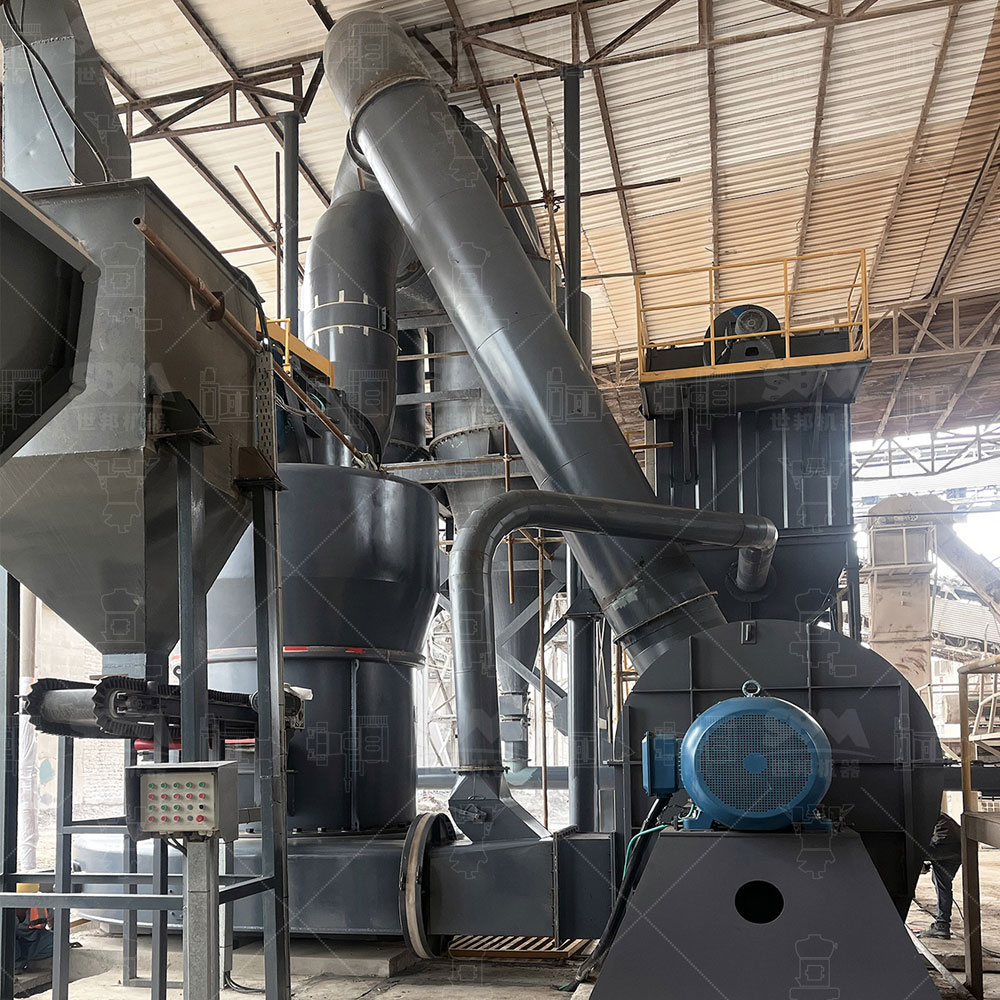
Figure 1: MTW Raymond Mill processing large calcite feed with curved shovel blades and arc air duct design.
Calcite is one of the most widely used non-metallic minerals, serving as a key raw material in the production of heavy calcium carbonate (GCC), which finds applications in plastics, paper, paints, coatings, sealants, and construction. As demand for finer and more uniformly ground calcite grows, processors face the challenge of selecting grinding equipment that can handle large-sized feed material while maintaining efficiency and product quality. Raymond mills, traditionally known for processing relatively fine feed, have evolved significantly. The question of whether large-sized calcite can be processed by Raymond mill is therefore highly relevant. This article provides a technical analysis based on SBM Machinery's product data, examining the capabilities of modern Raymond mills, particularly the MTW Series European Trapezium Grinding Mill, and comparing them with alternative solutions such as vertical roller mills and ultrafine mills. We also discuss application considerations and conclude with five FAQs that address common customer pain points.
Technical Capabilities of Modern Raymond Mills for Large Calcite
The MTW Series European Trapezium Grinding Mill, often referred to as MTW Raymond Mill, represents a significant advancement over traditional Raymond mills. Developed through long-term R&D and the integration of proposals from more than 9,500 customers, this mill is designed to handle input sizes up to 50mm, which qualifies as large-sized calcite feed in many processing contexts. Traditional Raymond mills typically have smaller input size limits, but the MTW series incorporates several design innovations that enable it to accept coarser material without compromising grinding efficiency or equipment longevity.
One key feature is the unique wear-proof perching knife design. The combined-type shovel blade reduces the cost of wearing parts, as only the blade needs replacement during maintenance. The curved shovel blades change the feeding angle and prolong the service life of the roller and ring. This design is particularly beneficial when processing large-sized calcite, as the initial crushing action is more efficient, reducing the load on the grinding elements. Additionally, the arc air duct design avoids air energy loss and ensures transportation efficiency, while the high-strength guard plate protects the working face of the air duct. The cone gear whole transmission achieves higher transmission efficiency, saves space, and lowers investment costs. The volute design further improves wind-driven transmission efficiency and reduces maintenance costs.
These technical advantages collectively enable the MTW Raymond Mill to process large-sized calcite with output fineness ranging from 30 to 400 mesh and capacities from 3 to 40tph. For many GCC producers, this range is sufficient for producing standard grades of ground calcium carbonate used in construction, plastics, and paper. However, it is important to note that the actual capacity and fineness depend on the specific grindability of the calcite, the moisture content, and the desired product specification. In general, large-sized calcite feed up to 50mm can be handled, but preprocessing such as primary crushing may still be recommended to optimize mill performance and reduce wear.
Comparison with Alternative Grinding Solutions
While Raymond mills can process large-sized calcite, other grinding technologies may offer advantages depending on the scale and fineness requirements. SBM Machinery's LM Vertical Roller Mill, for instance, is designed for higher capacities (3-400tph) and also accepts input sizes up to 50mm. It integrates crushing, drying, grinding, powder separation, and transportation, featuring a compact layout and low operating costs. The roller does not contact the grinding plate directly, and both are made of high-quality materials, resulting in longer service life and less wear. Energy consumption is 30-40% lower than ball-milling systems. For large-scale calcite processing, the LM Vertical Roller Mill may be more suitable due to its higher output and drying function, especially if the raw calcite has significant moisture content.
For ultrafine calcite powder, the SCM Ultrafine Mill and LUM Ultrafine Vertical Mill offer fineness ranges from 325 to 2500 mesh and 325 to 4000 mesh, respectively. However, these mills typically have smaller input size limits (0-20mm), meaning large-sized calcite would require pre-crushing. The SCM series features high output and low energy consumption, with intelligent control and environmental protection. The LUM series integrates advanced separation technology and intelligent control, making it ideal for medium to high-end applications in plastics, PVC, artificial stone, and non-woven fabrics. Therefore, while Raymond mills can process large-sized calcite directly, ultrafine mills are better suited for finer products but require smaller feed sizes.
Ball mills, while mature and widely used, are generally less efficient for large-sized calcite due to high energy consumption and wear on metal balls. SBM's optimized ball mills reduce spare parts costs and offer both dry and wet options, but for large-sized calcite, Raymond mills and vertical roller mills are generally more energy-efficient and cost-effective. The choice ultimately depends on the target product fineness, capacity requirements, and specific application.
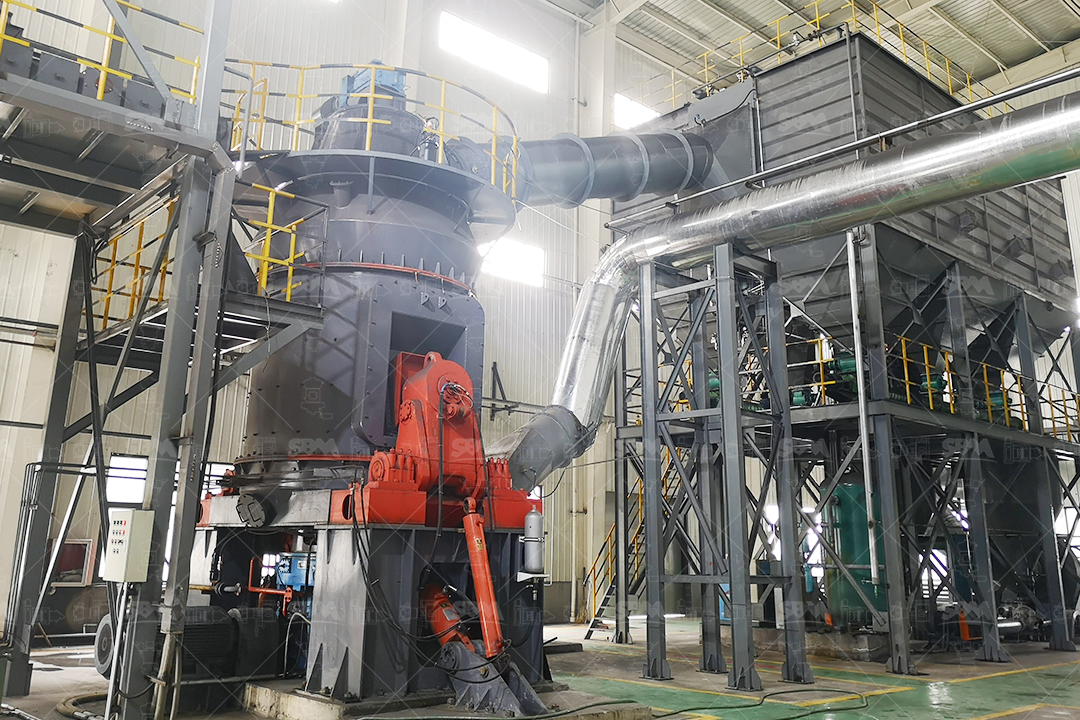
Figure 2: Integrated calcite processing system with MTW Raymond Mill and LM Vertical Roller Mill for large-scale production.
Application Discussion and Practical Considerations
In real-world applications, large-sized calcite processing by Raymond mill is often seen in medium-scale GCC plants. For example, a plant producing 10-20tph of 200-325 mesh GCC for the plastics industry can use an MTW Raymond Mill with a 50mm input size, provided that the calcite is pre-crushed to below 50mm. The mill's curved shovel blades and arc air duct ensure smooth material flow and efficient grinding. The cone gear transmission and volute design reduce energy losses, making the operation cost-effective. However, customers should be aware that large-sized feed can increase wear on the roller and ring, so regular maintenance and inspection are essential. The combined-type shovel blade design mitigates this by allowing only the blade to be replaced, reducing downtime and spare parts costs.
For larger-scale operations, such as 30-40tph, the MTW Raymond Mill can still be viable, but the LM Vertical Roller Mill may offer better economy of scale. The LM mill's automatic control system and high environmental protection standard (meeting national emission standards) make it attractive for companies prioritizing automation and sustainability. In the chemical and metallurgy sectors, where calcite is used as a flux or filler, the ability to process large-sized feed directly reduces the need for additional crushing stages, simplifying the flowsheet. SBM Machinery's grinding equipment has been used in power generation, building materials, mining, metallurgy, chemicals, and non-metallic minerals across 180 countries, demonstrating the versatility and reliability of these solutions.
Environmental compliance is another critical factor. The MTW Raymond Mill, like other SBM mills, is designed with dust containment and noise reduction in mind. The system operates under negative pressure, preventing dust spillover, and the optimized sound insulation room and muffler effectively prevent noise spread. This is particularly important when processing calcite, which can generate fine dust. Customers should ensure proper installation and maintenance of the dust collection system to meet local regulations.
In terms of maintenance, large-sized calcite processing requires attention to the wear parts. The MTW mill's wear-proof perching knife design and curved shovel blades reduce the frequency of replacement, but regular inspection of the roller and ring is still necessary. The inner oil absorption lubrication system and cone gear whole transmission reduce maintenance requirements compared to traditional mills. SBM provides global after-sales support, which is crucial for customers in remote locations.
Frequently Asked Questions (FAQs)
Q1: What is the maximum input size of calcite that a Raymond mill can handle, and does large-sized feed reduce capacity?
A1: Modern Raymond mills like the MTW Series can handle input sizes up to 50mm. However, processing large-sized calcite may slightly reduce capacity compared to finer feed because the grinding process requires more energy for initial size reduction. To optimize capacity, we recommend pre-crushing calcite to below 30mm if possible. The MTW mill's curved shovel blades and arc air duct design help maintain efficient material flow, but customers should expect a trade-off between feed size and throughput. For capacities of 3-40tph, the MTW mill remains a viable choice for large-sized calcite, especially when paired with a primary crusher.
Q2: How does large-sized calcite affect wear parts and maintenance costs?
A2: Large-sized calcite increases the mechanical stress on the roller, ring, and shovel blade. However, the MTW Raymond Mill features a unique wear-proof perching knife design with combined-type shovel blades that allow only the blade to be replaced, reducing spare parts costs. The curved shovel blades change the feeding angle to prolong the service life of the roller and ring. Nevertheless, customers should monitor wear regularly and maintain the lubrication system. Compared to traditional Raymond mills, the MTW series offers longer wear part life and lower maintenance costs, but large-sized feed still requires more frequent inspection than fine feed.
Q3: Can a Raymond mill produce ultrafine calcite powder, or do I need a different mill?
A3: The MTW Raymond Mill can produce fineness from 30 to 400 mesh, which covers most standard GCC applications. For ultrafine powder (325-2500 mesh or finer), you would need an SCM Ultrafine Mill or LUM Ultrafine Vertical Mill. These mills have smaller input size limits (0-20mm), so large-sized calcite must be pre-crushed. If your target product is ultrafine, a two-stage process (Raymond mill or jaw crusher for coarse grinding, then ultrafine mill) may be more economical than trying to achieve ultrafine fineness directly from large feed in a single Raymond mill.
Q4: How does the energy consumption of a Raymond mill compare to a vertical roller mill when processing large-sized calcite?
A4: The LM Vertical Roller Mill generally has lower energy consumption (30-40% lower than ball mills) and can handle similar input sizes (0-50mm) with higher capacities (up to 400tph). The MTW Raymond Mill is efficient for medium-scale operations (3-40tph) but may have higher specific energy consumption per ton at larger scales. For large-sized calcite, the choice depends on capacity: if you need more than 40tph, the LM Vertical Roller Mill is more energy-efficient and cost-effective. For 3-40tph, the MTW Raymond Mill offers a good balance of investment and operating costs, especially with its cone gear transmission and volute design that reduce energy losses.
Q5: What are the environmental compliance requirements for processing calcite with a Raymond mill, and how does SBM ensure dust control?
A5: Calcite grinding generates fine dust, so environmental compliance is critical. SBM's MTW Raymond Mill is designed with a sealed system operating under negative pressure, preventing dust spillover. The arc air duct and volute design improve airflow efficiency, and the high-strength guard plate protects the air duct. For additional dust control, SBM offers pulse dust collectors and efficient powder collectors that meet national emission standards. The mill also features noise reduction measures such as sound insulation and mufflers. Customers should ensure proper installation and regular maintenance of the dust collection system to comply with local regulations. SBM's global service network can assist with environmental audits and system optimization.


