

Can quartz be processed by raymond mill?
Published on: May 15, 2025
Quartz is one of the most abundant minerals in the Earth's crust and is widely used in industries ranging from glass and ceramics to electronics and construction. A common question from customers is whether quartz can be effectively processed by a Raymond mill. The short answer is yes—quartz can be processed by Raymond mills, including traditional models and advanced versions like the MTW Series European Trapezium Grinding Mill. However, the feasibility and efficiency depend on the required fineness, capacity, and specific mill configuration. Traditional Raymond mills can handle quartz to produce powders in the range of 30–400 mesh, which is suitable for many applications. For ultrafine quartz powder (325–2500 mesh), specialized mills such as the SCM Ultrafine Mill or LUM Ultrafine Vertical Mill are recommended. This article explores the technical aspects, potential challenges, and practical solutions for grinding quartz with Raymond mills, drawing on SBM Machinery's extensive experience in mineral processing.
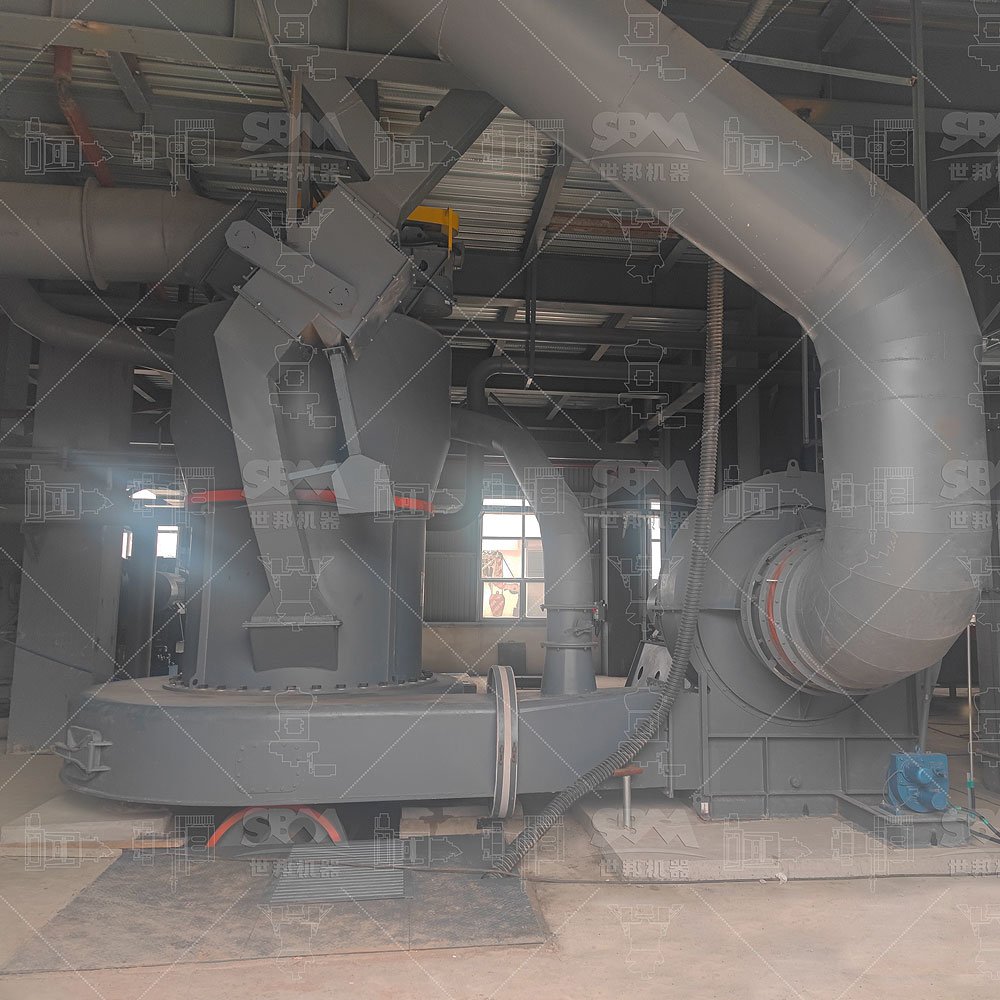
Understanding Quartz and Its Grinding Characteristics
Quartz (SiO2) is a hard and abrasive mineral with a Mohs hardness of 7. Its crystalline structure and high silica content make it challenging to grind efficiently, as it causes significant wear on mill components. Traditional Raymond mills, while versatile, may experience accelerated wear on rollers and rings when processing quartz unless equipped with wear-resistant materials. SBM Machinery has addressed this by designing the MTW Series European Trapezium Grinding Mill with unique wear-proof perching knife designs and curved shovel blades that reduce wear and extend service life. These features are particularly beneficial for abrasive materials like quartz.
Raymond Mill Capabilities for Quartz Processing
The MTW Raymond Mill, developed by SBM Machinery after extensive research and feedback from over 9,500 customers, represents a new generation of grinding equipment with international advanced technology. It incorporates cone gear whole transmission, an inner oil absorption lubrication system, and an arc air flue design. For quartz processing, the mill can accept input sizes up to 50 mm and produce output sizes from 30 to 400 mesh, with capacities ranging from 3 to 40 tons per hour. This makes it suitable for producing quartz powder for applications such as glass manufacturing, ceramic glazes, and construction fillers.
Key technical advantages for quartz grinding include:
- Unique wear-proof perching knife design: The combined-type shovel blade reduces the cost of wearing parts, with only the blade needing replacement during maintenance. The curved shovel blades change the feeding angle and prolong the service life of the roller and ring, lowering operating costs.
- Arc air duct design: The circular duct avoids air energy loss and ensures transportation efficiency, while the high-strength guard plate protects the working face of the air duct.
- Cone gear whole transmission: The bevel gear integral transmission achieves higher transmission efficiency, saves space, and lowers investment costs.
- Volute design: The unobstructed wear-resistant volute improves wind-driven transmission efficiency and reduces maintenance costs.
When Raymond Mill Is Not Enough: Ultrafine Grinding Options
While the MTW Raymond Mill is capable of processing quartz to 400 mesh, many modern applications require finer powders. For ultrafine quartz powder (325–2500 mesh), SBM Machinery offers the SCM Series Ultrafine Grinding Mill and the LUM Ultrafine Vertical Mill. The SCM mill can achieve fineness up to 2500 mesh with a one-time finished product D97≤5μm, making it ideal for high-purity quartz applications in electronics and specialty coatings. It features high output and low energy consumption—capacity more than twice that of jet mills with 30% lower energy consumption—and an efficient vertical turbine powder classifier for accurate cutting size.
The LUM Ultrafine Vertical Mill integrates grinding, separation, and transportation, and is designed for medium and high-end processing in industries such as plastic masterbatch, PVC, artificial stone, and non-woven fabrics. It is suitable for ultrafine grinding of calcite, marble, limestone, talc, dolomite, barite, kaolin, wollastonite, gypsum, feldspar, pyrophyllite, and other non-metallic mineral ores, including quartz. With output sizes from 325 to 4000 mesh and capacities from 10 to 70 tph, it offers high efficiency and quality of finished products through uniquely designed grinding curves that improve material bed formation.
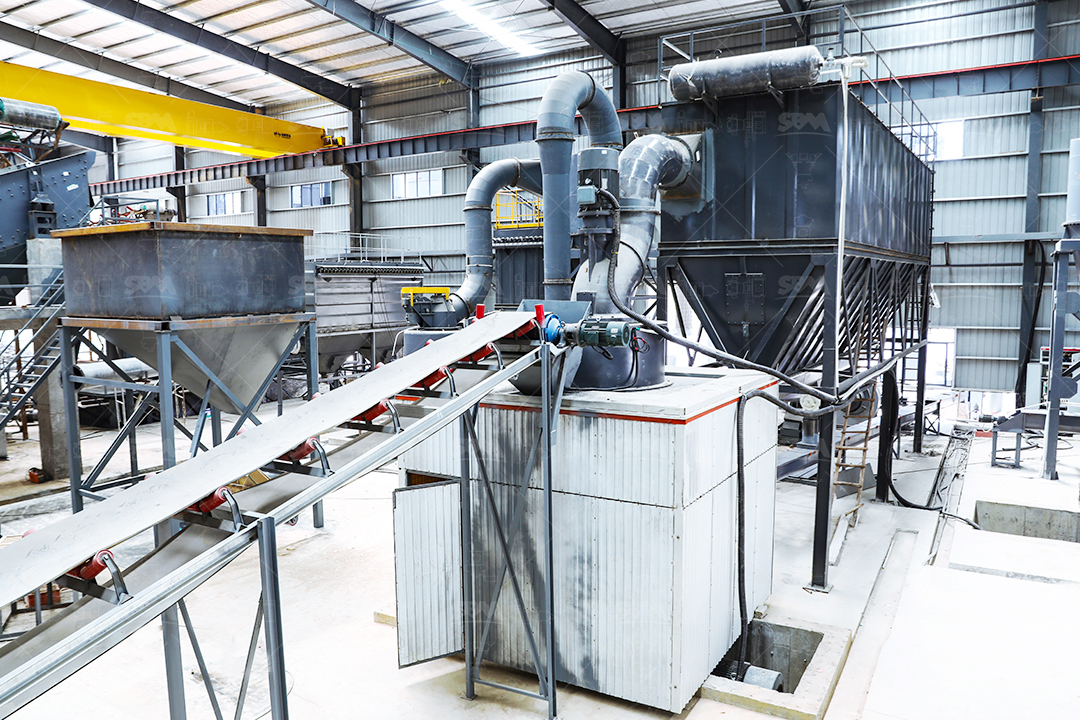
Addressing Customer Pain Points in Quartz Grinding
Customers often express concerns about wear parts, energy consumption, and product fineness consistency when grinding quartz. SBM Machinery's grinding equipment is designed to address these pain points:
- Wear parts cost: The MTW mill's combined-type shovel blade and curved design reduce wear part replacement frequency and cost. The SCM mill uses special materials for the roller and ring, offering durability several times higher than conventional mills.
- Energy consumption: The LUM Ultrafine Vertical Mill adopts PLC/DCS automatic control for pressure adjustment, ensuring high efficiency and stable operation. The SCM mill features high output and low energy consumption, with intelligent control saving labor costs.
- Fineness consistency: The SCM mill's efficient vertical turbine powder classifier achieves accurate cutting size with no spillover of coarse powder. The LUM mill's multi-rotor powder classifiers allow customized fineness with no low-grade material in existence.
- Environmental compliance: All SBM mills are designed with environmental protection in mind. The LUM mill is well sealed and operates under negative pressure, preventing dust spillover. The SCM mill uses efficient double powder collecting methods with pulse dust collectors, far exceeding international standards.
For customers requiring very fine quartz powder, the SCM or LUM mills are preferable over traditional Raymond mills, as they can achieve higher fineness with better consistency and lower energy consumption per ton. However, for coarse to medium-fine quartz powder (30–400 mesh), the MTW Raymond Mill remains a cost-effective and reliable choice, especially with its advanced wear protection features.
Practical Considerations for Grinding Quartz
When planning to process quartz with a Raymond mill, several factors should be considered:
- Moisture content: Quartz should be dry before grinding to prevent clogging and ensure efficient operation. The LUM Ultrafine Vertical Mill features a drying function, which can be advantageous for materials with moderate moisture.
- Feed size: The MTW mill accepts input sizes up to 50 mm, while the SCM and LUM mills accept up to 20 mm. Pre-crushing may be required depending on the raw quartz size.
- Capacity requirements: The MTW mill offers capacities from 3 to 40 tph, the LUM mill from 10 to 70 tph, and the SCM mill from 0.5 to 25 tph. Selecting the right model depends on the desired production scale.
- Product fineness: For applications requiring powders finer than 400 mesh, ultrafine mills are necessary. The SCM mill can reach 2500 mesh, and the LUM mill up to 4000 mesh.
- Wear protection: Quartz is abrasive, so mills with wear-resistant components and easy maintenance access are essential. SBM's mills incorporate various wear-reduction technologies, such as the MTW mill's unique perching knife design and the SCM mill's heavy rotor design with special materials.
Conclusion
In summary, quartz can indeed be processed by Raymond mills, particularly the advanced MTW Series European Trapezium Grinding Mill from SBM Machinery, which offers enhanced wear resistance and efficient operation for abrasive materials. For finer product requirements, SBM's SCM Ultrafine Mill and LUM Ultrafine Vertical Mill provide excellent solutions with high fineness, low energy consumption, and environmental compliance. With over 180 countries and regions served, SBM Machinery has the expertise and equipment to meet diverse quartz grinding needs. Customers should evaluate their specific requirements for fineness, capacity, and budget to select the most appropriate mill, and SBM's technical team can provide tailored recommendations.
Frequently Asked Questions (FAQ)
1. What is the maximum feed size for grinding quartz with a Raymond mill?
The MTW Series Raymond Mill can accept input sizes up to 50 mm. For the SCM Ultrafine Mill and LUM Ultrafine Vertical Mill, the maximum input size is 20 mm. If your quartz raw material is larger, pre-crushing is recommended.
2. Can I achieve 500 mesh quartz powder with a Raymond mill?
Traditional Raymond mills typically produce powders up to 400 mesh. For 500 mesh or finer, you would need an ultrafine mill such as the SCM Series Ultrafine Mill (up to 2500 mesh) or the LUM Ultrafine Vertical Mill (up to 4000 mesh). These mills are designed to meet higher fineness requirements with consistent quality.
3. How do I reduce wear part costs when grinding abrasive quartz?
SBM's MTW Raymond Mill features a unique combined-type shovel blade and curved shovel blades that reduce wear and extend the service life of rollers and rings. The SCM Ultrafine Mill uses special materials for the roller and ring, offering durability several times higher than conventional mills. Regular maintenance and using the correct wear parts are also key to minimizing costs.
4. Is it necessary to dry quartz before grinding?
Yes, it is generally recommended to dry quartz before grinding to prevent clogging and ensure efficient operation. However, the LUM Ultrafine Vertical Mill integrates a drying function, which can handle materials with moderate moisture content, reducing the need for separate drying equipment.
5. What capacity can I expect from a Raymond mill processing quartz?
The MTW Series Raymond Mill offers capacities from 3 to 40 tons per hour, depending on the model and the desired fineness. For higher capacities up to 70 tph, the LUM Ultrafine Vertical Mill is available. The SCM Ultrafine Mill offers capacities from 0.5 to 25 tph. The right choice depends on your production scale and product specifications.


