

Wide industrial applications of bentonite
Published: March 15, 2025
Bentonite, a naturally occurring clay mineral primarily composed of montmorillonite, has emerged as one of the most versatile industrial materials in modern manufacturing and processing. Its unique properties—including high swelling capacity, excellent adsorption, thixotropic behavior, and cation exchange capability—make it indispensable across a remarkable spectrum of industries, from oil and gas drilling to foundry operations, from environmental remediation to pharmaceutical production. As global demand for bentonite continues to rise, driven by expanding applications in construction, agriculture, and advanced materials, the need for efficient, reliable, and technologically advanced processing equipment has never been more critical. This article explores the wide industrial applications of bentonite, examines the key processing challenges, and provides insights into selecting the right grinding and processing equipment to maximize product quality and operational efficiency.
Understanding Bentonite: Properties That Drive Industrial Demand
Bentonite is formed from the weathering of volcanic ash, primarily in the presence of water. Its dominant mineral, montmorillonite, belongs to the smectite group of clay minerals and possesses a layered structure that enables it to absorb water and swell significantly—sometimes up to several times its original volume. This swelling behavior, combined with its ability to form thixotropic gels, makes bentonite invaluable in applications requiring viscosity control, suspension stabilization, and sealing properties.
Two main types of bentonite are commercially important: sodium bentonite, which exhibits high swelling capacity and is often referred to as swelling bentonite, and calcium bentonite, which has lower swelling capacity but excellent adsorption properties and is sometimes called non-swelling bentonite. The processing requirements for each type differ significantly, influencing equipment selection and operational parameters.
Key Industrial Applications of Bentonite
1. Drilling Fluids and Oil & Gas Exploration
One of the largest and most well-established applications of bentonite is in drilling fluids, commonly known as drilling mud. Sodium bentonite is mixed with water to create a thixotropic fluid that cools and lubricates the drill bit, carries rock cuttings to the surface, stabilizes the borehole walls, and prevents the influx of formation fluids. In oil and gas exploration, bentonite-based drilling fluids are essential for maintaining wellbore integrity, particularly in challenging geological formations. The demand for high-quality bentonite with consistent rheological properties has driven advancements in processing technology, including precise grinding and activation methods.
2. Foundry and Metal Casting
In the foundry industry, bentonite serves as a critical binder in molding sands. When mixed with sand and water, bentonite provides the green strength, dry strength, and hot strength necessary for producing high-quality metal castings. The ability of bentonite to withstand high temperatures without losing its binding properties makes it ideal for both ferrous and non-ferrous metal casting operations. Foundry-grade bentonite must meet stringent specifications for purity, particle size distribution, and thermal stability, requiring carefully controlled grinding processes to achieve the desired mesh size and surface area.
3. Environmental Protection and Waste Management
Bentonite's high adsorption capacity and low permeability make it an excellent material for environmental applications, particularly in landfill liners, wastewater treatment, and soil remediation. When compacted, sodium bentonite forms an impermeable barrier that prevents the migration of leachate and contaminants into groundwater. In wastewater treatment, bentonite is used as a flocculant and adsorbent to remove heavy metals, organic pollutants, and suspended solids. The growing emphasis on environmental sustainability and stricter regulations regarding waste management have significantly expanded the demand for high-quality bentonite in these applications.
4. Construction and Civil Engineering
Bentonite plays a vital role in construction and civil engineering, particularly in foundation engineering, tunnel boring, and diaphragm wall construction. Bentonite slurries stabilize excavations, prevent soil collapse, and facilitate the placement of concrete and other materials. In waterproofing applications, bentonite-based products such as geosynthetic clay liners (GCLs) provide reliable barriers against water infiltration. The construction industry's continued growth, particularly in developing regions, has driven steady demand for bentonite products with consistent quality and performance characteristics.
5. Agriculture and Animal Feed
In agriculture, bentonite is used as a soil amendment to improve water retention, cation exchange capacity, and nutrient availability. It also serves as a carrier for pesticides and herbicides, enabling controlled release and reducing environmental impact. In animal feed, bentonite is added as a flow agent and pellet binder, and it also helps reduce the incidence of certain digestive disorders in livestock. The agricultural sector's demand for bentonite is expected to grow as farmers seek sustainable solutions to improve soil health and crop productivity.
6. Pharmaceuticals, Cosmetics, and Personal Care
Purified bentonite is used in pharmaceutical formulations as a suspending agent, emulsifier, and tablet binder. In cosmetics and personal care products, bentonite serves as a thickening agent, absorbent, and detoxifying ingredient in facial masks, cleansers, and antiperspirants. The stringent purity requirements for these applications necessitate advanced processing techniques, including ultrafine grinding and classification, to achieve the desired particle size and eliminate impurities.
7. Catalysts and Chemical Processing
Activated bentonite, produced through acid treatment or thermal activation, is widely used as a catalyst and catalyst support in chemical processing. Its high surface area and acidic properties make it suitable for cracking, isomerization, and polymerization reactions. The chemical industry's demand for high-performance catalysts has driven the development of specialized activation and grinding processes to optimize the material's catalytic properties.
8. Iron Ore Pelletizing and Metallurgy
In the metallurgical industry, bentonite is used as a binder in iron ore pelletizing, helping to agglomerate fine iron ore particles into uniform pellets suitable for blast furnace feed. The binder properties of bentonite improve pellet strength and reduce fines generation during handling and transportation. This application requires bentonite with specific characteristics, including high dry strength and low swelling index, which are achieved through careful selection of raw materials and precise processing.
_1793204725492.jpg)
Processing Challenges and Equipment Solutions
The diverse applications of bentonite demand different particle sizes, surface areas, and activation levels. Raw bentonite must be dried, crushed, ground, and sometimes activated or modified to meet specific end-use requirements. The grinding stage is particularly critical, as it determines the particle size distribution, surface area, and overall performance of the final product.
Different applications require different fineness levels. For drilling fluids, bentonite is typically ground to pass through a 200-mesh screen, while foundry applications may require finer grinding to 300 mesh or more. Pharmaceutical and cosmetic applications often demand ultrafine grinding to 1000 mesh or finer, with strict control over particle size distribution and contamination.
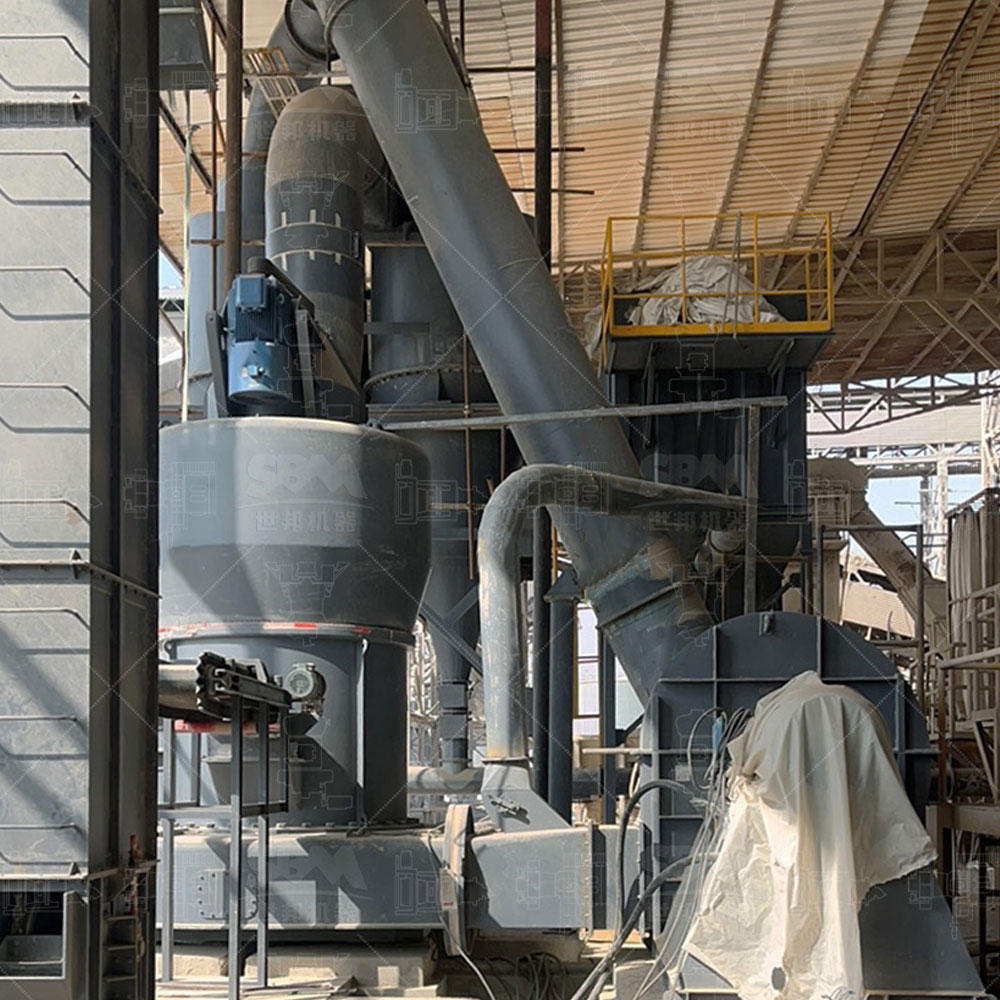
Shanghai SBM Machinery Equipment Co., Ltd. has developed a comprehensive range of grinding equipment to address the diverse processing needs of the bentonite industry. The company's MTW Series European Trapezium Grinding Mill, with its unique wear-proof perching knife design and arc air duct, offers efficient grinding for medium-fine bentonite products. The LM Vertical Roller Mill, featuring integrated drying, pulverizing, and powder-selection functions, provides high capacity and low operating costs for large-scale bentonite processing operations. For ultrafine applications, the SCM Series Ultrafine Grinding Mill achieves fineness levels up to 2500 mesh, making it suitable for pharmaceutical and cosmetic-grade bentonite production.
Environmental considerations are also paramount in bentonite processing. Dust generation during grinding and handling poses both health and environmental risks. SBM's grinding equipment incorporates advanced dust collection systems, sealed operation under negative pressure, and noise reduction features to ensure compliance with stringent environmental standards. The company's commitment to environmental protection aligns with the growing regulatory requirements in the bentonite industry.
Quality Control and Product Consistency
Consistency is critical in bentonite processing, as variations in particle size, moisture content, and activation level can significantly affect product performance. Advanced grinding equipment with automated control systems enables precise adjustment of operating parameters, ensuring consistent product quality. The use of frequency-conversion control, PLC/DCS automatic control systems, and online monitoring technologies allows operators to maintain optimal grinding conditions and quickly respond to changes in raw material characteristics or product specifications.
Testing and quality assurance are essential components of any bentonite processing operation. Key parameters such as swelling index, methylene blue absorption, gel strength, and particle size distribution must be regularly monitored to ensure product conformity. Equipment manufacturers and processors must work together to establish appropriate testing protocols and quality control measures.
Future Trends and Opportunities
The bentonite industry is poised for continued growth, driven by several key trends. The increasing demand for sustainable and environmentally friendly materials is creating new opportunities for bentonite in areas such as biodegradable packaging, green construction materials, and pollution control. The development of nanotechnology is opening new frontiers for bentonite-based nanocomposites with enhanced properties for advanced applications.
The shift toward renewable energy and electric vehicles is also creating new demand for bentonite. Lithium-ion battery manufacturers use bentonite as a binder and separator material, while geothermal energy projects rely on bentonite-based grouts for well sealing. These emerging applications are expected to drive innovation in bentonite processing and create demand for more specialized and efficient grinding equipment.
Geographically, Asia-Pacific is expected to remain the largest market for bentonite, driven by rapid industrialization and infrastructure development in countries such as China, India, and Southeast Asian nations. North America and Europe will continue to demand high-quality bentonite for environmental, pharmaceutical, and specialty applications, with an emphasis on product purity and performance consistency.
Conclusion
Bentonite's wide industrial applications stem from its unique physicochemical properties, which can be tailored through careful processing to meet the specific requirements of diverse industries. From drilling fluids and foundry molds to environmental barriers and pharmaceutical formulations, bentonite continues to demonstrate its versatility and value. As the demand for high-quality bentonite products grows, the role of advanced grinding and processing equipment becomes increasingly critical. By selecting the right equipment and implementing robust quality control measures, bentonite processors can optimize product performance, reduce operating costs, and capitalize on emerging market opportunities.
Frequently Asked Questions
Q1: What is the most common problem customers face when grinding bentonite, and how can it be solved?
One of the most common challenges in bentonite grinding is the material's high moisture content and tendency to clog equipment. Bentonite can absorb moisture from the air, becoming sticky and difficult to handle. This can lead to reduced grinding efficiency, equipment blockages, and inconsistent product quality. The solution is to use grinding equipment with integrated drying functions, such as vertical roller mills, which can handle materials with higher moisture content while maintaining stable operation. Additionally, proper material storage and pre-drying can help minimize moisture-related issues.
Q2: How do I determine the appropriate grinding fineness for my bentonite application?
The required fineness depends entirely on the end-use application. For drilling fluids, a fineness of 200 mesh is typically sufficient. Foundry applications usually require 200-300 mesh. For pharmaceutical and cosmetic uses, ultrafine grinding to 1000 mesh or finer may be necessary. It is important to consult with equipment manufacturers and conduct testing to determine the optimal fineness for your specific application, as both over-grinding and under-grinding can negatively impact product performance and increase costs.
Q3: What are the key factors affecting the energy consumption of bentonite grinding equipment?
Energy consumption in bentonite grinding is influenced by several factors, including the hardness and moisture content of the raw material, the desired fineness of the final product, the capacity of the equipment, and the efficiency of the grinding mechanism. Modern grinding equipment, such as vertical roller mills and ultrafine mills, incorporate advanced technologies that can reduce energy consumption by 30-40% compared to traditional ball mills. Regular maintenance, proper lubrication, and optimal operating parameter settings also play crucial roles in minimizing energy consumption.
Q4: How can I ensure consistent product quality when processing bentonite from different sources?
Bentonite from different deposits can vary significantly in mineral composition, swelling capacity, and other properties. To ensure consistent product quality, it is essential to implement a comprehensive quality control program that includes raw material testing, process parameter monitoring, and finished product analysis. Advanced grinding equipment with automated control systems can help maintain consistent particle size distribution and surface area. Working closely with equipment suppliers to establish appropriate processing parameters for different raw material sources is also recommended.
Q5: What environmental regulations apply to bentonite processing, and how can equipment help achieve compliance?
Bentonite processing operations are subject to various environmental regulations, particularly regarding dust emissions, noise levels, and wastewater discharge. Modern grinding equipment incorporates features such as sealed operation under negative pressure, pulse dust collectors, sound insulation, and mufflers to help meet these requirements. When selecting equipment, it is important to consider the environmental regulations in your region and choose equipment that is designed to comply with those standards. Working with experienced equipment manufacturers who understand the regulatory landscape can help ensure that your processing operation meets all applicable environmental requirements.


